






 Portuguese
  Spanish


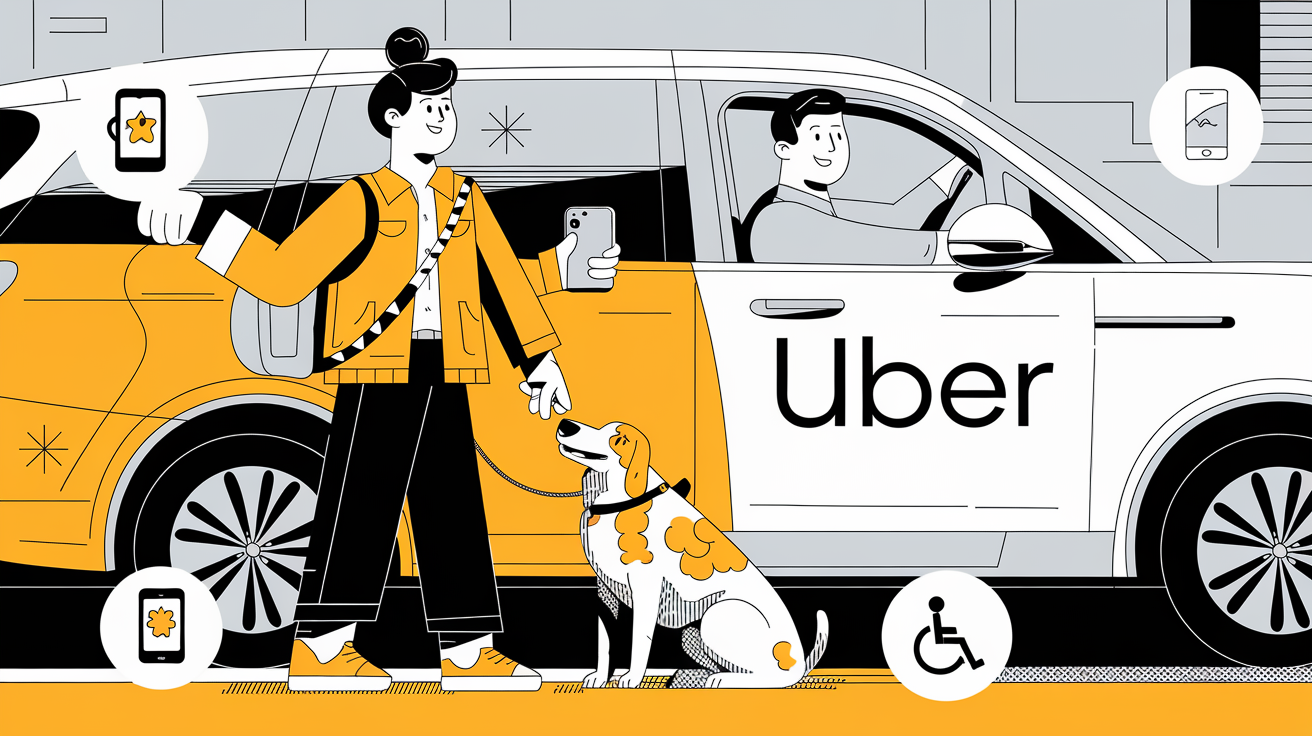


Uber Implemented An Update That Allows Passengers With Service Animals To Self-Identify, Automatically Notifying Drivers. The Company Emphasizes That Drivers Are Prohibited From Refusing Rides To These Passengers, Under Penalty Of Account Deactivation.
Urban mobility has been revolutionized by transportation apps, offering practicality and accessibility to millions of users.
However, for visually impaired individuals who rely on service animals, this experience is not always straightforward.
Difficulties such as drivers refusing to accept guide dogs are still a reality faced by many.
-
Erected in just 30 minutes over the water that had already engulfed the courtyard, a motorized floating bridge from China evacuated more than 6,000 students trapped inside a school surrounded by the flood in the south of the country, after Typhoon Maysak turned the region into a flooded area.

-
Employee buys a ticket that a customer left behind, discovers a million-dollar prize, tries to claim the fortune, is fired after 20 years, and ends up in a legal dispute with the company.

-
China returned almost 20 Brazilian ships with soybeans and is now back to buying from the USA, but stocks above 9 million tons raise suspicions of a political move, not a commercial necessity.
-
Japan will have a bullet train that levitates at 500 km/h and will cross 90% of the route through tunnels; the project promises trips in just 67 minutes but faces billion-dollar challenges and unprecedented environmental obstacles.




In light of this scenario, ride-hailing companies are seeking solutions to ensure a more inclusive and accessible service for all.
Update In The App Aims For Inclusion
Recently, Uber announced an update to its app aimed at enhancing the experience of visually impaired users who use service animals.
Now, passengers have the option to self-identify in the app as companions of service animals, allowing drivers to be automatically notified of the animal’s presence upon arriving at the pickup location.
This functionality eliminates the need for prior communication between passenger and driver regarding the presence of the animal, making the process smoother and less prone to misunderstandings.
Zero Tolerance Policy For Discrimination
Although self-identification is optional, Uber reinforces that its policy prohibits drivers from refusing rides to passengers with service animals.
Any driver who violates this guideline may permanently lose access to the platform.
This measure aims to ensure that all users, regardless of their special needs, have equal access to the services offered by the company.
Brazilian Legislation And Rights Of Uber Users
In Brazil, legislation also protects the rights of visually impaired individuals who use guide dogs.
The Federal Law No. 11,126 of 2005 guarantees the right to enter and stay with the animal in collective use environments, including public and private transportation vehicles.
Therefore, app drivers are legally obliged to accept passengers accompanied by guide dogs, under penalty of legal sanctions and account deactivation on the platform.
Accessibility Features In The App
In addition to the new self-identification functionality, Uber offers various features to make the app more accessible.
The company’s web and mobile platforms are compatible with screen readers such as VoiceOver and TalkBack, facilitating navigation for blind or visually impaired users.
The company also provides accessibility guides and educational content for partner drivers, aiming to promote more inclusive and informed service.
Support And Reporting Channels
If a passenger with a service animal encounters issues, such as trip cancellations or improper charges, Uber provides support channels to report the incident.
The company has a specialized team to investigate these occurrences and take appropriate measures, ensuring that users’ rights are respected and instances of discrimination are properly addressed.
Challenges And Future Prospects For Uber
Despite the advancements, there are still reports of discrimination by drivers against passengers with service animals.
Protests and demonstrations have been organized to demand a firmer stance from ride-hailing companies against these practices and better education for drivers regarding the needs of users with disabilities.
The implementation of zero tolerance policies and the introduction of new functionalities in the app are important steps, but the effectiveness of these measures depends on continuous awareness and the commitment of all parties involved.
For experts, Uber’s initiative to update its app to include self-identification for passengers with service animals represents a significant advancement in promoting accessibility and inclusion in ride-hailing.
However, it is essential that these measures are accompanied by strict enforcement of non-discrimination policies and continuous education for partner drivers.
Only then will it be possible to ensure that all users, regardless of their needs, can enjoy a safe, reliable, and inclusive service.





Acho justíssimo levar animais de serviço ok. Jamais negaria. Porém vale salientar que não somos empregados da Uber e nem de nenhuma empresa, A Uber veio no mundo como app de carona, porém hoje o povo quer um serviço melhor que táxi a preço de **** kkk aí fica difícil. Vale reforçar também que a Uber ampare os motoristas em casos em que por um acaso o carro fique sujo, pois uma lavagem de banco é 160 reais e uma corrida pra nós em média é 10 a 15 reais. Fiquei 6 meses com carro cheio de pelos pq n pude fazer uma lavagem detalhada por dentro por causa de pet ( que não foi de serviço). Imagina você está indo trabalhar, ou, indo em algum lugar importante entra no carro e sai com a roupa cheio de pelos
Essas empresas de aplicativos , agem como se fossem donos do nossos veículos, tratam os motoristas como empregados, explorando os pobres coitados que não estão conseguindo cumprir com as contas de suas casas com essas tarifas Absurdas!
**** solta pelos.
Custo da higienização= R$ 50,00
+ custo do tempo de ficar parado = R$ 100,00.
Total = R$ 150,00. Quem vai pagar?