Portuguese
  Spanish


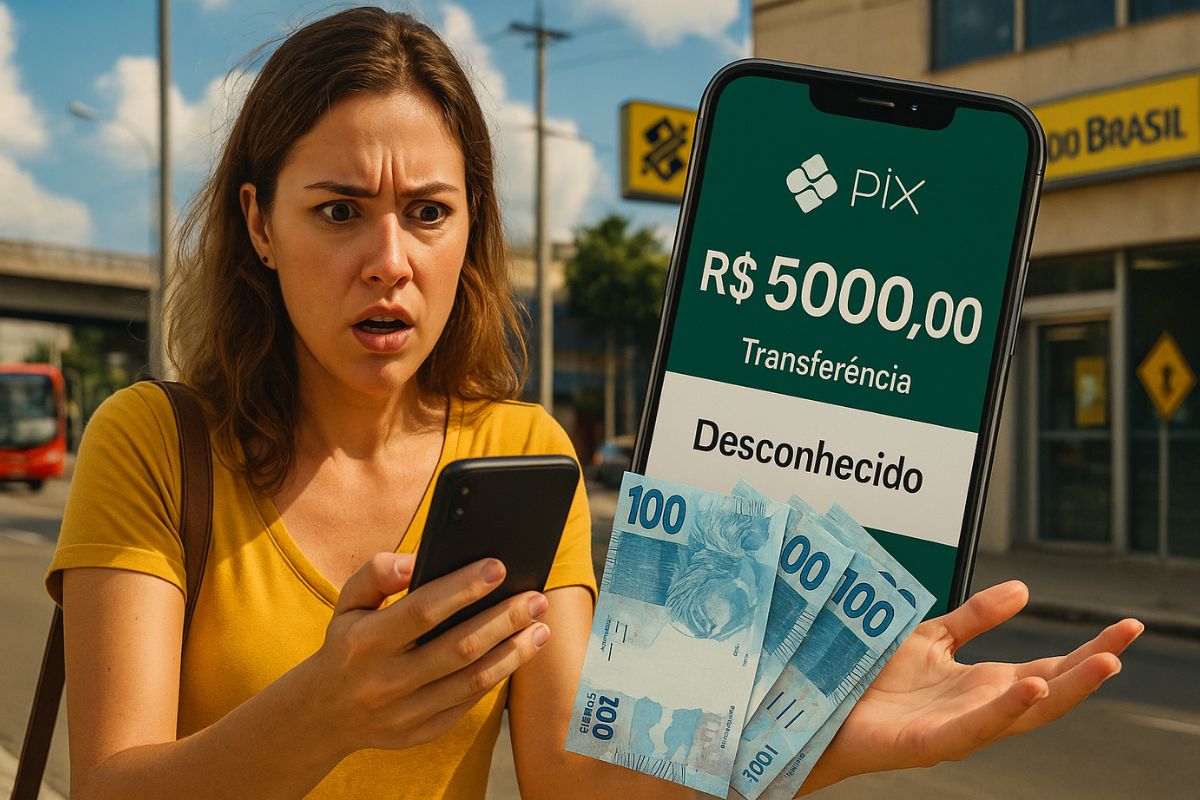


PIX Transaction Sent to Ex-Husband Ends Up in the Account of a Stranger; Case in Araraquara Exposes Limits of the System and Legal Obligation to Return Funds.
The PIX has transformed the financial lives of Brazilians with transfers in seconds and low cost. But the same speed that facilitates daily life increases the risk: confirmed, it’s done. This was the experience of a resident of Araraquara (SP), who sent R$ 5,000 via PIX to her ex-husband and, due to a typing error, saw the money end up in the account of a stranger who did not respond to the requests for refund.
The incident turned into a police report and illustrates a crucial point: the system does not reverse a PIX transaction due to a mere error by the user. From there, the Penal Code, the Civil Code, and a practical guide on how to act to recover the funds come into play.
The Case of Araraquara: When an Extra Tap Costs R$ 5,000
The sender made a PIX of R$ 5,000 to her ex-husband, intended for the purchase of machines, but typed the wrong key. The credit landed in the account of another woman, 35 years old, with no connection to the payer. The victim tried to make contact and received no response.
-
China Constructs 5.1 km Undersea Highway in Dalian Bay, Reducing Travel Time from 1 Hour to 5 Minutes

-
Massive Transporters Otto and Lore Move ALMA Radio Telescope in Chile’s Atacama Desert
-
Singapore Turns Incinerated Waste Ash into Construction “Sand” in Ambitious Project to Revolutionize Megacity Waste Management
-
Brazilian Entrepreneur Turns Passion for Amazonian Cocoa into a Million-Real Chocolate Business After Studying in France



Without a reply, she sought the bank, which advised her to file a police report. At the police station, the case was classified as “appropriation of funds by error”, initiating an investigation by the Civil Police. This path of contact, bank, and police report is now the actual route when the error is human and the recipient does not cooperate.
Why does this happen? Because PIX settles instantly. There is no “window” for cancellation. The responsibility for confirming the data lies with the user, and the solution, if the recipient does not return the funds, shifts to legal routes.
PIX, Penal Law, and Civil Law: Two Doors to the Same Problem
Criminal Sphere Art. 169 (appropriation by error): Receiving by mistake is not a crime; a crime arises when, aware of the error, the recipient decides to retain. Criminal definition: “appropriating someone else’s property that came into your possession by mistake, chance occurrence, or force of nature.” The penalty is detention from 1 month to 1 year or a fine, following the procedures of Special Courts and the possibility of a plea bargain. The key point is the later intent: the will to keep what one knows is not theirs.
Civil Sphere Unjust Enrichment: Regardless of intent, anyone who receives what was not owed must return it (arts. 876 and 884 of the Civil Code), with interest and adjustment. Unjustified refusal may lead to compensation for moral damages when the inconveniences exceed mere annoyance. These are complementary routes: even if there is no proof of criminal intent, the civil return remains due.
What to Do in Practice: From Friendly Request to Legal Action
1) Try for immediate return within the app. Many banks display the “Return PIX” button to the recipient. A polite message with proof of transaction helps establish good faith.
2) Formalize with your bank. Open a protocol, send proof and a narrative of the error. The bank notifies the recipient’s institution and creates useful documentary evidence for the inquiry and civil process.
3) File a police report. Describe the facts, attach proof and screenshots of contact attempts. The police report opens an investigation and strengthens the evidence that there was a refusal after acknowledging the error.
4) Act in the civil sphere. Propose a repetition of undue payment/unjust enrichment action, requesting updated return and interest; if applicable, moral damages for time lost and distress. Don’t wait for the conclusion of the criminal case to seek restitution.
Prevention Tip: Triple verification (name/partial ID/amount) before entering the password; prefer QR Code to reduce typing errors; maintain configured value limits; beware of urgency and validate through another channel.
MED Is Not a “Refund Button”: When Blocking and Return Do Not Apply
The Special Mechanism for Refund (MED) of PIX does not apply to user errors. It exists for fraud or operational failure, when the bank can block remaining funds after analysis between institutions. In commercial disagreement or typed the wrong key, the MED does not resolve the path returns to dialogue and Justice.
Honest Summary: PIX prioritizes speed, not reversal. TED/DOC had registration checks that sometimes blocked errors; credit cards offer chargeback for disputes. In PIX, user attention is the main barrier and the State is the remedy when it fails.
If an incorrect PIX lands in your account and you are notified, returning it is a legal duty. Retaining it constitutes civil wrongdoing and may become a crime if there is awareness and refusal. Good faith requires a quick response: accept the request, use “Return PIX”, and keep the receipt.
Statements to Remember: “Incorrect money is not a gift.” “Wrong PIX has an owner.” “Good faith is proven by action, not silence.”
The case in Araraquara exposes the paradox of PIX: the benefit of instantaneity comes with the cost of irreversibility. When an error occurs, penal and civil laws protect those who paid and oblige those who received. What do you think would most help reduce these cases: mandatory extra confirmation for high amounts, more financial education in apps, or improvements in the recipient identification process?
Have you ever gone through something similar with PIX? Were you able to get a refund? Share your experience your account helps those who are going through this now.