Portuguese
  Spanish


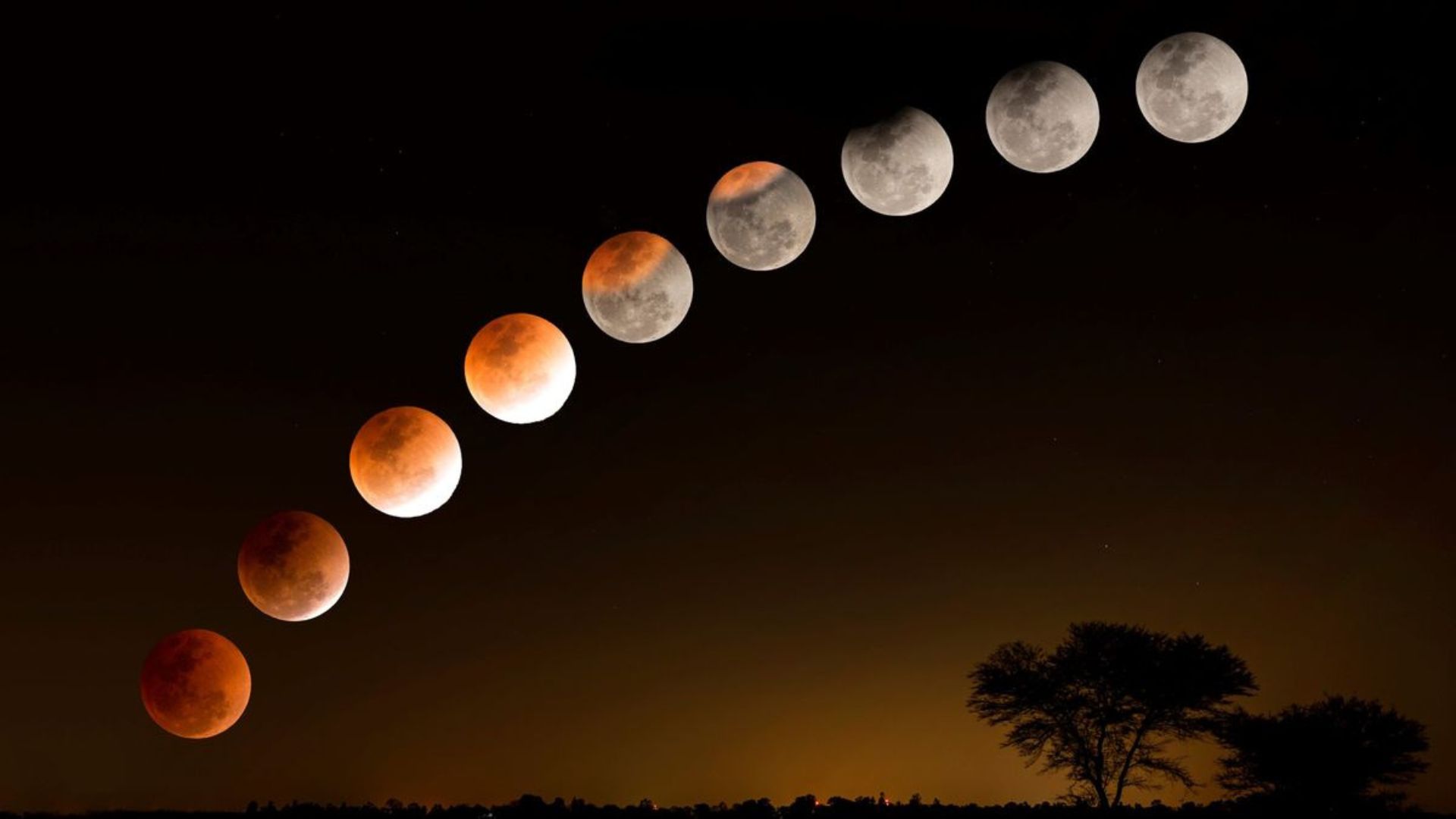


March Lunar Eclipse Will Have Global Totality Phase of 58 Minutes and May Change the Color of the Moon, Although Visibility in Brazil Varies by Region and Time. The Phenomenon Poses No Risks to Vision and Depends on Favorable Weather Conditions for Better Observation.
In the early hours of March 3, a lunar eclipse will occur with a totality phase expected to last about 58 minutes during the global event, when the full moon passes through the Earth’s central shadow and may take on reddish hues, according to schedules and materials from NASA.
Although the eclipse is classified as total in the global context, observation from Brazil has significant limitations, as the total phase does not appear in cities like São Paulo and Rio de Janeiro, where the phenomenon is described as penumbral and more difficult to notice.
In this type of eclipse, the “blackout” mentioned in reports refers to the period when the Moon enters the umbra, the darkest part of the Earth’s shadow, and stops receiving direct sunlight, posing no risk to vision and requiring no filters.
-
Northern Lights May Be Visible in 19 U.S. States Tonight as Solar Ejection Approaches Earth, Potentially Triggering Geomagnetic Storm

-
Energy-Efficient Upgrade: Brazilian Utility Offers Discounts to Replace Old Fridges and Bulbs with New Models in Paraná Homes
-
World’s Fastest Tractor, the JCB Fastrac Two, Hits Nearly 247.5 km/h with Over 1,000 Horsepower

-
At 86, mountaineer Carlos Soria becomes the oldest person ever to summit an 8,000-meter peak, reaching the top of Manaslu in Nepal.




As the times and visibility vary depending on the observer’s position and the moonrise or moonset, astronomical services indicate that, in Brazil, observation tends to occur near dawn in some regions and may happen with the moon low on the horizon.
March 3 Lunar Eclipse and Visibility in Brazil
The totality, when the lunar disk is entirely immersed in the umbra, is estimated to last about 58 minutes during the global event, concentrating the interval in which the color is usually most pronounced.

At the same time, visibility maps indicate that the best conditions for seeing all phases of the eclipse are concentrated in areas of Asia, Australia, and North America, with the Pacific occupying a significant part of the nighttime band.
In the Brazilian case, local observation pages show that the total phase is below the horizon in capitals like São Paulo and Rio de Janeiro, which reduces the experience to a subtle darkening, typical of a penumbral eclipse, and sometimes brief.
In São Paulo, for example, the available record indicates a penumbral eclipse around early morning, with a short local duration, reinforcing that the complete “Blood Moon,” with intense red, is not guaranteed for most of the country.
Why Does the Blood Moon Turn Red During the Eclipse
Even when the Moon is in the Earth’s shadow, it does not disappear completely because part of the sunlight is refracted and filtered by the Earth’s atmosphere before reaching the satellite, a process that favors redder tones along the way.
This effect appears more strongly during totality, as the typical silvery brightness of the full moon diminishes, and the lunar disk begins to depend on what reaches it indirectly, creating variations that can range from copper to dark red.
However, the intensity of the red is not a fixed standard for the phenomenon and can vary from one eclipse to another, as atmospheric conditions on Earth influence how much light is refracted and how it is distributed within the projected shadow.
Therefore, expressions like “blackout” help summarize the blockage of direct light, but they do not indicate a complete darkening of the lunar disk, nor do they imply any impact beyond the visual alteration of the satellite during alignment.
Worm Moon and Tradition Associated with the March Full Moon

The same March full moon is commonly referred to, in popular traditions of the Northern Hemisphere, as the “Worm Moon,” a reference linked to the end of winter and the time when the ground begins to thaw, favoring the reemergence of worms.
This cultural nickname has blended with, in astronomy coverage, the term “Blood Moon,” although the reddish coloration depends on the eclipse and not on the name of the month, which by itself only describes the lunar phase.
Thus, when the two elements coincide, the coverage often combines the traditional lunar calendar with the mechanics of the eclipse, highlighting that the red observed is a direct consequence of the alignment between the Sun, Earth, and Moon.
How to Observe the Lunar Eclipse Safely
To follow the event accurately, it is recommended to check tables by city, as the altitude of the Moon on the horizon and the time zone change what is visible, possibly limiting the observation to just a few minutes.
On specific pages for Brazil, the eclipse appears as a global total event, but with local type varying between partial and penumbral, which means the observer may not see the phase when the Moon is entirely within the umbra.
Still, since it is a lunar eclipse, observation is safe to the naked eye, and binoculars or telescopes can help notice subtle brightness differences, as long as the sky is clear and the Moon is not obscured by clouds at dawn.
Locations with less artificial lighting tend to facilitate the perception of contrast, but in the case of penumbral eclipses, the difference can be subtle even in ideal conditions, making the consultation of local times even more relevant.
NASA reference materials also provide diagrams and visibility maps for the eclipse, allowing for the comparison of the shadow’s path and understanding why certain regions see the complete totality while others only observe a slight variation in brightness.