






 Portuguese
  Spanish


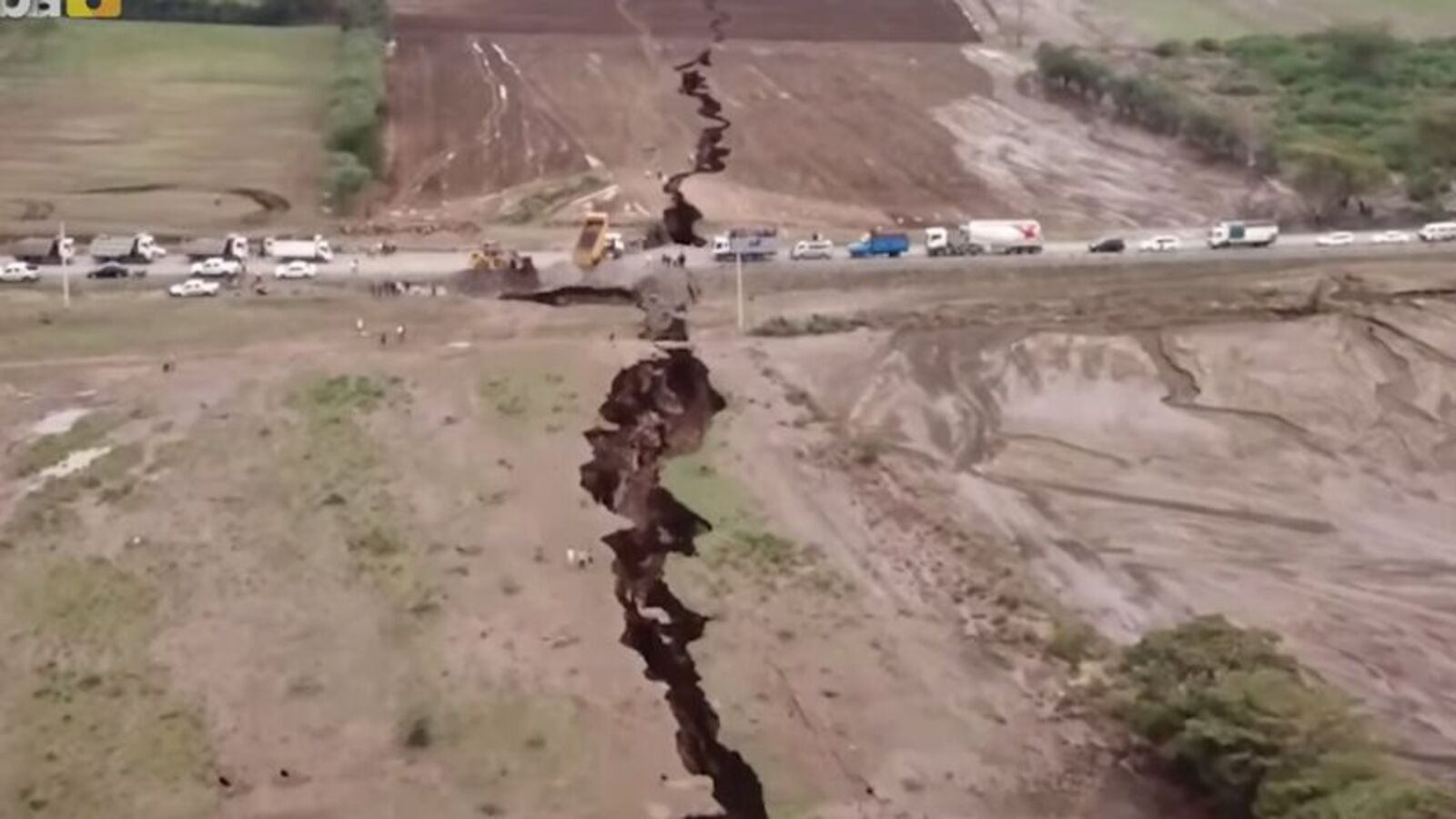


National Geographic confirmed that Africa is slowly splitting in the East African Rift, in a geological process that could form an ocean
An article from National Geographic confirmed: Africa is undergoing a slow but active geological process that could make way for a new ocean over millions of years. The separation is happening in the East African Rift System and is already causing fissures, earthquakes, and visible changes in the landscape.
Slow division is already altering the landscape
The movement occurs in the East African Rift System, where large tectonic plates are slowly moving apart. Although the pace is slow, the effects are already visible in the soil and relief of various areas of the continent.
This process does not change the map immediately, but it is ongoing. For science, it is one of the most important geological phenomena today, as it helps explain how continents open up and how a new ocean can emerge.
-
A fossil kept for years in a small museum in Montreal concealed 450-million-year-old soft tissue, a discovery that has only happened once before in history.

-
Three teenagers transform cut cardboard into Japanese origami-style packaging that promises to retire styrofoam and bubble wrap, win a $12,500 prize, and target giants like Amazon, FedEx, and Home Depot after a robot motor arrived broken.

-
The large jar blender has a rival: Oster Ultra Power bets on 1,000 W, six stainless steel blades, and two portable cups with leak-proof lids.

-
Tesla injected an additional $250 million into the German factory, doubled the battery cell target, and opened its own production line for startups.



The marks of this transformation include fissures in the ground, earthquakes, and gradual changes in the landscape.
Even though it is almost imperceptible in daily life, the movement remains active and draws attention due to the impact it may have on the future of the planet.
Afar region marked the beginning of the process
The origin of the division is in the Afar region, in northern Ethiopia. It was there, about 30 million years ago, that a fracture began to form within Africa, initiating a process that continues to this day.
Over time, this rift has progressed southward toward Zimbabwe. The displacement occurs at centimeters per year, a speed considered slow but constant within the geological time scale.
The East African Rift System cuts through countries such as Ethiopia, Kenya, Tanzania, Uganda, Rwanda, Malawi, and Mozambique. Along this path, it reshapes the relief and creates more unstable areas in the Earth’s crust.
Separation of the plates maintains constant pressure
The change is caused by the separation of the African Plate into two sub-plates. On one side is the larger Nubian Plate. On the other is the Somali Plate, which is slowly moving eastward.
This separation is driven by internal processes of the Earth. The dynamics of the mantle and the movement of partially molten rocks beneath the lithosphere maintain continuous pressure on the crust, favoring the opening of faults.
In an explanation published by researchers, geologist Lucia Perez Diaz from Royal Holloway College stated to The Conversation that the activity in the eastern branch of the Rift Valley became evident when a large fissure suddenly appeared in southwestern Kenya.
2005 Rift Strengthened Scientific Attention
One of the most significant episodes occurred in 2005, when a rift of about 60 kilometers opened in western Ethiopia.
In a short time, the ground shifted two meters, something that would normally take much longer to happen.
Cases like this have increased the debate about a possible acceleration of the process in some areas.
Recent research indicates that the northern part of the system may evolve more quickly, increasing scientific interest in the formation of a new ocean.
A New Ocean May Emerge in the Future
When the separation advances enough, the seabed could fill the rift and begin the formation of a new ocean.
Lucia Pérez Díaz stated that, over tens of millions of years, the seabed will advance across the entire length of the rift.
On a human scale, this change seems distant. Still, on the geological timeline, the process is already underway and shows that the planet remains active, even when everything appears stable.
With information from National Geographic and Gazeta de São Paulo.


