Portuguese
  Spanish


The city of Fuzhou, capital of China’s Fujian province, operates smart deep-water aquaculture platforms with zero carbon that produce over 2,200 tons of fish and seafood per year, with a production value of 44 million dollars. By the end of 2026, the total number of platforms will reach 15, with the completion of two new units called Yunhai that will receive an investment of 130 million yuan. The floating farms run on solar and wind energy, use 20 smart sensors, require only one or two crew members, and allow fish feeding via smartphone.
China is farming fish on an industrial scale in the middle of the ocean using zero-carbon floating platforms that operate without fossil fuel and are controlled by mobile phone. In Fuzhou, the capital of Fujian province, 13 smart deep-water aquaculture platforms already occupy 270,000 cubic meters of water and produce over 2,200 tons of fish and seafood per year. The structures, nicknamed “Iron Men of the Sea,” cultivate high-value species like large yellow croaker and abalone using automated feeding and monitoring systems that have drastically reduced the need for labor.
By the end of this year, two new platforms called Yunhai will be completed, bringing the total to 15 units, according to ChinaDaily, expanding the capacity by 170,000 cubic meters. The investment in the new structures is 130 million yuan, equivalent to about 97 million reais, and the expectation is to achieve 80% digitalization throughout the entire fish and seafood production cycle, with feeding controlled by smartphone from silos with a capacity of 10 tons each.
How the platforms farm fish without fuel
![An aerial view captures the Qiandong 2 deep-water intelligent aquaculture platform in Dinghai Bay, Fuzhou, Fujian province. [image: CHINA DAILY]](https://clickpetroleoegas.com.br/wp-content/uploads/2026/05/Imagine-criar-toneladas-de-peixe-no-meio-do-mar-usando-apenas-2-1290x726.jpg)
The aquaculture platforms in Fuzhou are zero-carbon systems that operate with complementary solar and wind energy. Each unit of the Qiandong series holds 20,000 cubic meters of water for fish farming and operates with nearly 20 intelligent sensors for digital management of temperature, oxygenation, currents, and feeding.
-
Quail Eggs Reveal a “Secret Code” on Their Shells Explaining Unique Patterns and Colors

-
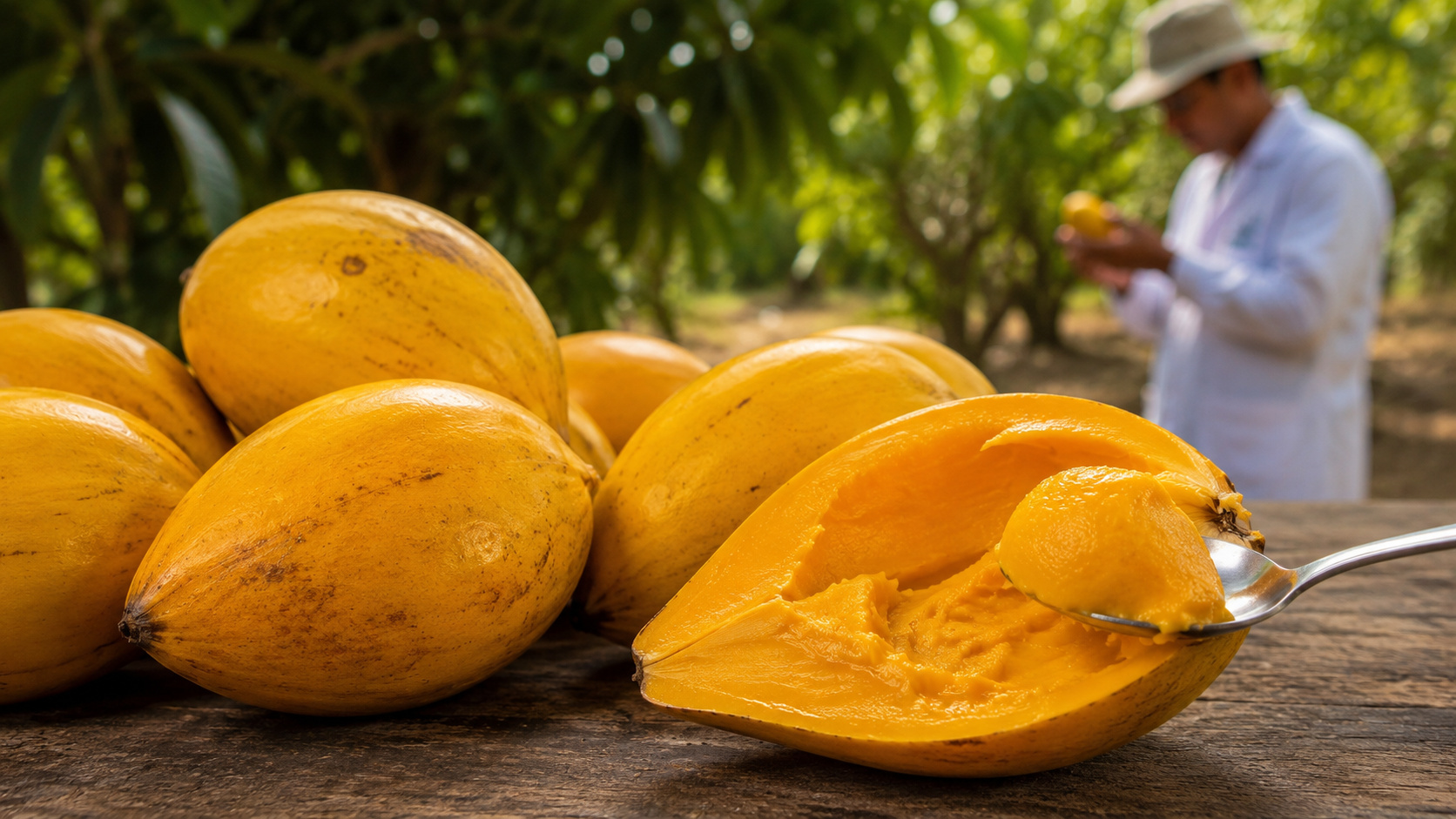
Rare Tropical Fruit Canistel, with Egg Yolk Color and Caramel Flavor, Gains Interest from Researchers and Small Producers in Brazil
-
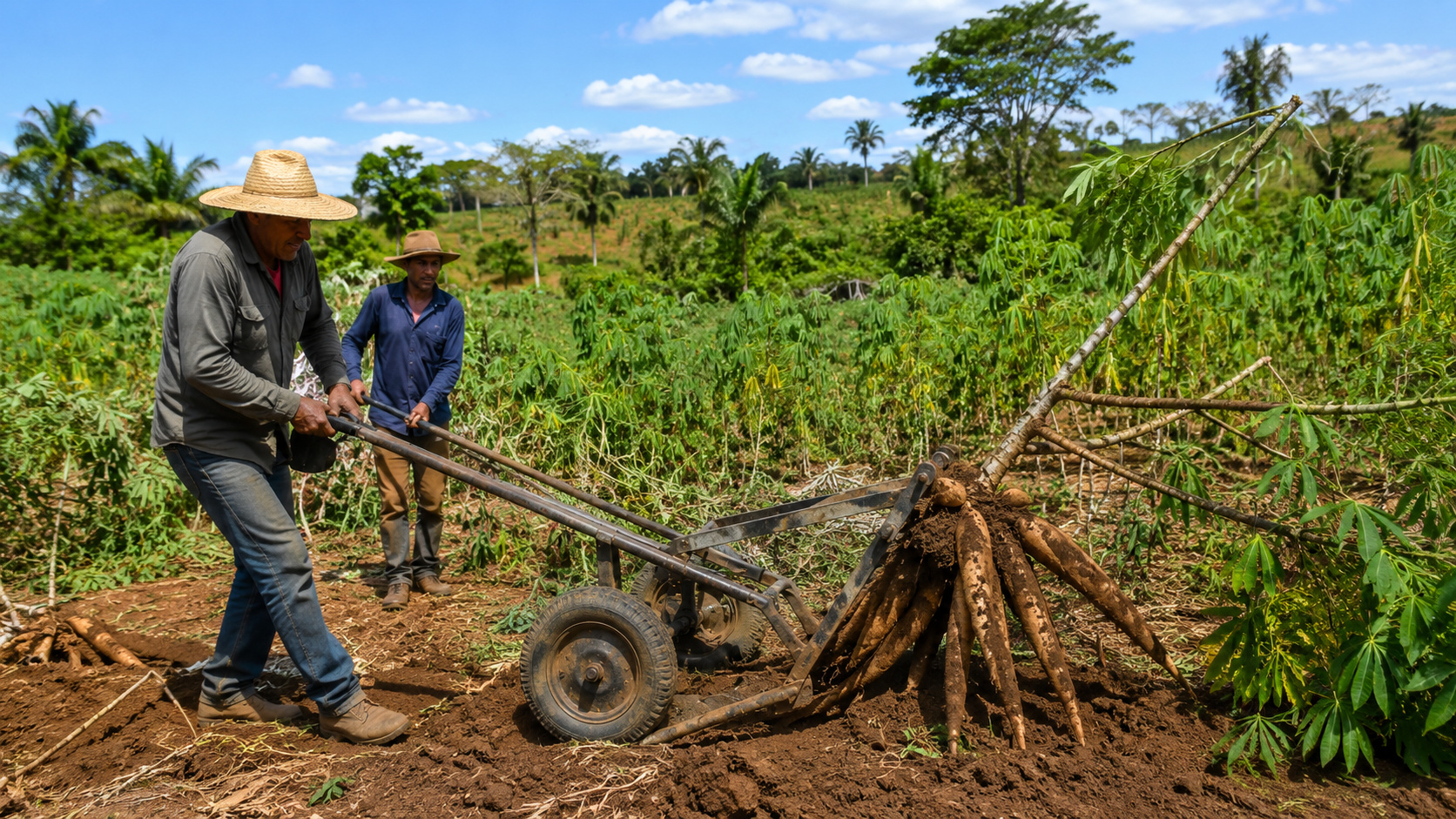
Brazilian Farmers Develop Wheeled Metal Lever to Ease Cassava Harvesting Without Heavy Machinery
-
Study of Brazil’s Tietê River Finds 25 Pesticides in Water, Including Cancer-Linked Substance Near Source


The 360-degree floating cage automatically rotates above the water level every three days for sun drying and removal of biofouling, marine organisms that accumulate on the structure and compromise water quality. Li Xiaoping, assistant to the president of Qiandong Marine Granary, explained that this automatic rotation “effectively resolves the historical bottlenecks of harvesting and biofouling faced by previous models, eliminating the need for frequent maintenance vessels”.
Farmed fish with wild quality
One of the differentiators of these platforms is that the fish farmed in deep waters have much higher meat quality than those raised in conventional coastal ponds. The strong ocean currents keep the fish at a high level of physical activity, which produces firmer and tastier meat, very similar to that of wild species caught by traditional fishermen.
Chen Jinwen, from Marine Granary (Fujian) Technology Co., confirmed that quality is one of the main commercial arguments for the fish produced on the platforms. The price difference between deep-water fish and shallow pond fish justifies the investment in intelligent structures, and the annual production value of 44 million dollars proves that the operation is economically viable even with the high costs of offshore construction and maintenance.
Resistance to super typhoons and operation with two crew members
The platforms were designed to withstand super typhoons with category 16 winds, a condition that would destroy conventional coastal aquaculture structures. The system requires only one or two crew members for routine maintenance, and the entire fish feeding operation can be remotely controlled via smartphones connected to the 10 feed silos with a capacity of 10 tons each.
The Qiandong series holds nearly 50 patents and copyrights related to zero-carbon technology for deep-water aquaculture. The commercial production of large yellow croaker in Dinghai Bay, Lianjiang County, demonstrates that the model works on a real scale and can be replicated in other coastal regions of China and the world.
What fish platforms mean for the future of aquaculture
The Fujian government supports the “Maritime Fujian” initiative to expand deep-water aquaculture, and the province already ranks first in China in scale for this type of production. Chen revealed that the company intends to invite traditional fish farmers to become shareholders of the platforms, transforming artisanal fishermen into managers of advanced marine farms operated via mobile phone.
The strategy of transforming traditional fishermen into “coastal fishermen” who manage smart platforms is relevant because it solves two problems simultaneously: modernizing fish production and preserving the livelihood of communities that depend on fishing.
For the world, the Chinese model demonstrates that it is possible to farm fish on an industrial scale in the middle of the ocean, with zero-carbon systems, minimal staff, and quality comparable to wild catch.
Did you know that China farms fish in the middle of the ocean using platforms controlled by mobile phone? Do you think Brazil should invest in this technology for the Brazilian coast? Tell us in the comments.