






 Portuguese
  Spanish


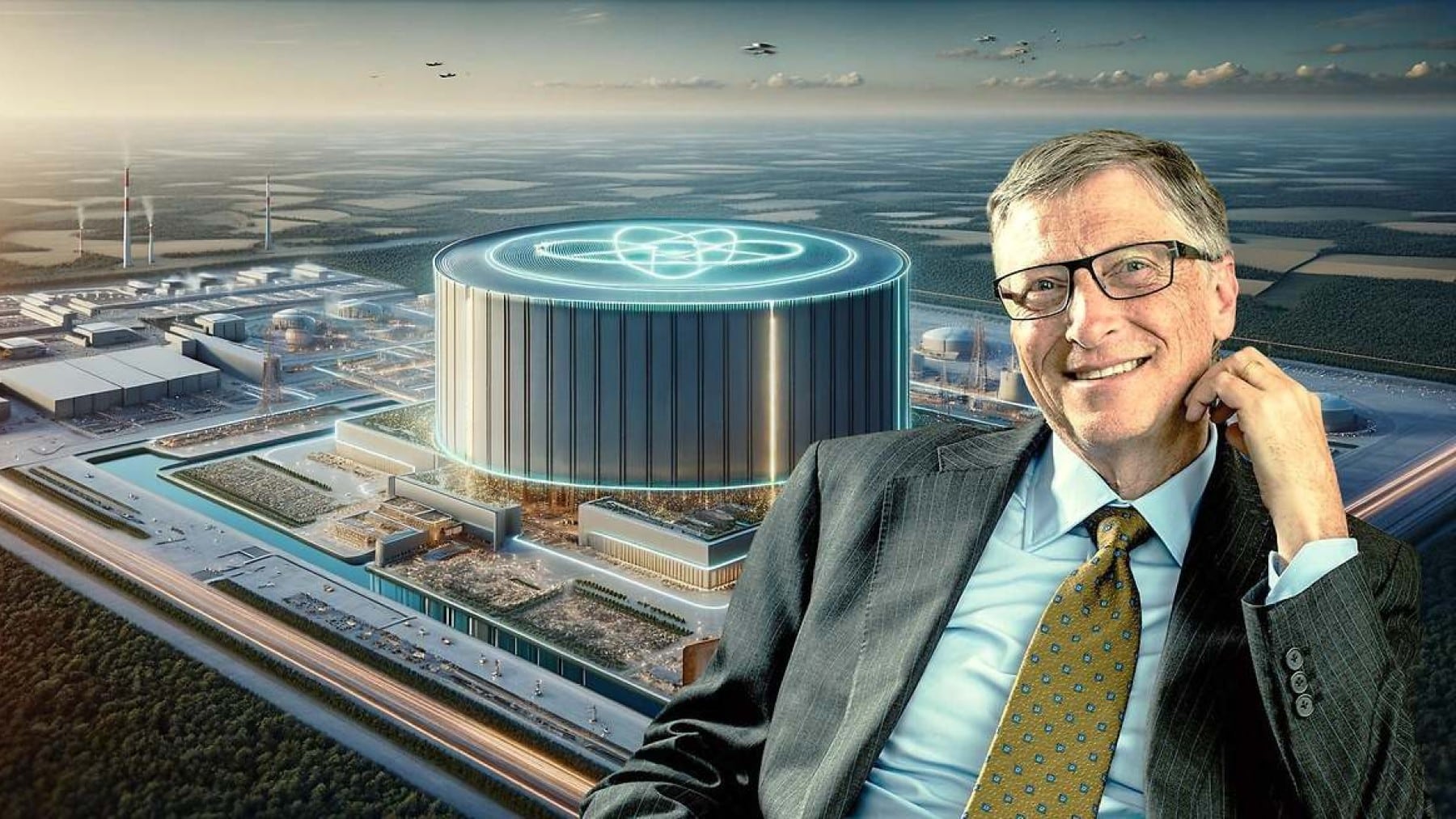


Bill Gates Surprises By Advocating That Natrium, An Advanced Nuclear Reactor Technology, Will Be The Energy Solution Of The Future, Surpassing Other Options.
When talking about the future of energy, many imagine wind farms, solar panels, and even nuclear fusion.
However, for billionaire Bill Gates, co-founder of Microsoft, the energy future lies in something less obvious: the Natrium, an advanced nuclear reactor that promises to be safer, more efficient, and more accessible.
Gates believes this technology can transform the way the world generates electricity, solving major energy challenges.
-
Spanish Startup Develops Europe’s Densest Solid-State Battery at 402 Wh/kg

-
Telescope Launched 80 Billion km from Earth Could Use the Sun as a Giant Lens to Magnify Exoplanets, Potentially Revealing Continents, Oceans, and Signs of Life

-
Australian Researcher Turns Discarded Coffee Grounds into Eco-Friendly Bricks with 80% Less Pollution and Double the Strength Required by Law

-
Scientific Tool Developed in Brazil Aims to Prevent Femicide by Identifying Risk Factors and Strengthening Women’s Protection



What Is Natrium?
Unlike traditional nuclear plants, which use water to cool their reactors, Natrium relies on liquid sodium. This choice provides significant advantages:
- High Thermal Efficiency: Sodium can absorb up to eight times more heat than water, increasing energy production.
- Reduced Cost: Being an abundant element in the earth’s crust, sodium is an economical and easily accessible option.
- Enhanced Safety: Unlike water, sodium does not boil easily, reducing the risks of radioactive leaks.
- Advanced Storage: The reactor includes a molten salt system that stores energy for long hours, allowing greater stability in electricity supply, especially in partnership with renewable sources like solar and wind.
The first Natrium plant is under construction in Wyoming, USA, and is expected to begin operating by 2030. With a capacity of 345 megawatts, the facility could supply approximately 400,000 households.
The responsible company, TerraPower, also plans even more powerful reactors, with a capacity of up to 500 megawatts.

Why Natrium Could Be The Ideal Solution?
In addition to the technical advantages, Natrium also promises to be an economically viable solution. Traditional nuclear reactors can exceed US$ 25 billion in construction costs.
On the other hand, Natrium, thanks to its simplified design, has an estimated cost of only US$ 1 billion.
Bill Gates describes Natrium as “the most advanced nuclear technology in the world“.
For him, the reactor can break the historical barriers of nuclear energy, such as high costs and safety concerns. If this happens, Natrium has the potential to change public perception of nuclear energy and significantly contribute to a more sustainable future.
Challenges and Resistance
Despite the optimism, the path to adopting Natrium will not be simple. The initial project in Wyoming is an important milestone, but demonstrating its long-term reliability will require rigorous testing.
Moreover, there is a major challenge in overcoming public skepticism. Disasters like Chernobyl and Fukushima have left a legacy of fear regarding nuclear energy.
TerraPower will need to invest heavily in communication, demonstrating how Natrium’s advancements minimize risks. Engaging local communities and dialoguing with environmentalists will also be crucial to gain the necessary trust.
Another obstacle lies in regulatory issues. Despite being promising, the technology must meet strict nuclear safety standards, which may delay its large-scale deployment.
Natrium and The Fight Against Climate Change
If successful, Natrium could revolutionize the energy sector, especially in the fight against climate change.
By providing a clean, safe, and economically viable alternative, the technology could drastically reduce the dependence on fossil fuels, which are responsible for a large portion of greenhouse gas emissions.
Additionally, Natrium’s ability to store energy makes it an ideal partner for renewable sources that suffer from intermittency.
During the day, excess energy generated by solar panels can be stored in the reactor’s molten salt system, ensuring a stable supply at night.





Super interessante!
Pelo pouco que li, a fusão nuclear é a que produz menos lixo (portanto, a mais limpa), além de ser bastante segura. Claro que precisa avançar muito (o custo para produzir ainda não compensa), mas com os avanços em IA, computação quântica, etc., nos deixa cada dia mais próximos da utilização da mesma.
Mais alguém concorda que esse sr. é um ps1cop4t4?