Portuguese
  Spanish


Basquevolt, a solid-state battery startup born in the Spanish Basque Country, announced that its latest cell has reached an energy density of 402 watt-hours per kilogram — a number that surpasses any commercially available conventional lithium-ion battery today and represents the European record in energy density for solid-state batteries in a full cell, not just in an individual laboratory component.
What is a solid-state battery and why 402 Wh/kg matters
Every conventional lithium-ion battery has a liquid electrolyte — an organic solvent that allows lithium ions to move between the anode and cathode during charging and discharging. This liquid electrolyte is both what enables the battery to function and its greatest weakness: it is flammable, degrades over time, and limits the operating temperature.
Solid-state batteries replace this liquid electrolyte with a solid — ceramic, polymer, or glass. The theoretical result is a safer, more energy-dense battery with a much longer lifespan and capable of operating over a wider temperature range.
The number 402 Wh/kg is what engineers call gravimetric energy density — energy per unit of weight. For reference: the best conventional lithium-ion batteries for electric vehicles — Tesla’s 4680 cylindrical cells — reach about 280-300 Wh/kg. Basquevolt is 30-40% above this in a pouch format cell that can be stacked in battery modules.
-
Telescope Launched 80 Billion km from Earth Could Use the Sun as a Giant Lens to Magnify Exoplanets, Potentially Revealing Continents, Oceans, and Signs of Life

-
Australian Researcher Turns Discarded Coffee Grounds into Eco-Friendly Bricks with 80% Less Pollution and Double the Strength Required by Law

-
Scientific Tool Developed in Brazil Aims to Prevent Femicide by Identifying Risk Factors and Strengthening Women’s Protection
-
Brazil Sets New LED Bulb Efficiency Standards to Save Energy for 14 Million Homes by 2028



Why Spain and why the Basque Country
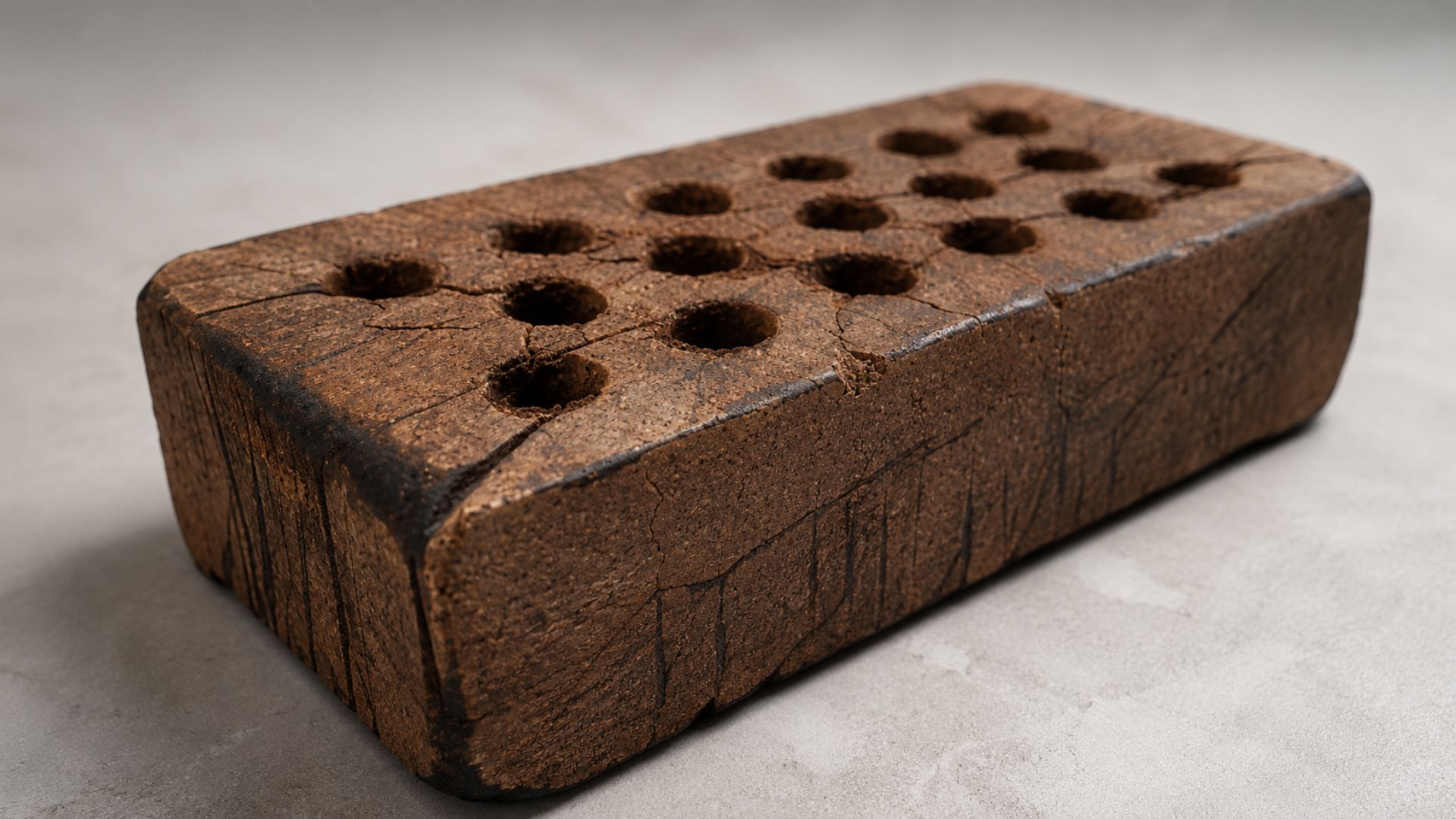
Basquevolt was founded in Vitoria-Gasteiz in 2021, supported by the Basque government and CIC Energigune — Cooperative Research Center of Energies, which is one of Europe’s leading battery materials research centers. The Basque Country has a metallurgical and advanced materials industrial tradition dating back to the 19th century when Basque steel fueled Spanish industrialization.
This materials infrastructure — specialized furnaces, ceramic processing equipment, expertise in metal alloys — is essential for manufacturing solid-state batteries. Basquevolt’s ceramic solid electrolyte uses lithium, lanthanum, and zirconium oxide — LLZO — which needs to be processed at temperatures above 1,100 degrees Celsius with precise atmosphere control.
The startup aims to have a semi-industrial scale pilot production line operational by 2026, with a capacity of 100 megawatt-hours annually — enough to equip a few thousand electric vehicles.
What still needs to be resolved before reaching the electric car
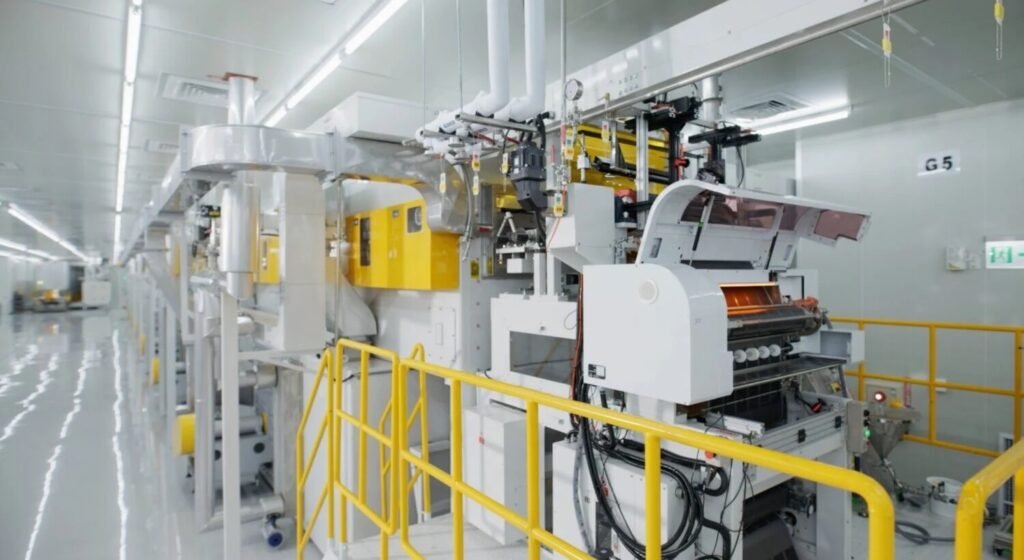
Honesty compels us to admit that there is a chasm between achieving 402 Wh/kg in a laboratory and producing solid-state batteries at gigafactory scale. The central problem is cost: today, a high-performance solid-state cell costs between twenty and fifty times more per unit of energy than a conventional lithium-ion cell.
The second problem is the interface. Solid-state batteries have a contact resistance at the junction between the solid electrolyte and the anode/cathode that generates heat and degrades the cell over time. Basquevolt uses a lithium metal anode — which has the highest capacity of all possible anodes but is the most difficult to work with because lithium metal is extremely reactive.
The third problem is cycling: the cell needs to survive hundreds of charge/discharge cycles while maintaining more than 80% of the original capacity. Achieving 402 Wh/kg with good capacity retention after 500 cycles would be a very significant milestone.
Who is competing and what does Brazil have to do with it
The race for solid-state has multiple competitors: Japanese Toyota and Panasonic are working together on a development that promises solid-state cells for vehicles in 2027-2028. Chinese CATL has announced semi-solid cells already available. American Solid Power has a partnership with BMW and Ford. South Korean Samsung SDI has advanced projects. Basquevolt enters as the most promising European competitor in a race that will determine who dominates the second generation of electric vehicles.
For Brazil, the direct correlation is lithium. Solid-state batteries use more lithium per unit of energy than conventional ones — the lithium metal anode is almost pure lithium. Brazil has the fifth-largest lithium reserve in the world and still produces almost nothing on an industrial scale. If solid-state wins the race and demand for lithium skyrockets, Brazil will want to be within the value chain — not just exporting raw ore.
Read also: the world’s first lithium-sulfur battery factory | AI data centers that have already contracted nuclear reactors.
Do you think solid-state batteries will reach the electric vehicle market at scale before 2030, or are there still many technical and cost obstacles ahead? Comment here.