Portuguese
  Spanish


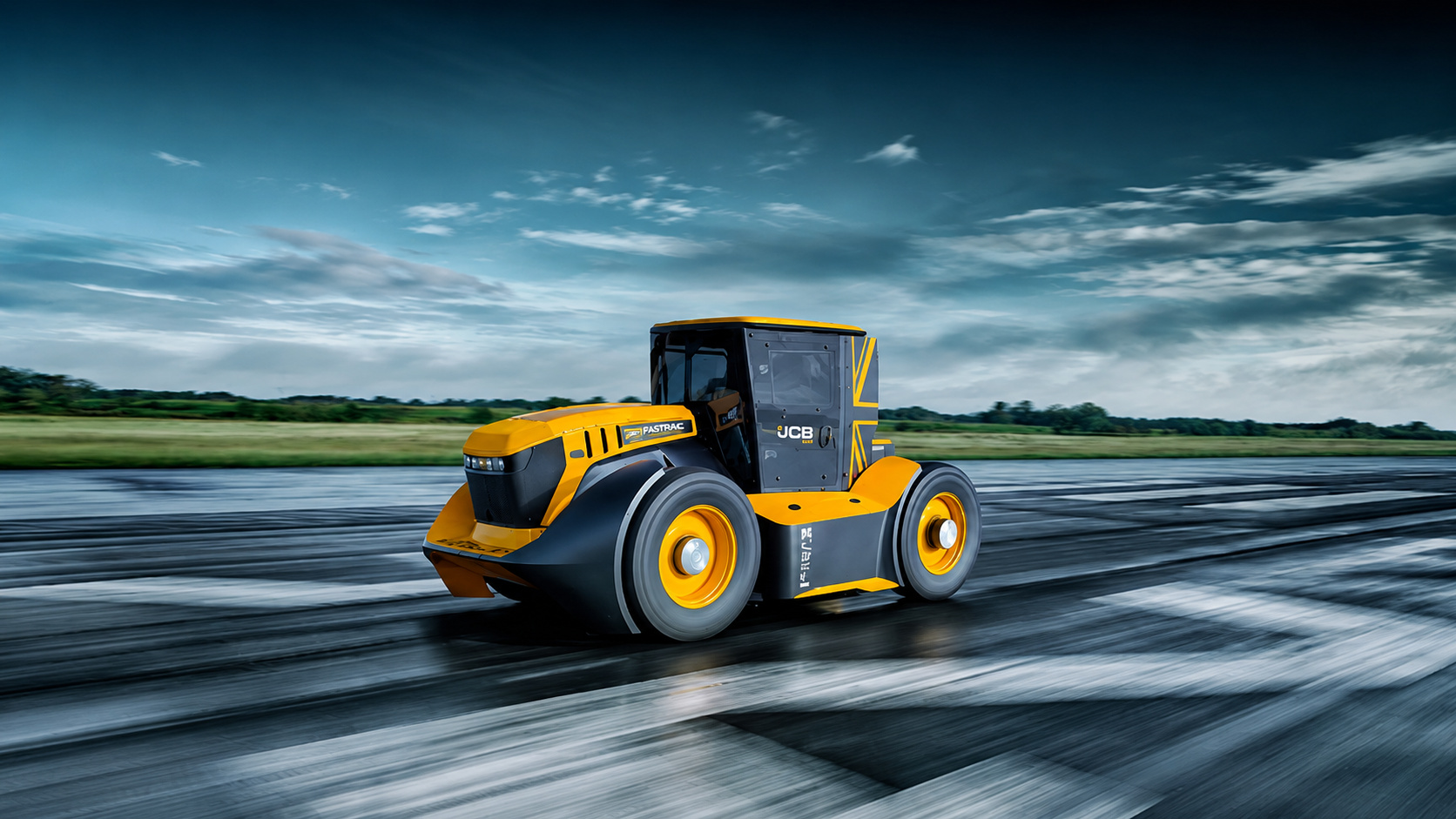

The JCB Fastrac Two became known as the world’s fastest modified tractor by recording an official average of 217.570 km/h and a maximum close to 247.5 km/h. Created from the Fastrac line, the model received a diesel engine of more than 1,016 horsepower, a lowered cabin, aerodynamic changes, and support from Williams Advanced Engineering
The JCB Fastrac Two tractor made history as one of the most unlikely agricultural machines ever taken to a speed track. The modified tractor from British manufacturer JCB was recognized by the Guinness World Records as the world’s fastest modified tractor, by recording a bidirectional average of 135.191 mph, equivalent to about 217.570 km/h.
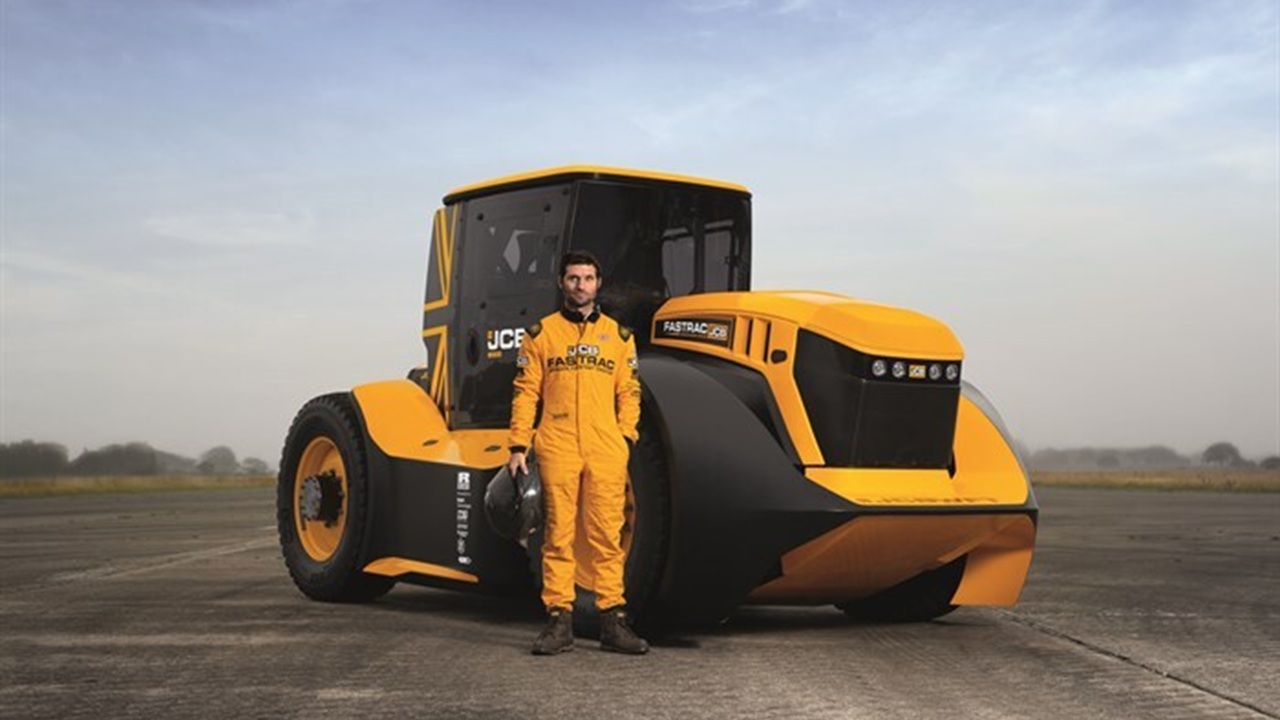
The feat was achieved at Elvington Airfield in the United Kingdom, with British pilot and presenter Guy Martin at the wheel. The official mark considered two passes in opposite directions, a procedure used in speed records to reduce external interferences, such as wind or track inclination.
During the attempt, the Fastrac Two went even further in maximum speed. JCB reports that the tractor reached 153.771 mph, approximately 247.470 km/h, before closing the officially recognized average.
-
At 86, mountaineer Carlos Soria becomes the oldest person ever to summit an 8,000-meter peak, reaching the top of Manaslu in Nepal.

-
Brazil Secures Spot in International Mathematical Olympiad as Students Excel in One of the World’s Most Competitive Selections, Highlighting Growth in STEM Education Among Young Talents

-
June 2026 Heatwave in France Depletes “Blanc de Meudon” as Residents Use Chalk Powder to Cool Homes by 3 to 7°C Without Air Conditioning
-
Frustrated by delays, Brazilian entrepreneur builds toll road in 3 days to avoid 23 km detour.


The tractor was born from a real agricultural machine but was deeply modified
The project’s base came from the JCB Fastrac line, a family of agricultural tractors known for running at higher speeds than many conventional models. In production configuration, the Fastrac series can reach about 69 km/h, according to Mobility Engineering, a publication linked to SAE.
But the Fastrac Two was not just a common tractor “tweaked” to race. JCB itself describes the equipment as a highly modified version of the Fastrac 8000 series, specifically prepared to break records. The company states that the model used a JCB Dieselmax engine of 7.2 liters and six cylinders, with power exceeding 1,016 hp.
This distinction is important to avoid confusing the reader. The record does not mean that a conventional agricultural tractor can reach more than 200 km/h. The Fastrac Two maintained a technical connection with the production line but underwent a complete transformation in engine, aerodynamics, weight, stability, and cooling.
Aerodynamics was decisive in transforming a tractor into a record-breaking machine
One of the biggest challenges was obvious: tractors are not made to cut through the air at high speed. They have high bodies, large frontal areas, huge tires, and focus on strength, traction, and stability in the field. To change this behavior, JCB worked with the support of Williams Advanced Engineering, an engineering company associated with high-performance projects.
The standard cabin was lowered by 200 mm and narrowed by 300 mm, reducing the frontal area and helping the vehicle face less aerodynamic resistance. This alteration was one of the most visible changes of the Fastrac Two compared to a common agricultural tractor.
JCB also reported that the Fastrac Two was developed as an evolution of the Fastrac One, previously used by the company to establish a British record. The second vehicle was 10% lighter and received a more refined design to achieve higher speed.
Dieselmax engine exceeded a thousand horsepower
Under the hood, the Fastrac Two carried a JCB Dieselmax six-cylinder 7.2-liter diesel engine, prepared to deliver more than 1,016 hp. The number is confirmed by JCB and also by Denso, the company that participated in the development of the cooling system used in the project.
The setup also produced torque greater than 2,500 Nm, equivalent to approximately 255 kgfm. Therefore, saying that the equipment had “more than 240 kgfm” is correct, although the more precise conversion is slightly above this value.
This power was essential to push a large and heavy machine to speeds normally associated with sports cars. Unlike a traditional racing vehicle, the Fastrac Two started from an agricultural architecture, making the challenge even more complex.
Cooling also became a key part of the project
The extreme power brought another problem: heat. Denso Marston reported that it developed a specific cooling system for the record-breaking tractor, as the modified Dieselmax engine needed to operate under demands far above normal agricultural use.
In a common tractor, the engine works for long periods under heavy load, but at much lower speeds. In the Fastrac Two, the challenge was different: sustaining extremely high power in a short, intense attempt with a large thermal load.
Therefore, the record did not depend only on “putting a strong engine” in a tractor. The equipment required integration between engine, turbocharging, cooling, aerodynamics, transmission, tires, and safety.
Fastrac Two surpassed JCB’s previous record
Before the Fastrac Two’s world record, JCB had already drawn attention with the Fastrac One. In June 2019, this first project recorded an average of 103.6 mph, about 166.7 km/h, setting a previous record for modified tractors.
A few months later, the manufacturer returned to the track with a lighter, lower, and more aerodynamic machine. The result was a significant leap: from just over 166 km/h to an official average exceeding 217 km/h.
This evolution showed that the project was not just an isolated promotional action. JCB used the Fastrac Two to demonstrate technical capability in engineering, diesel engine preparation, and aerodynamic solutions applied to an unusual platform.
A tractor that became a high-speed laboratory
The JCB Fastrac Two became famous precisely for the contrast. The image of a tractor is usually associated with the field, heavy work, and low speed. In this case, the machine was taken to a track and reached numbers comparable to sports vehicles.
Even so, the equipment should not be understood as a production tractor capable of running at over 200 km/h. The record belongs to a modified version, built for a specific purpose and validated by Guinness in the category of fastest modified tractor.
The final result was a showcase of extreme engineering: a tractor based on the Fastrac family, with a diesel engine of over a thousand horsepower, lowered cabin, optimized bodywork, and an official average speed of 217.570 km/h. More than a mechanical curiosity, the Fastrac Two showed how far technical preparation can take a machine originally created for agricultural work.