Portuguese
  Spanish


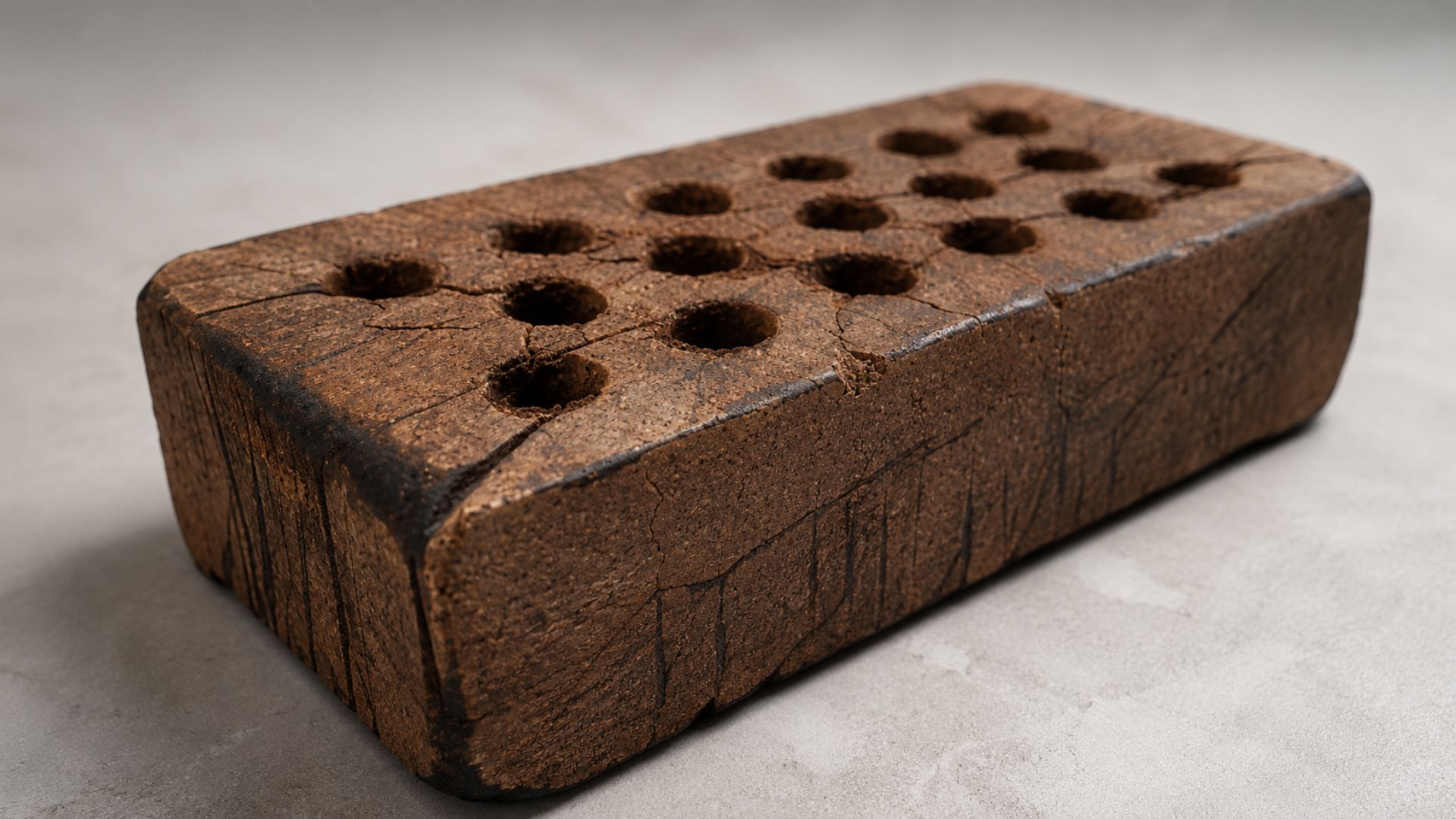

In Australia, researchers from Swinburne transformed discarded coffee grounds into a coffee ground brick baked at less than 400 degrees: made of clay and coffee, it pollutes up to 80% less and is twice as strong as required by law, promising to reduce construction costs.
That coffee ground left in the filter can become a wall. That’s what researchers from Swinburne in Australia demonstrated by transforming coffee waste into a real brick. Instead of throwing the grounds in the trash, they mixed it with clay and baked the piece at a much lower temperature than a common brick. The result is a coffee ground brick that pollutes up to 80% less and is twice as strong as the law requires.
The innovation was announced by Swinburne itself, the Australian university behind the project. The secret lies in the temperature: the brick is baked at less than 400 degrees, compared to over a thousand degrees for a traditional brick, which reduces energy consumption. Less heat, less emission and more strength, all from a waste that was headed for the trash.
A brick baked at less than 400 degrees
A common brick needs to be fired in kilns at over a thousand degrees, a process that consumes a lot of energy and releases a lot of carbon.
-
Spanish Startup Develops Europe’s Densest Solid-State Battery at 402 Wh/kg

-
Telescope Launched 80 Billion km from Earth Could Use the Sun as a Giant Lens to Magnify Exoplanets, Potentially Revealing Continents, Oceans, and Signs of Life

-
Scientific Tool Developed in Brazil Aims to Prevent Femicide by Identifying Risk Factors and Strengthening Women’s Protection
-
Brazil Sets New LED Bulb Efficiency Standards to Save Energy for 14 Million Homes by 2028




The Swinburne coffee ground brick, on the other hand, is baked at less than 400 degrees, a temperature about 80% lower. This changes everything in the energy bill.
By mixing coffee grounds with clay and an activator, the team achieved a firm brick without the need for extreme heat. Less hot kiln means less fuel, less emission, and less cost. It’s the same wall brick, just made in a much more economical way.
It’s not coffee concrete: it’s brick
It’s worth distinguishing this invention from a similar one that has already circulated. Researchers at RMIT, also in Australia, created a concrete reinforced with coffee grounds, where the residue becomes a powder that makes the cement stronger.
The case of Swinburne is different: here the coffee grounds do not go into the concrete, but rather become the baked clay brick itself. These are two distinct paths for the same residue.
In concrete, coffee reinforces the cement mix; in the brick, it becomes part of the fired block. Swinburne focuses on replacing the traditional clay brick, not on improving concrete. Therefore, the coffee grounds brick is a novelty on its own.
How coffee grounds become brick
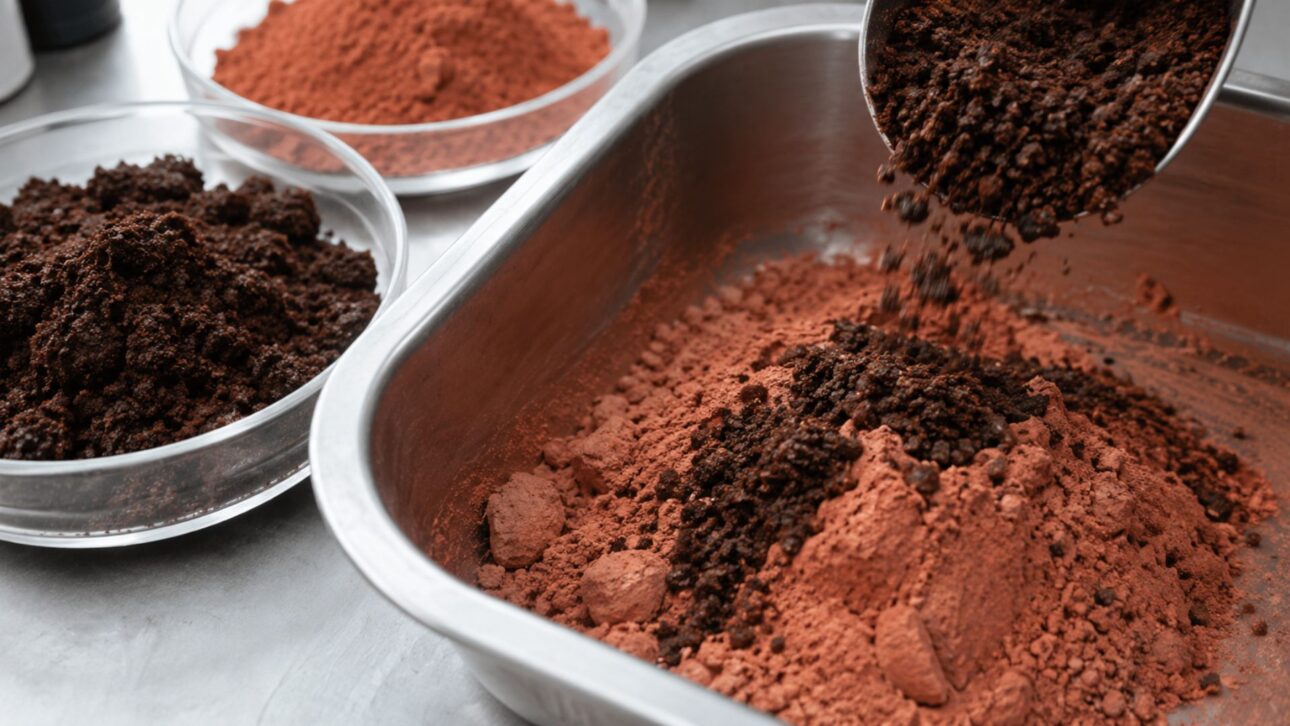
The process is simpler than it seems. The Swinburne team takes used coffee grounds, mixes them with clay, and adds an alkaline activator, an ingredient that helps the material gain firmness.
This mixture is then molded and baked at a low temperature, turning into a coffee grounds brick ready for construction. The grounds, which would be discarded, become part of the raw material.
Clay remains the base, but with a sustainable reinforcement from coffee. In the end, it results in a common-looking construction block, but green in origin. It’s recycling transformed into building material.
Pollutes 80% less and is 2x stronger than the law requires
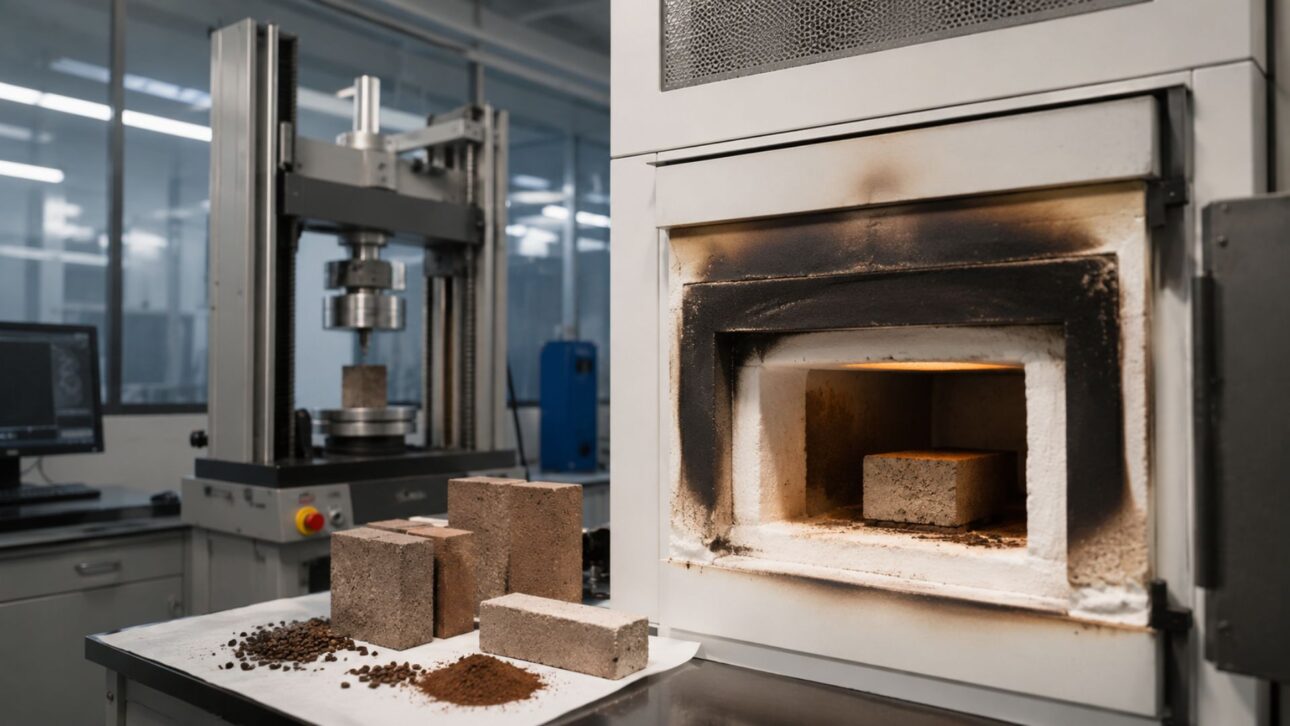
Being baked at a much lower temperature, the brick reduces carbon emissions related to energy by up to 80%, compared to traditional bricks, according to Interesting Engineering.
And it’s not fragile: the block’s strength reaches double the minimum required by the Australian construction standard. In other words, it pollutes much less and still supports more weight.
Generally, sustainable material comes with the reputation of being weaker, but here it’s the opposite. Having a cleaner and stronger brick at the same time is the kind of rare combination that catches the industry’s attention.
From Swinburne to the market, with Green Brick
The invention has already moved from the laboratory to business. In 2025, Swinburne announced a technology licensing agreement with the company Green Brick, to bring the bricks to market.
Moving from prototype to establishing a commercial partnership is what separates a good idea from a product that can actually reach construction sites. With the licensing, large-scale manufacturing is closer.
Swinburne provides the science, and Green Brick the production. It is the bridge between research and actual construction.
Why this matters for the construction industry
The impact goes far beyond a pretty brick. Brick manufacturing is one of the most polluting activities in the construction industry, precisely because of the high-temperature kilns.
Reducing this heat by 80% would tackle one of the largest sources of emissions in the sector, without compromising strength. Add to this the reuse of coffee grounds, a waste that Australia produces by the ton every year.
Instead of rotting in a landfill and releasing gases, the coffee becomes a wall. For the construction industry, it’s a chance to reduce the carbon footprint by using abundant waste.
What the invention shows
The biggest lesson is that sustainability and performance can go hand in hand. Swinburne’s coffee ground brick pollutes less, costs less energy, and is still stronger than required, debunking the idea that green material is weak material.
Of course, it’s important to stay grounded. The technology still needs to gain industrial scale and prove it works in large volumes, and the licensing with Green Brick is the beginning of this journey, not the end.
Even so, seeing Australia’s coffee grounds turn into a cleaner and stronger brick is the kind of innovation that points to the future of the construction industry. From coffee shop waste to wall block, Swinburne has shown that it’s possible to build using less energy and throwing away less, and that the next wall of your house could start at the bottom of your cup.
And you, would you live in a house made of coffee ground bricks? Tell us in the comments what you think of this type of sustainable material.