






 Portuguese
  Spanish
  2 min of reading


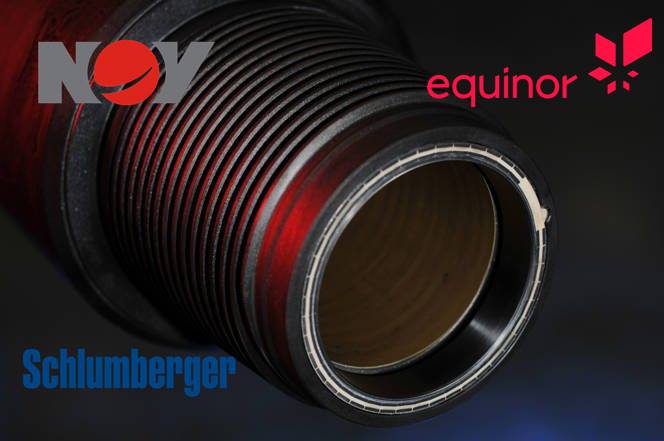
Equinor, Norway, Is Intensifying Its Use of Wired Drill Pipe to Acquire Real-Time Subsurface Data During Drilling Operations, in Line with Corporate Digitalization Strategy and to Prepare for Automated Drilling.
The oil company said on Wednesday that NOV and Schlumberger had received corporate framework agreements for global deliveries of wired drill pipes for Equinor. Both suppliers utilize IntelliServ solutions, which are owned by NOV and Schlumberger.
In addition to the corporate framework agreements with the two suppliers, commitments have been made regarding the use of wired drill pipes provided by NOV for specific operations, such as Mariner in the United Kingdom, the West Hercules exploration campaign on the Norwegian continental shelf, and the Transocean Enabler drilling campaign on Trestakk.
The estimated value of this scope of work is around 300 million Norwegian crowns (US $ 35.2 million).
-
Dona Floripes is 103 years old, drinks Coca-Cola every day, dances alone at home, makes the doctor wait, and says she doesn’t consider herself old because old is what you throw away.
-
Dona Floripes is 103 years old, drinks Coca-Cola every day, dances alone at home, makes the doctor wait, and says she doesn’t consider herself old because old is what you throw away.
-
Dona Floripes is 103 years old, drinks Coca-Cola every day, dances alone at home, makes the doctor wait, and says she doesn’t consider herself old because old is what you throw away.
-
The 7-seater SUV has become an alternative for those who need space without spending much, combining a 260 hp V6 engine, automatic transmission, and the size of a large utility vehicle for less than R$ 80,000: meet the 2012 Hyundai Veracruz.
The contracts allow the technology to be used across all Equinor facilities worldwide. The total contract value may exceed NOK 1 billion during the first three years of the contract period.
Speed and Power Control
Geir Tungesvik, Head of TPD Drilling & Well, said: “This technology gives us a deeper understanding of what is happening inside and around the well during drilling, making it easier to make the right choices based on real-time data during drilling operations. We will eliminate costly errors, such as obstructions in the open hole during and after drilling and having to drill deviated paths. This also gives us a better understanding of the reservoirs and allows us to optimize well placement. We become more efficient because we can control the speed and power of drilling concerning the most suitable threshold values underground.”
He says that Equinor already has good experience using this technology during last year’s Barents Sea exploration campaign.
“That is why we are expanding the use of this technology while updating all platforms and some rigs in 2018 and 2019 to prepare for more automated drilling. This technology is an important element of our digitalization strategy,” he says.
According to Equinor, the wire inside the drill pipe allows high-speed data transfer. Signals transmitted through the drill pipe are estimated to be 10,000 times faster than pressure waves from drilling mud in conventional drill pipes.
Peggy Krantz-Underland, Head of Procurement at Equinor, stated: “We are pleased to award these global contracts and look forward to cooperating with NOV and Schlumberger. At the same time, we want the industry to continue developing this type of technology.
Technology development in this segment is progressing rapidly, and we are eager to see the development of other solutions in the market that may be relevant for us to test in the short or long term.”







Be the first to react!