Portuguese
  Spanish


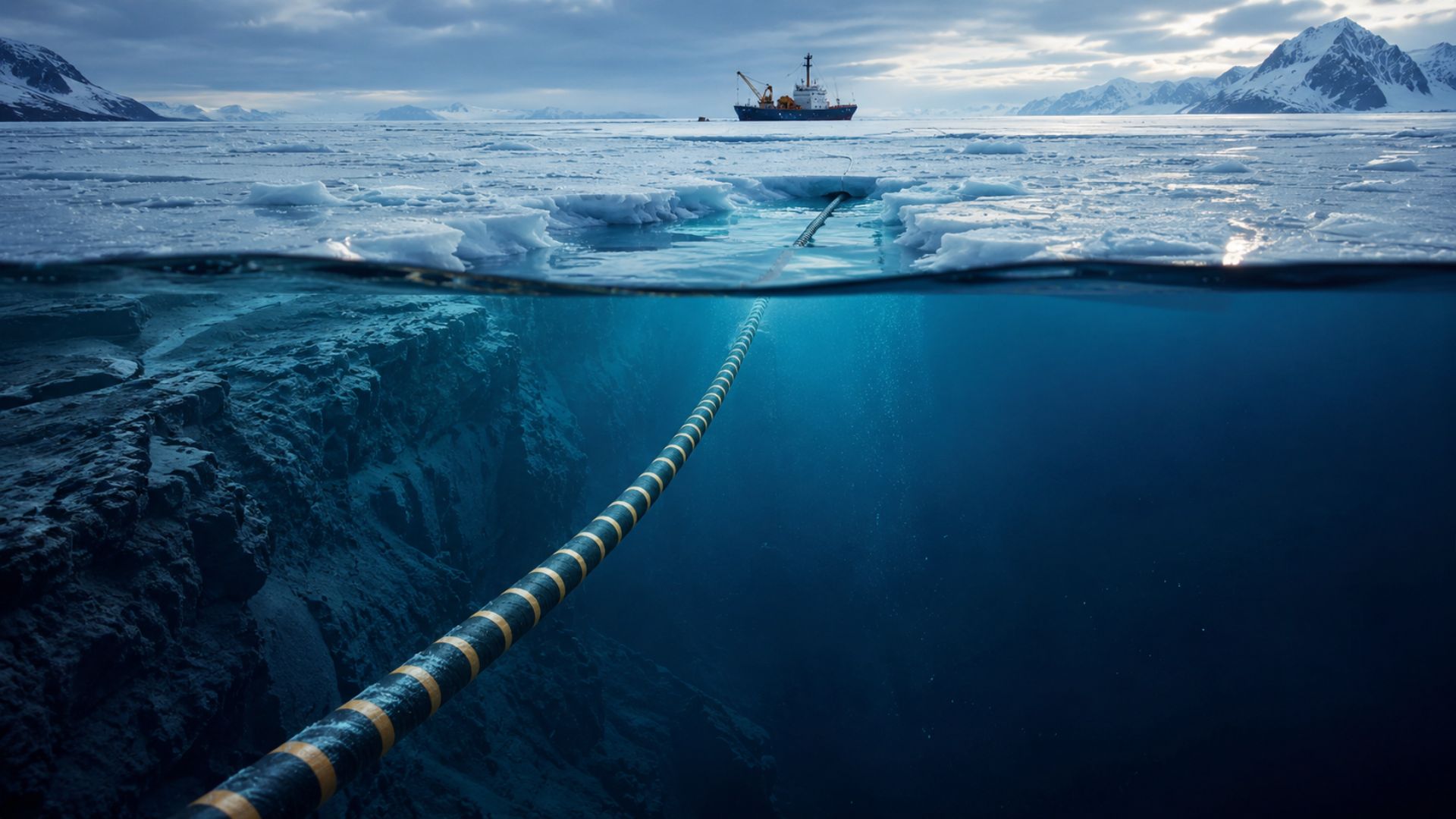


The European Union advances with the Polar Connect project, a submarine fiber optic cable that will cross the Arctic to connect Scandinavia to Asia without passing through the Red Sea. Today, about 90% of Europe’s internet traffic passes through this region, which has suffered multiple interruptions from missiles, ships, and geopolitical tensions. According to information released by the channel Olhar Digital, the cost of the submarine cable is estimated at 2 billion euros, with an expected operation by 2030. The project faces unprecedented challenges, including ice that can scrape and break the cables at depths of up to 4,000 meters.
Europe is about to build a submarine cable under the most extreme conditions on the planet to solve a problem that has become impossible to ignore. The Polar Connect project plans to install fiber optics at the bottom of the Arctic Ocean, connecting Scandinavia to the Asian continent via a route that completely avoids the Middle East. Currently, about 90% of Europe’s internet traffic passes through the Red Sea, a region that has suffered at least seven cable breaks in the last two years caused by missiles launched by the Houthi group, anchors dragged by cargo ships, and accidents in conflict zones.
The Polar Connect submarine cable is a direct response to this vulnerability. In 2024, a missile hit a cargo ship in the Bab el-Mandeb strait, and the vessel dragged its anchor, breaking three cables at once. In September 2025, another four cables were damaged by a commercial ship in the same region. Recent attacks by the United States and Israel on Iran have rendered alternative land routes that were being planned to bypass the Persian Gulf unfeasible. Europe concluded that it needs a path that no conflict in the Middle East can affect.
What is the Polar Connect project and how much does it cost
The Polar Connect is a submarine fiber optic cable that will cross the Arctic Ocean via the North Pole, directly connecting Scandinavia to Asia. The total cost of the project is estimated at 2 billion euros, and the goal is for the infrastructure to be operational by 2030. The cable promises to increase the resilience of the European network and reduce latency in data transmission between the two continents.
-
Polar Air Mass to Hit Brazil: Temperatures to Plummet in Nine States, Near Freezing in the South with Frost Risk Until Monday

-
Chinese “dark factories” produce electric cars 24/7 with minimal human intervention, as Zeekr assembles 800 units daily, raising concerns in Brazil.

-
Spectacular Green Aurora Seen from Space Illuminates International Space Station, Captivates French Astronaut

-
In Tasmania, a Beach Features a Natural Stone Mosaic Formed by Earth’s Cracks Millions of Years Ago



The project is part of a broader European Union strategy to ensure what policymakers call “data sovereignty”: the ability to control the physical infrastructure through which information travels. While the submarine cable through the Red Sea is subject to military attacks and naval accidents, the Arctic route passes through international waters under the jurisdiction of European allied countries, such as Norway and Iceland.
The challenges of installing a submarine cable under the ice
The installation of the submarine cable in the Arctic faces technical challenges that no previous project has had to solve. Sea ice can scrape the ocean floor in shallow depths and damage cables that are exposed, and repairs can only be carried out during the short Arctic summer, when the ice cover decreases enough to allow the operation of specialized ships.
Previous experience with cables in the Arctic is not encouraging. The company Quintillion activated a section of submarine cable on the northern coast of Alaska, but the structure was broken by sea ice in June 2023. In January 2025, an iceberg hit the line again, leaving the system inoperative for eight months because there are no repair ships adapted as icebreakers. The rest of the route planned by Quintillion was never implemented. The central question about Polar Connect is whether Europe will be able to overcome the same obstacles that stalled smaller projects.
Why 90% of European internet passes through the Red Sea


The concentration of data traffic in the Red Sea is the result of infrastructure decisions made in the 1990s and 2000s, when the route through the Suez Canal was considered safe and efficient. The submarine cables connecting Europe to Asia were installed following existing commercial navigation routes, passing through the Mediterranean, Suez Canal, Red Sea, and Indian Ocean.
This concentration was never a problem until instability in Yemen and the Persian Gulf turned the region into a permanent risk zone. The Houthis, an armed group that controls part of Yemen, began attacking commercial ships in the Bab el-Mandeb strait in 2023, and collateral damage to the submarine infrastructure became routine. For Europe, each broken submarine cable means reduced capacity, increased latency, and risk of interruptions in services ranging from banking operations to video conferences.
What Polar Connect changes for the global internet
If the submarine cable is completed by 2030, Europe will have for the first time a data route to Asia that does not depend on any active conflict zone. The redundancy offered by the Arctic route means that even if all the cables in the Red Sea are simultaneously severed, the European internet will continue to function via the North Pole.
The Arctic route also offers an advantage in latency for connections between Northern Europe and East Asia, because the path through the North Pole is geometrically shorter than the route through the Suez Canal. However, maintenance costs in a polar environment are significantly higher than in tropical waters, and the long-term economic viability depends on Europe being able to develop repair ships capable of operating in icy conditions.
Did you know that 90% of Europe’s internet passes through a war zone? Do you think it’s worth investing 2 billion euros to lay a submarine cable under the ice of the North Pole? Tell us in the comments.