






 Portuguese
  Spanish
  3 min of reading
  1 comment


Genetic Advancement Promises Self-Sufficient Crops That Transform Atmospheric Nitrogen Into Fertilizer
Researchers from different parts of the world have recently developed a simpler way to enable plants to fix nitrogen on their own, without the need for fertilizers.
This advancement, which could transform modern agriculture, is based on a minimum of seven identified genes that allow plant cells to produce the enzyme needed to convert atmospheric nitrogen gas into fertilizer.
The Challenge of Nitrogen Fixation
The production of nitrogen fertilizers is an essential process for agriculture, as nitrogen is one of the primary nutrients required for plant growth. However, plants do not directly obtain nitrogen from the air, leading to the necessity for industrial fertilizers.
-
The invisible danger inside the house: plugging too many devices into the same outlet and spreading extensions throughout the rooms can overload the electrical network, silently heat wires, and turn a common habit into one of the leading causes of house fires.

-
Goodbye traditional laundry: Roborock launches washer and dryer with super hydrolysis, microbubbles, 99.99% sterilization, low-temperature drying, automatic detergent, app control, and cycles to remove stains, odors, mites, and bacteria from clothes.

-
It is now possible to generate energy without batteries: new flexible material transforms body heat into electricity and paves the way for more efficient, autonomous, and comfortable wearable devices, with the potential to revolutionize personal electronics in the coming years.
-
Leaving the charger plugged in without a phone consumes energy or is it a myth? Experts call the phenomenon “phantom consumption” and warn that dozens of devices on standby can add up on the bill over the year.



The Haber-Bosch process, developed over a century ago, revolutionized the conversion of atmospheric nitrogen into a usable form for plants. However, its large-scale production relies on fossil fuels and is highly polluting.
The Impact of the New Method
A recent development by scientists could have a significant impact on agricultural productivity and the reduction of synthetic fertilizer use. Major food crops, such as corn and rice, could potentially fix nitrogen on their own, using only sunlight.
This would slightly reduce the use of fertilizers, which not only represents a significant cost saving for farmers but also brings environmental benefits by decreasing the carbon footprint associated with the production of these inputs.
International Collaboration
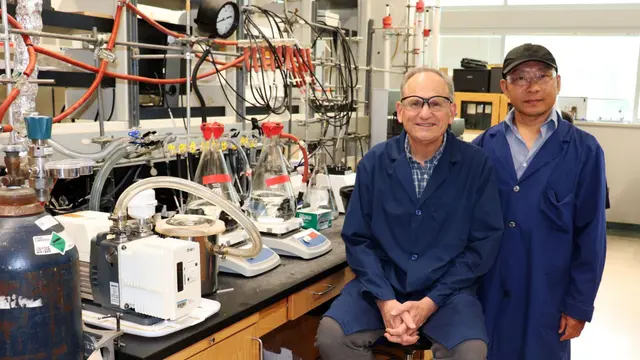
The project that resulted in this innovative discovery is the result of collaboration among scientists from Utah State University (USA), Polytechnic University of Madrid (Spain), Carnegie Mellon University (USA), and other research centers.
Biochemist Lance Seefeldt from Utah State University and senior scientist Zhi-Yong Yang led the investigations with a multidisciplinary team, including specialists in biotechnology and genomics.
The researchers’ work was published in the November 6, 2024 edition of the scientific journal Proceedings of the National Academy of Sciences.
How Nitrogen Fixation Works in Plants
Nitrogen fixation is the process by which plants convert the nitrogen gas present in the air into usable compounds for their growth.
Traditionally, this process occurs in some plants, such as legumes, which have a symbiotic relationship with bacteria capable of performing this conversion.
Now, scientists are working to transfer this ability to essential food crops, such as rice and corn, through the introduction of specific genes.
A research team managed to reduce the number of genes required for nitrogen fixation from nine to seven, simplifying the process.
By placing these genes in the mitochondria and chloroplasts of plants, researchers believe that crops can generate enough energy to fix nitrogen directly from sunlight, without the need for external fertilizers.
Social and Environmental Benefits
In addition to the possibility of reducing dependence on chemical fertilizers, the discovery has enormous potential to help countries facing difficulties in access to agricultural inputs.
Regions in Sub-Saharan Africa, for example, face challenges in importing fertilizers due to a lack of infrastructure or have exacerbated food scarcity issues.
Furthermore, reducing the production of nitrogen fertilizers also has the potential to mitigate the environmental impacts associated with their large-scale use.
According to Seefeldt, nearly 2% of global fossil fuel consumption is directed toward fertilizer production, resulting in significant greenhouse gas emissions.
Future Perspectives
With the discovery of the essential genes for nitrogen fixation, research is also extending to areas beyond terrestrial agriculture, including the potential for food production in space missions.
Seefeldt’s group is working in collaboration with NASA to explore how these findings can be applied in long-duration missions, such as those planned for Mars, where the production of fertilizers and food would be a major challenge.
The scientific advancement being developed is an important step toward ensuring food security in the future and creating more sustainable solutions in agriculture.
With the latest results, it is expected that the use of fertilizers can be significantly reduced, alleviating both the environmental impacts and the economic costs of this practice.





Só para quem produz alimentos no campo é que sabe a dificuldade de aplicar fertilizantes nitrogenados, principalmente quando o clima não colabora. Tomara que essa descoberta se torne realidade no futuro