






 Portuguese
  Spanish
  4 min of reading
  0 comments


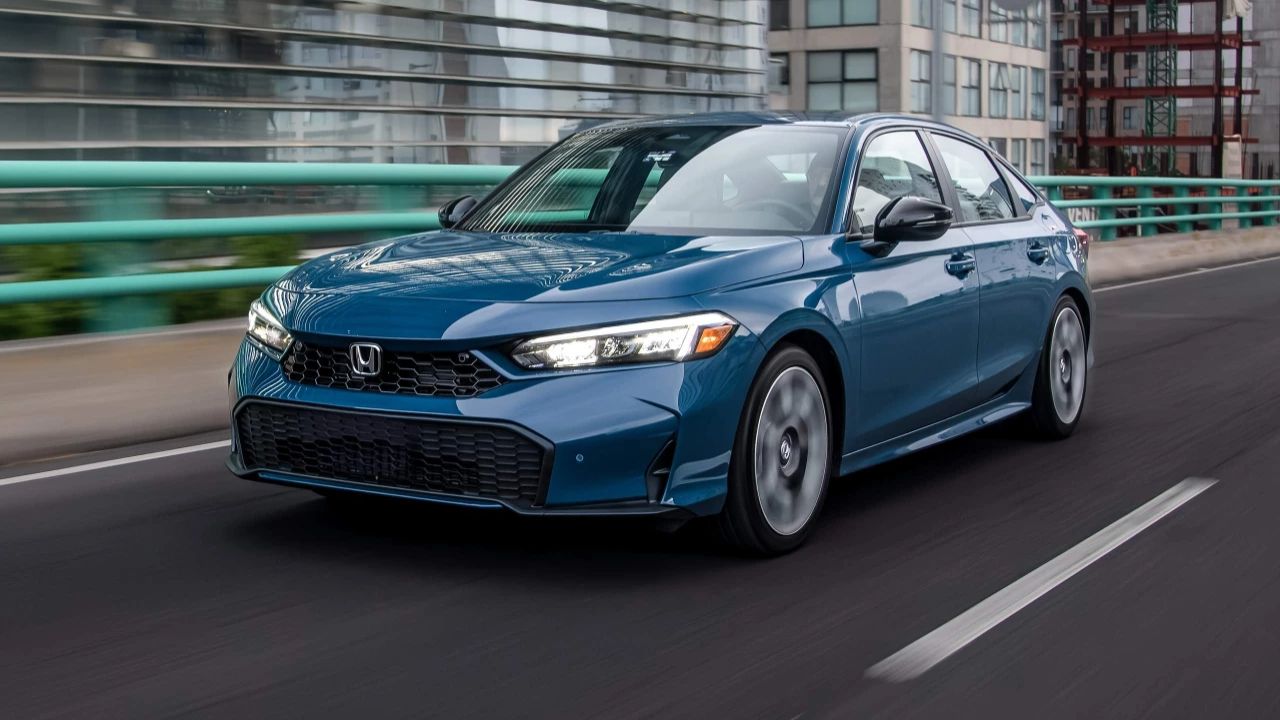
Civic Hybrid 2026 Arrives in Brazil with 2.0 Gasoline Engine + Two Electric Motors: 32.1 kgfm Torque and Urban Consumption of 26.9 km/l in Tests
Honda has taken an important step to reclaim its space in the competitive medium sedan market in Brazil. During the Interlagos Festival 2025, the brand officially presented the new Honda Civic Hybrid 2026, which arrives with visual changes, a more complete technology package, and the same efficient mechanics that has pleased those seeking a true hybrid. The competition is fierce: on the other side of the track are heavyweight rivals like the Toyota Corolla and the BYD King.
The launch is part of a global effort by the brand to keep the Civic updated with what is already being sold in other markets, such as the United States and Japan. And the good news for those who liked the new model: Honda has confirmed that sales of the Civic Hybrid 2026 will start in the coming weeks, with prices and detailed versions to be announced soon. For now, the current hybrid Civic costs R$ 265,900, always in the Advanced Hybrid version.
What Changed in the Design and Cabin?
The visual update follows a subtle style, but effectively modernizes the whole set. At the front, the bumper has more prominent lines and a new honeycomb grille, as well as a wider lower opening that adds a sporty touch. On the sides, the wheels maintain the same design, while the rear received no significant alterations.
-
Uber Faces Shareholder Scrutiny as Board Accused of Ignoring Safety, Compliance, and Harassment Warnings Amid Over 3,500 U.S. Lawsuits

-
Ferrari’s First Electric Car Divides Fans, Priced at $630,000, Amid Concerns Over Limited Editions; Brand Clarifies It’s Not Just for Future Perks
-
BYD Dolphin Mini: The Electric Car That Defies Depreciation, Losing Only 3.58% in a Year and Becoming the Best-Selling Retail Model Under $22,000

-
Electric Car JAC E-JS4 Loses $19,000 in Value in One Year, Leading Record Depreciation of Used Cars in Brazil Due to Expensive Battery and New Models


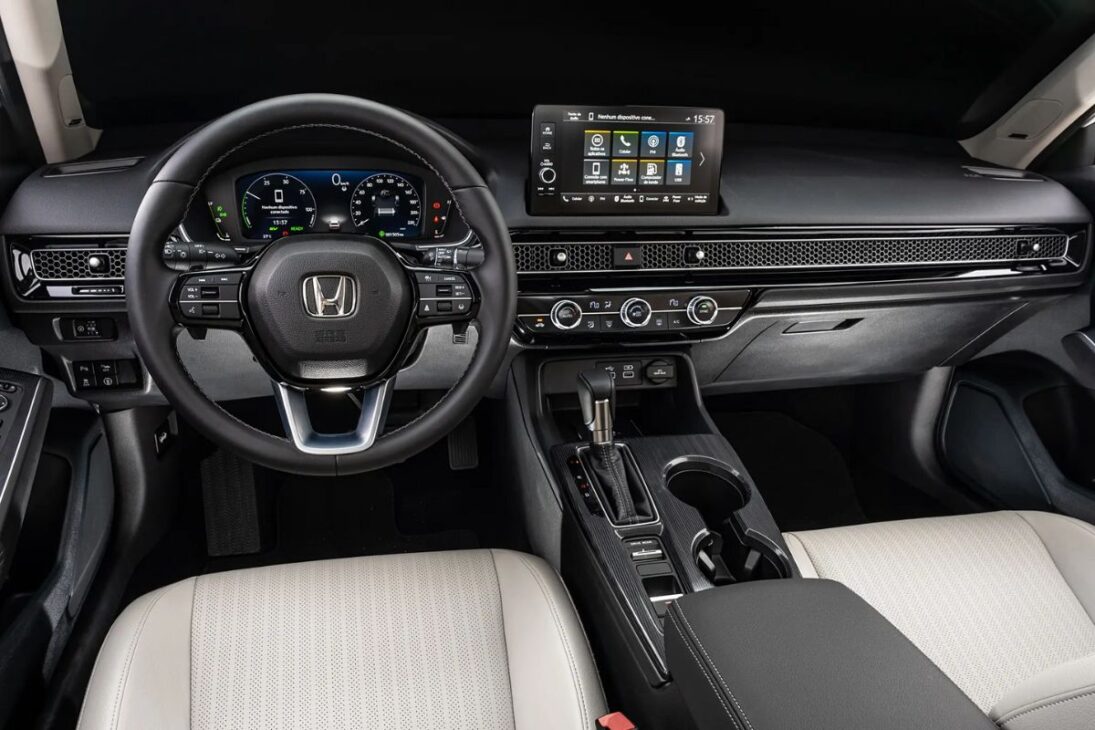
Inside, the highlight is the multimedia center, which now integrates Google services natively, such as Google Maps, Play Store, and the Google Assistant voice assistant. This change positions the Civic in line with a trend that has been consolidating in the segment: cars with more open and integrated digital platforms, as already seen in models from Volvo, Renault, and Chevrolet.
Additionally, the model continues to offer the Honda Sensing package, one of the most complete in the category in terms of safety and driving assistance. Among the available items, the highlights are:
- Automatic Emergency Braking
- Lane Departure Warning with Active Steering Assist
- Adaptive High Beam Headlights
- Adaptive Cruise Control with Full Stop and Automatic Restart in Traffic
This last feature is especially useful for those facing congestion in large cities, allowing the car to come to a complete stop and resume moving without the driver needing to take action.
Hybrid Engine and Surprising Consumption
If there has been evolution in aesthetics and technology, Honda preferred not to change the mechanical set. And it’s no wonder: the e:HEV hybrid system of the Civic is one of the most praised in the market.
It combines a 2.0 aspirated gasoline engine with two electric motors. One of these motors acts as a generator, converting the energy generated by the combustion engine into electricity. This energy is stored in a 1 kWh battery, which is positioned just in front of the rear axle. The other electric motor is responsible for driving the wheels.
Honda does not officially disclose the combined power of the system. What is known is that the combustion engine generates 143 hp and 19.1 kgfm of torque, while the electric motor delivers up to 184 hp and impressive 32.1 kgfm.
And what does this mean in practice? Agile performance in urban use and surprisingly high consumption. According to official data from Inmetro, the Civic Hybrid achieves 18.3 km/l in the city and 15.9 km/l on the highway. But in independent tests, the results were even better: 26.9 km/l in urban traffic and 21.9 km/l on the highway. With a gasoline tank of 40 liters, the range in the city can easily exceed 1,000 km — a remarkable achievement for a medium sedan.
A Serious Rival to Corolla and BYD King
The launch of the new Civic comes at a strategic moment. The medium sedan segment has been losing ground to SUVs, but models like Toyota Corolla and BYD King have managed to maintain their attractiveness by betting precisely on hybrid versions with good cost-benefit.
The current Civic has not had significant sales numbers in recent months, but Honda hopes to reverse this scenario with the innovations of the 2026 model. It is worth remembering that both the Corolla and the King have hybrid systems, but with distinct technical solutions:
- The Toyota Corolla Hybrid uses a mild hybrid system, with a 1.8 combustion engine coupled with electric motors.
- The BYD King bets on a plug-in hybrid architecture, with a larger battery that allows for about 100 km in 100% electric mode.
In this context, the Civic Advanced Hybrid positions itself as a high-efficiency option for urban use, with a proposal more focused on conventional hybrid use, without the need for external charging.
When Will It Arrive and How Much Will It Cost?
As mentioned, Honda has confirmed that the Civic Hybrid 2026 will start being sold in the coming weeks. The final price has not yet been disclosed, but it is expected to be in the current range or have a slight adjustment, following market logic.
The Civic is expected to continue to be offered in a single version, with a complete equipment package, to compete directly with the top versions of its main rivals.
If you are interested in a hybrid sedan with fuel consumption comparable to that of a compact car and an enviable equipment list, the new Civic 2026 promises to be a very interesting choice.





-

-

-

5 people reacted to this.