






 Portuguese
  Spanish


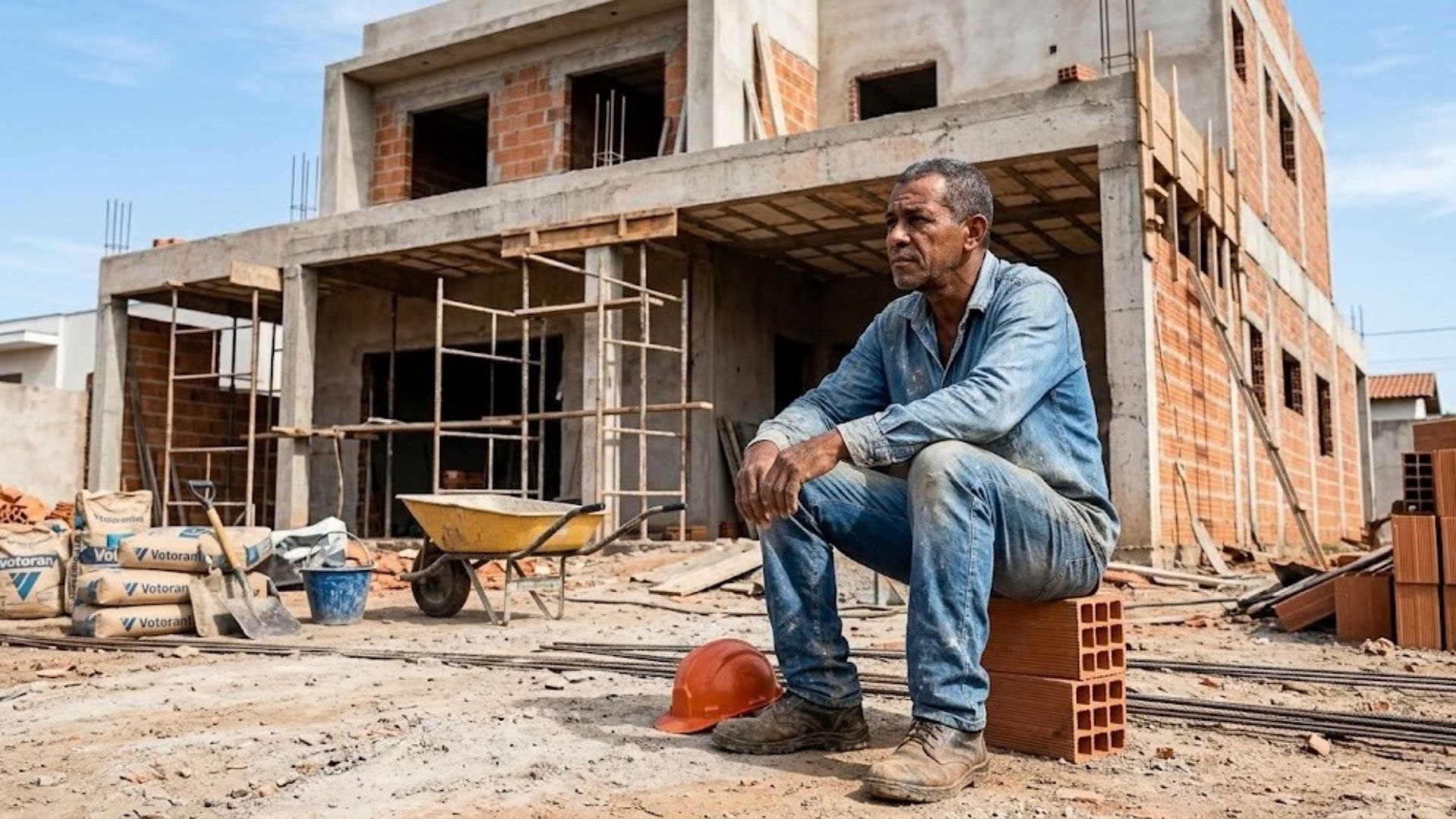


Skilled Worker Shortage Begins to Affect Construction in Different Regions of Brazil as Experienced Professionals Age and Fewer Young People Enter the Construction Industry. Reports from Business Owners Point to Hiring Difficulties and Reignite the Debate on Valuation and Training of Masons.
The difficulty in finding masons, helpers, and specialized professionals in construction has become increasingly common in Brazil.
The topic gained prominence after a video posted on the channel Tiag Souza on YouTube, in which construction entrepreneur Tiag Souza discusses the shortage of qualified workers in the sector and warns of a possible worsening of the problem in the coming years.
According to him, the situation is already directly affecting companies and professionals who depend on workforce in construction.
-
Billionaire says the most valuable skill will help overcome job elimination caused by AI, following Bill Gates’ fears

-
A Dutchman created a ‘box’ that makes trees grow in the desert almost without water and without irrigation: the invention has already brought seedlings to dozens of countries and achieves up to 90% survival where common planting did not exceed 10%.

-
Abandoned warehouse hid a giant collection of rare computers, with over 2,000 artifacts from the 1930s to the 1980s.
-
Scientists warn that melting ice is triggering an alarming chemical transformation in preserved areas, and the first signs are already concerning researchers worldwide.




“If you need to hire a mason, you can’t find one. If you need a helper, you can’t find one. If you need someone really qualified, it gets even harder,” he stated in the video.
The entrepreneur works in the paving sector with interlocking pavers and describes recurring difficulties in forming work teams.
The scenario pointed out by Souza is not limited to the individual experience of the entrepreneur.
Similar reports have been made by companies, engineers, and site foremen in different regions of the country, indicating a trend of professional shortage in a sector that remains essential to the economy.
Worker Shortage Already Impacts Construction


The construction industry remains one of the sectors generating the most formal jobs in Brazil, but faces a growing paradox.
There is demand for construction and real estate projects, while the replenishment of qualified workers occurs at a slower pace than necessary.
Companies have reported difficulty filling vacancies in different roles, from helpers to professionals with technical experience.
In some cases, this shortage has already caused delays in schedules and increased costs of project execution.
According to industry specialists, the scarcity does not mean a complete absence of workers, but indicates a reduction in the availability of experienced professionals in the market.
The problem becomes more evident in activities that require practical skills and knowledge accumulated over the years.
Generation Change Influences the Labor Market
In the video posted on the channel Tiag Souza, the entrepreneur attributes part of this difficulty to changes in the profile of new generations.
According to him, the traditional path of entering the construction industry has weakened over the past decades.
Souza explains that in previous generations, many workers started their professional lives as young people on construction sites.
The learning occurred practically, observing relatives or more experienced colleagues and gradually advancing in the profession.
“The helper would become a mason, the mason would become a foreman. It was a learning process that happened in the daily life of the construction site,” he commented.
According to him, this informal training process was responsible for creating many of the professionals who currently work in the sector.
This model, however, has become less common.
As the entrepreneur mentions in the video, many young people have started to seek different professional paths, especially in areas associated with the digital environment or office work.

Internet and New Professional References
The increasing presence of the internet and social media also influences how part of the youth perceives the labor market.
According to Tiag Souza, professions related to the digital universe have captured the imagination of many young people.
He notes that activities such as content creation, programming, digital marketing, and online entrepreneurship have become frequent references for those starting their professional lives.
These occupations are often perceived as less physically demanding and associated with greater flexibility in routine.
For the entrepreneur, the shift in perspective alters the balance between sectors that depend on manual labor and those linked to the technological environment.
Physical Labor Still Detaches Some Interested Parties
Another factor mentioned by Souza in the video is the level of physical demand of construction work.
As he explains, the routine of construction involves intense tasks, often performed outdoors and under varying weather conditions.
Carrying materials, preparing concrete, laying blocks or tiles, working at heights, and dealing with dust and noise are part of the daily life on construction sites.
“Working in construction isn’t simple. It requires physical effort, discipline, and endurance,” he emphasized.
According to the entrepreneur, these characteristics end up making the sector less attractive to part of the new generation, especially compared to professions considered more comfortable.
Social Perception of Manual Labor Affects Choices
In addition to changes in the labor market, there are cultural factors that interfere with professional choices.
For decades, expressions like “study so you don’t have to work hard” have been repeated in family and school environments.
This type of narrative, as Souza analyzes, helped create the perception that professions linked to manual work would have lower social prestige.
“The profession of mason has often been treated as if it were a failure, when in fact it is fundamental for society,” he stated.
The construction industry relies on various technical occupations to function.
Masons, carpenters, rebar workers, tile setters, and machine operators are part of the structure that enables the execution of residential, commercial, and infrastructure projects.
Experienced Professionals Are Aging
While fewer young people enter the sector, many experienced workers are approaching retirement or reducing their work pace.
According to Tiag Souza, this combination contributes to widening the imbalance between supply and demand for labor.
The entrepreneur notes that the training of new professionals takes time, as the construction industry depends on practical learning and accumulated experience.
Without a constant base of newcomers on construction sites, the renewal of the sector tends to occur more slowly.
According to him, this dynamic can lead to even greater scarcity in the future. “The professionals are aging and no one wants to replace them,” he commented in the video while explaining the concerns of business owners and managers in the sector.
Increasing Valuation of Qualified Labor
Despite the difficulties pointed out, the entrepreneur also highlighted that qualified workers can achieve good compensation within the construction industry.
As he stated, specialized professionals are increasingly sought after in the market.
According to Tiag Souza, there are cases of workers who started as helpers and over the years built solid careers in the sector.
Some have even started their own companies or taken on management roles in construction firms.
“The mason who is truly a good professional ends up being valued,” he stated. He added that experience and specialization can significantly expand growth opportunities within the field.
Construction Remains Essential for the Country
Even in the face of transformations in the labor market, the construction industry remains one of the most important economic activities in the country.
The sector is responsible for building housing, buildings, roads, bridges, and various infrastructure projects.
For Tiag Souza, the discussion about the shortage of workers should serve as a warning for the future of the activity.
As he emphasized in the video, the sector may need to rethink training and professional valuation strategies to attract new generations.
According to him, the challenge involves not only improving technical training but also reinforcing the perception that the construction industry offers concrete career and income generation opportunities.





