






 Portuguese
  Spanish
  3 min of reading
  0 comments


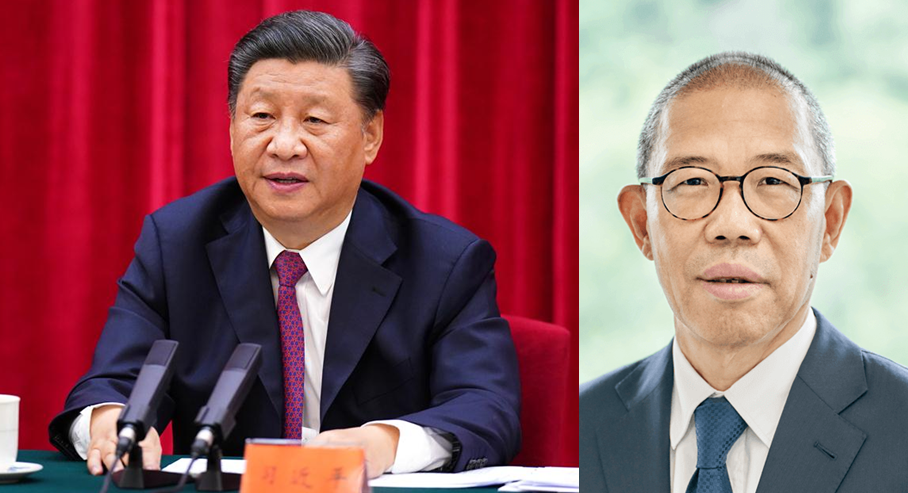
In A Bold Move, The Richest Billionaire In China, Valued At 52 Billion Dollars, Challenges The Communist Party Government With Piercing Criticisms
The billionaire Zhong Shanshan, founder of Nongfu Springs and currently the richest man in China, stirred up a commotion by criticizing the Chinese government and major e-commerce platforms like Pinduoduo. In a context of economic slowdown, his statements highlighted rising tensions between entrepreneurs and the policies of the Communist Party of China (CPC).
Criticisms Of The Pricing System And Pinduoduo
According to CNN, last Tuesday (19), the richest man in China drew attention by publicly attacking Pinduoduo, one of the largest e-commerce platforms in the country, accusing it of sparking a price war that harmed Chinese brands and industries.
During a visit to a county in eastern China, he declared that these platforms “have ‘brought down the pricing system’ and turned pricing into the main industrial guideline.”
-
Central Bank changes rule that lasted decades and allows dollar and euro accounts in Brazil for exporters and companies with foreign capital, eliminating the need for currency exchange in some transfers starting in October 2026.

-
The Central Bank ends the R$ 500 limit on Pix by approximation, and account holders will be able to use the general Pix limit to pay any amount by tapping their phone on the terminal starting in October 2026.
-
A collective political will that allows for the creation of a cross-party and state agenda, focusing on concrete actions such as reducing the Custo Brasil; commitment to fiscal balance; feasible goals that enhance professional qualification and the adoption of a myriad of incentives aimed at innovation.

-
PIX from BRICS becomes reality: BRICS Pay advances to enable international payments without the dollar; system inspired by Pix and based on blockchain could move up to 20% of global trade by 2030, while bloc countries already account for 40% of the world economy.




Zhong, the richest man in China, stated that Pinduoduo’s business model, based on low prices, has negatively impacted local companies. “It is not just bad money driving out good. It is an orientation of the entire industry,” he told the state media The Paper.
While his criticisms of Pinduoduo were initially published, harsher comments directed at the government did not receive the same coverage. Zhong accused the Chinese government of “negligence” for allowing this harmful pricing trend. “The government did not intervene in this industry orientation, and I think it was negligent in its duty,” he added.
A Rare Act Of Courage Among Entrepreneurs
It is extremely uncommon for large Chinese entrepreneurs to publicly criticize the government. The risk of repercussions is high, and recent history offers clear examples of how the CPC responds to dissenters.
Jack Ma, founder of Alibaba, saw his business empire targeted by investigations after criticizing financial regulators in 2020. Similarly, Ren Zhiqiang, a real estate mogul, was sentenced to 18 years in prison after criticizing the government’s response to the COVID-19 pandemic.
Zhong appears to be aware of the risks. His comments come after a challenging period. Earlier this year, he faced nationalist backlash that negatively affected Nongfu Springs’ sales, as well as drastically reducing the company’s market valuation.
Despite this, Zhong regained the title of the richest man in China, with a net worth estimated at US$ 52.2 billion, according to the Bloomberg Billionaires Index.
Impacts Of The Economic Crisis On Consumption
The Chinese economy is facing a sharp slowdown, with consumers becoming more cautious in their spending. From food to cars, the search for deals and discounts has intensified, benefiting platforms like Pinduoduo.
Founded in 2015, the company has leveraged this scenario to grow rapidly, capturing a significant market share with competitive pricing.
This shift in consumption habits not only affects Chinese companies but also Western brands trying to attract the premium audience.
The pressure for discounts and promotions has profoundly altered market dynamics in the country, reinforcing Zhong’s argument about the negative impacts of price wars.
Repercussions And Possible Consequences For The Richest Man In China
Zhong’s statements have sparked a debate about the role of the government and digital platforms in the Chinese economy. Some analysts see his criticisms as a call to reform the regulatory system and protect local businesses.
Others, however, question whether the billionaire will have the same fate as Jack Ma, who disappeared from the spotlight for months after confronting the system.
The Chinese government’s history shows that public criticisms do not go unnoticed. Zhong may face sanctions or investigations that could harm his businesses. However, his prominent position in the market and the impact of his words have already raised an alarm among other tycoons.
Zhong Shanshan’s act highlights the growing tension between entrepreneurs and the Chinese government at a time of economic and social challenges. His criticisms could serve as a catalyst for broader discussions about the need to balance innovation, regulation, and market protection.




Be the first to react!