






 Portuguese
  Spanish


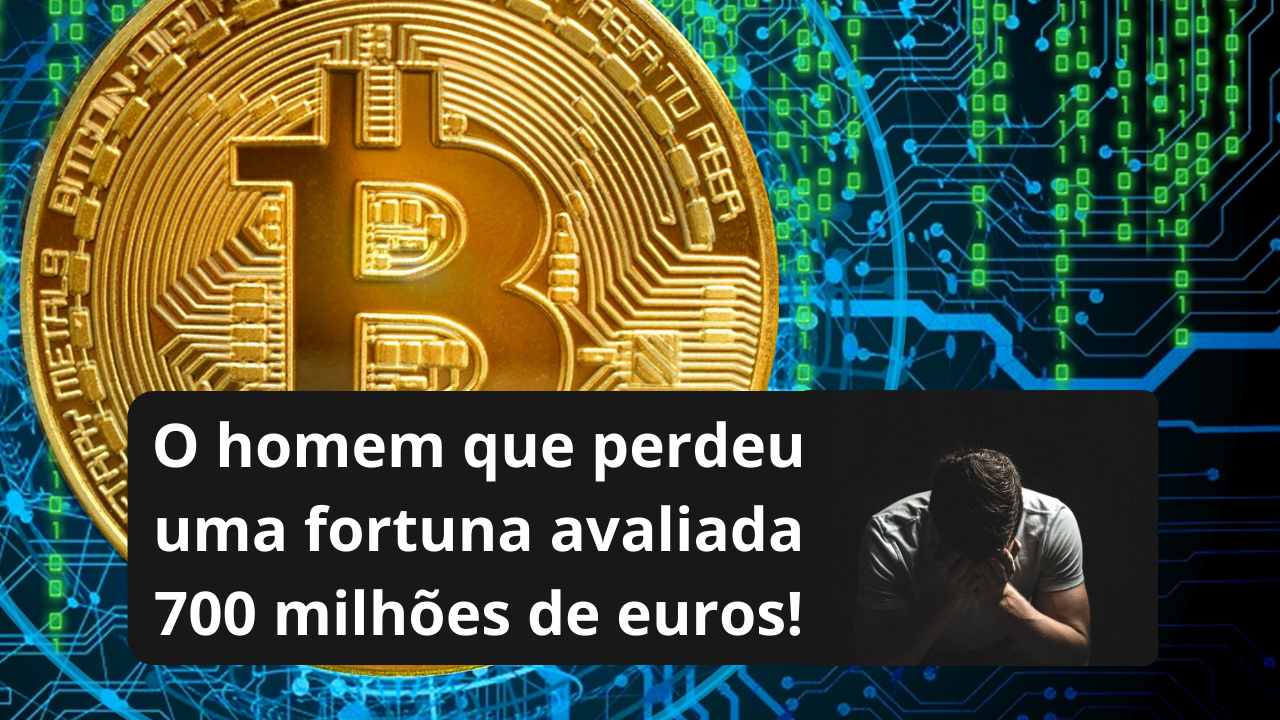


Man Gives Up Recovering Hard Drive With 8,000 Bitcoins After 12 Years of Legal Battle: Know How Howells Lost His Cryptocurrencies
For over a decade, James Howells tried tirelessly to recover a lost hard drive in a landfill in Wales. The content of that drive? Nothing less than 8,000 bitcoins, an amount that, at the time, was worth around 8 million euros in cryptocurrencies.
Currently, the value of those bitcoins exceeds 700 million euros, a fortune that, unfortunately, will never be recovered by Howells after a recent court ruling ended his search.
Howells’ story, a 37-year-old man, is a reflection of the controversial relationship between the advancement of cryptocurrencies and the practical obstacles that arise when investment in digital technology faces real-world issues, such as waste and environmental preservation.
-
A 3-year-old deaf student received the first white belt in Jiu-Jitsu and understood the achievement because the teacher learned Libras to communicate with him, in a video that surpassed 7 million views and moved social media by showing inclusion happening on the mat.

-
Miguel Krigsner opened a small compounding pharmacy in Curitiba in 1977, turned Brazilian fragrances into a national success, and created O Boticário, now one of the largest beauty networks in the world.

-
Meet the charming parrot grandpa, who became known for hugging free birds and revealed how he gained their trust over the years.
-
After 18 years of development, Bridgestone launches the AirFree airless tire, which requires no inflation and is puncture-proof, into daily service in Japan, starting with autonomous vehicles up to 20 km/h, used for transporting elderly people.





Since he accidentally discarded the hard drive in 2013, his journey to recover the equipment has been marked by frustrating attempts to obtain permission to dig up the landfill and retrieve the unit.
The Legal Battle to Recover the Hard Drive and Environmental Obstacles
The court ultimately ruled that there is no realistic possibility of success for Howells. The judge pointed out, among other factors, that digging up the landfill could release harmful substances, causing serious public health and environmental damage.
The ruling, announced recently, was also based on the Pollution Control Act of 1974, which states that any item deposited in a landfill becomes the property of the location.
With the excavation process that Howells proposed, it would be necessary to remove between 10 to 15 thousand tons of waste from an area of approximately 2,000 square meters, an action deemed illegal without a new environmental license.
Since 2013, Howells has attempted, unsuccessfully, to obtain the necessary permits for excavation. He proposed a series of solutions, including donating 10% of the value of the recovered cryptocurrency to the city of Newport, where the landfill is located.
The proposal included investments in projects aimed at promoting the use and understanding of cryptocurrencies.
However, local councils have always denied his request, concerned about the environmental risks associated with excavation.
The Value of Cryptocurrencies and the Impact of Bitcoin Fluctuation
The value of bitcoin is notoriously volatile, and in 2021, the 8,000 bitcoins that Howells had lost were valued at around £210 million (approximately R$ 1.3 billion).
However, the cryptocurrency market experienced a significant downturn in early 2024, resulting in a considerable decrease in the value of Howells’ bitcoins.
This factor makes the loss all the more dramatic for the man, who, over the years, saw his fortune of 8 million euros turn into an astronomical sum, only to have his efforts thwarted by legal and environmental issues.
Despite generous offers and Howells’ proposals to ensure the recovery of the hard drive in an “environmentally responsible” manner, the court and local authorities maintained their position.
According to Newport authorities, excavating the landfill would pose a huge logistical and environmental challenge, along with the risk of harming public health.
The End of a Million-Dollar Journey to Recover the Bitcoins
After 12 years of attempts, Howells’ dream of recovering his hard drive filled with cryptocurrency has come to an end.
Although he secured funding and a specialized team, including experts in artificial intelligence and the environment, the court’s decision represents the final word in a case that divided opinions on the feasibility of excavating landfills in search of a digital asset.
James Howells lamented the decision, stating that he did not have the chance to defend his case in a full trial.
Still, he continues to believe in the potential of cryptocurrencies and the technological solutions that could be applied in the future to solve similar problems.
For the cryptocurrency world, Howells’ story serves as a reminder of the market’s volatility and the importance of careful and conscious management of digital assets.
After all, as the case demonstrates, a simple human error can turn a valuable investment into an impossible quest.
Information from: https://br.ign.com/tech/134983/news/apos-12-anos-de-tentativas-fracassadas-homem-que-perdeu-disco-rigido-com-742-milhoes-de-euros-em-bit


