Portuguese
  Spanish


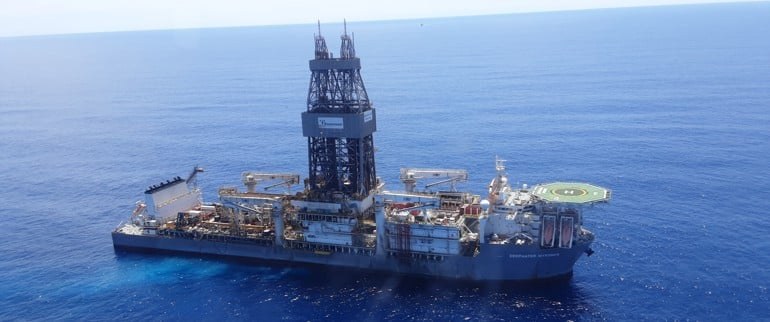
Petrobras officially announced this Thursday, July 9, the completion of the purchase of exploratory block 3, off the coast of São Tomé and Príncipe, assuming for the first time in years the role of operator of a deep-water project outside South America, in a move that seals three months of negotiation with Oranto and brings Africa back into the state company’s strategy.
The agreement announced by Agência Petrobras is not exactly a surprise. The company had already communicated, on April 17, the purchase of 75% of Oranto Petroleum’s stake in block 3, but this entire period was used to finalize the regulatory paperwork in São Tomé and Príncipe, obtain approvals from local authorities, and adjust the consortium’s structure. Now that the final signature has taken place, Petrobras officially establishes itself as the operator of the area, with Oranto holding 15% and the National Petroleum Agency of São Tomé and Príncipe holding the remaining 10%.
I confess that the timing is striking. The state company openly talks about reserve replenishment through the exploration of new frontiers, and block 3 fits right into this equation. It is Petrobras’s second operation in the Gulf of Guinea in less than two years; before this, it entered the Ivory Coast as a partner, and this is the first in this batch where the company takes command of the project’s technical decisions.
Block 3 and the invitation that Africa continues to extend
The Gulf of Guinea has returned to the radar of major oil companies in the last five years, and it’s not hard to see why. The basins of Namibia, Suriname, and the west coast of Africa itself have produced discoveries the size of Brazilian fields, with high-quality reservoirs in water depths that Petrobras knows like few others in the world. It’s the same pre-salt playbook, just in another ocean.
-
US$ 1.5 billion dam project on the Rio Indio promises water for the Panama Canal for 50 years, but it could flood rural areas and displace 2,000 residents from 38 farming communities.

-
At 14 years old, she worked in a factory in Hong Kong, studied economics abroad, and then entered the Chinese real estate market, which helped change the landscape of Beijing.

-
While NATO secured more than $10 billion in missiles and space surveillance at a single forum, Brazil still spends 1.1% of its GDP on defense and is stalling its own anti-aircraft system.

-
Corn ethanol attracts R$ 23 billion in 21 new plants and prepares for a nearly 50% jump in Brazilian production by 2027, even with high interest rates.


São Tomé and Príncipe, specifically, has become the most talked-about frontier on this map. Geology suggests that the coast of the archipelago country may harbor petroleum systems similar to those Galp is exploring in neighboring Namibia, the same one that made headlines due to the giant wells discovered there in 2022. Block 3 is located offshore in the country, at depths that the Brazilian state company can address with its own equipment and decades of experience.
What changes when Petrobras becomes the operator
Being a minority partner in a block is one thing. Being an operator is completely different. The operator is the one who hires the rig, defines the exploratory plan, signs the technical reports with the local regulatory agency, is responsible for emissions, and conducts the eventual development. In practice, it’s the one that carries the weight of the campaign and, if successful, also carries the fame.

In recent years, Petrobras has been avoiding taking on this role outside the domestic basin. The company did have operations abroad, but almost always as a technical partner or minority shareholder. The entry into São Tomé signals that the board is willing to take on the exposure again, probably because it believes that the geological return outweighs the political and regulatory risk of operating in a small country with a regulatory framework still under construction.
The calculation the state company made to take this risk
No one enters an African offshore block by chance. The internal machinery of Petrobras has been presenting, for at least two strategic plans, the same thesis: Brazilian pre-salt reserves have a clear plateau ahead, and without new exploratory frontiers, the company will start losing production towards the end of the decade. Block 3 is one of the bets to hold this curve.
The thesis becomes even more compelling when you consider the cost of failure. A well in African deep waters can exceed 100 million dollars, and the probability of a dry result exists. But when successful, the discovered volume usually justifies the entire round of drilling. Namibia has just shown this to the entire world, and Petrobras doesn’t want to miss out on the next wave.
What lies ahead and the timeline that no one mentioned
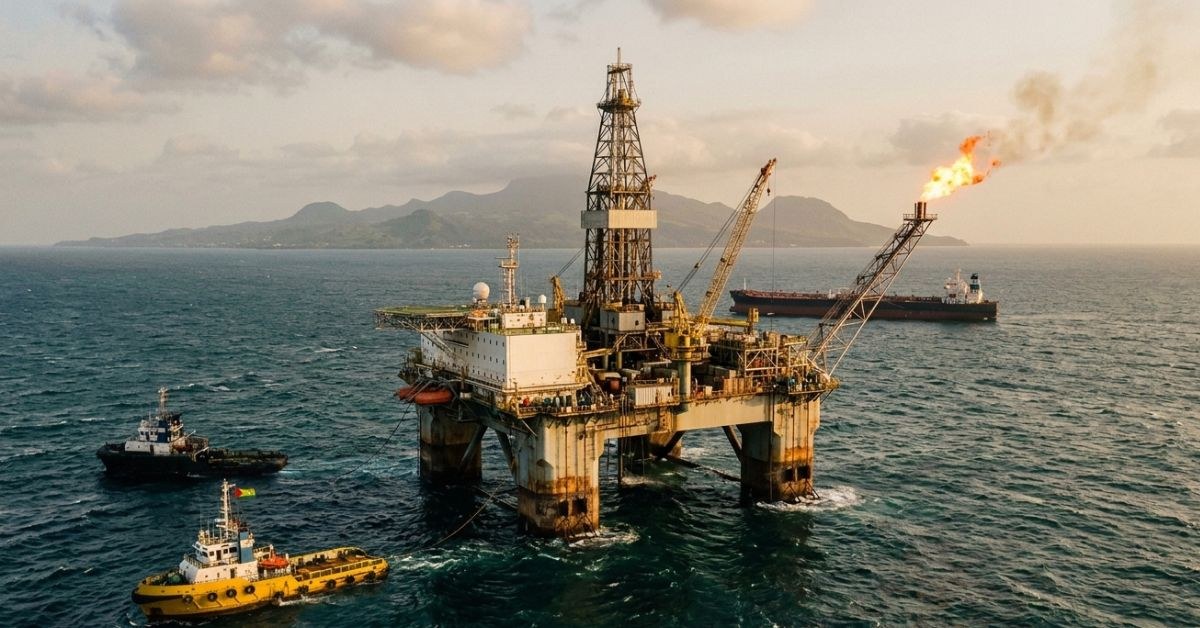
The official statement did not disclose the technical deadlines for the exploratory campaign, but industry standards suggest that Petrobras will spend the coming months conducting subsurface studies, reprocessing old seismic data, acquiring new data, analyzing neighboring basins, before deciding where to drill the first well.
We will know the project is progressing when the rig contract request appears, which usually happens between 12 and 24 months after this type of signing. Meanwhile, the National Petroleum Agency of São Tomé and Príncipe holds 10% of the consortium as a way to ensure the country’s participation in the eventual return, a structure that has become standard in African contracts and helps maintain the political stability of the agreement.
I imagine the moment when the first rig contracted by Petrobras appears on the horizon of São Tomé. It will be a sign that the company has fully returned to the international exploratory game, and a litmus test to see if the state company still has, outside the Campos Basin, the same knack that made it a world reference in pre-salt.
Do you think Petrobras will find a new pre-salt in São Tomé or is it burning money in a new frontier?