






 Portuguese
  Spanish


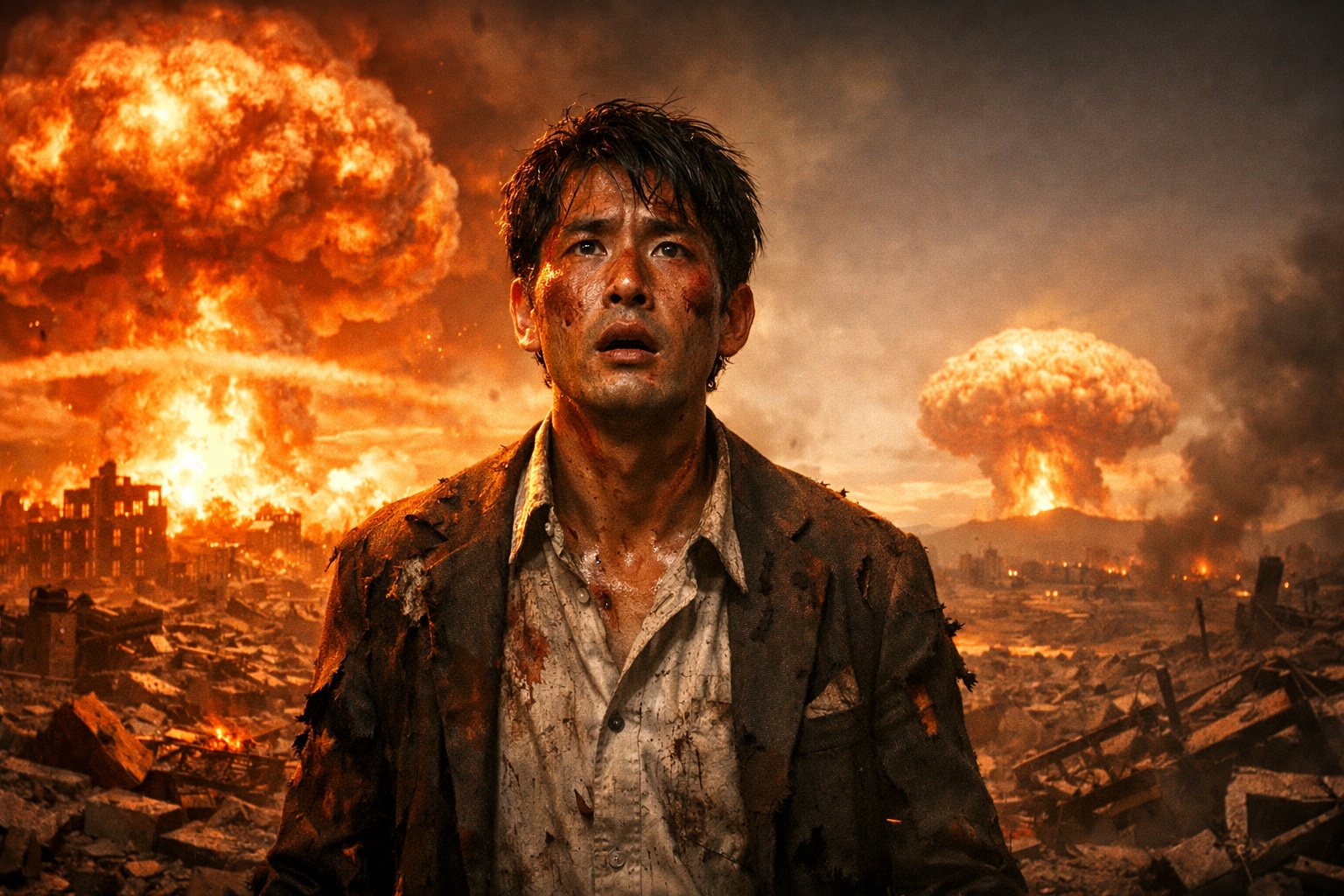


Tsutomu Yamaguchi Survived The Bombs Of Hiroshima And Nagasaki In 1945. The True Story Of The Engineer Who Faced Two Atomic Explosions.
Tsutomu Yamaguchi was 29 years old when a business trip turned into an unprecedented historical nightmare. A naval engineer from Mitsubishi Heavy Industries, originally from Nagasaki, was finalizing a three-month project in Hiroshima. On the morning of August 6, 1945, at 8:15 AM, he was preparing to return to the train station when he realized he had forgotten his personal identification hanko at the office. He returned to retrieve the document, a decision that simultaneously saved and doomed his life.
He was walking toward the docks when the American bomber Enola Gay appeared in the sky. Yamaguchi saw a tremendous flash followed by an explosion that ripped through the sky of Hiroshima. The Little Boy bomb, weighing 13 kilotons, detonated 3 kilometers from where he was.
The engineer was violently thrown into an irrigation ditch by instinctive protection. Left eardrum ruptured, temporary blindness, and severe burns on the left upper side of his body. The first atomic bomb used in warfare killed 70,000 people instantly.
-
Eight Artists Secretly Lived in a Hidden 70m² Apartment Inside a Shopping Mall in Brazil for Four Years

-
Artist Lives in Giant Wooden Egg Over a UK River to Observe Tides and Environmental Changes
-
Over 20 Metal Drums Repurposed into School Transport Train Boost Attendance in Australian Aboriginal Community

-
Abandoned Coal Crane at Copenhagen’s Old Port Transformed into Luxury Waterfront Retreat with Spa and Ship Views




Impossible Journey Back Home: The Man Who Survived Two Atomic Bombs
After hours of unconsciousness, he dragged himself out of the ditch, feeling pain throughout his body. He searched for an air raid shelter where he found three colleagues, Akira Iwanaga and Kuniyoshi Sato, who were also survivors. They spent the night together sharing the indescribable trauma. The next morning, August 7, the quartet managed to reach the train station despite their serious injuries. They boarded the journey back to Nagasaki, crossing the devastated country without imagining their final destination.
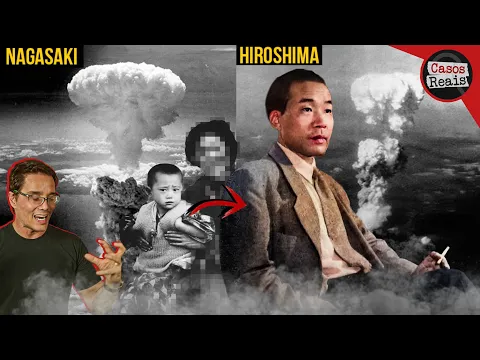

Yamaguchi arrived home and received medical treatment for his burns. Despite being heavily bandaged, he considered himself able to return to work. Determination or denial of reality led him to report to the Mitsubishi office just three days after the first explosion. On the morning of August 9, at 11:02 AM, he was describing the destruction of Hiroshima to his incredulous supervisor. The boss said he was crazy, asserting that it was impossible for a single bomb to destroy the entire city.
At that moment, a penetrating flash illuminated the office window. The American bomber Bockscar was dropping Fat Man, the second atomic bomb, this time over Nagasaki. The tragic fate followed Yamaguchi back to his hometown. The explosion occurred again 3 kilometers from where he was. This time he emerged physically unscathed but psychologically devastated. The Mitsubishi factory was obliterated, yet the engineer miraculously survived for the second time in 72 hours.
Physical Price Of Tsutomu Yamaguchi’s Double Radiation Exposure
The inability to replace the ruined bandages caused a severe infection. He spent the following week with a high fever, continuously vomiting. His body was battling the double dose of ionizing radiation at levels never before experienced by a human.
The second bomb killed 40,000 people on impact, with the number rising to 140,000 over five years. Yamaguchi was among an extremely rare statistical anomaly: approximately 165 people were present at both bombings, but he was the only one officially recognized by the Japanese government.
His family also paid the price of radiation. His wife, Hisako, a survivor of the Nagasaki bombing, developed liver cancer and kidney failure, passing away in 2008 at the age of 88. Their son, Katsutoshi, born in 1946, suffered from serious health problems throughout his life, dying in 2005.
Daughters Toshiko and Naoko also faced medical complications related to their parents’ exposure to radiation. The cycle of trauma spanned generations, turning the family into a living testament to the consequences of nuclear weapons.
Yamaguchi permanently lost hearing in his left ear. He experienced temporary baldness after the bombings. Daughter Toshiko reports that he remained constantly bandaged until she turned 12.
Despite severe physical damage, the engineer demonstrated extraordinary resilience, slowly recovering. During the Allied occupation of Japan, he worked as a translator for the occupying forces. In the early 1950s, he returned to Mitsubishi, designing oil tankers and resuming the career interrupted by the war.
Initial Silence Transformed Into Global Activism
When the Japanese government officially recognized bombing survivors as hibakusha in 1957, Yamaguchi’s identification mentioned only his presence in Nagasaki. He accepted the situation, pleased to be relatively healthy.
He placed his experiences in the past, trying to rebuild a normal life. Decades of silence protected him but also isolated him. The social stigma against hibakusha made it difficult to speak openly about the trauma experienced.
As he aged, opinions about the use of atomic weapons began to change dramatically. At 80, he wrote the experience book Ikasareteiru inochi, meaning A Life Well Lived.
He also published a poetry book expressing traumatic memories through verses: The bodies are stacked on top of each other and the ground will never dry, it is soaked with the fat of all the people who burned and died. The raw words conveyed the horror that was impossible to forget.
He participated in the 2006 documentary about the 165 double survivors of the atomic bombs called Twice Survived, which was screened at the United Nations. During the screening, he made a heartfelt appeal for the abolition of atomic weapons. He became a vocal activist for nuclear disarmament, corresponding with Barack Obama and hosting James Cameron.
He transformed personal pain into an urgent public message. He declared to the Independent in 2009 that he believed the mushroom cloud had followed him from Hiroshima to Nagasaki, haunting him.
Official Recognition And Historical Legacy Of Tsutomu Yamaguchi
After multiple petitions, he finally achieved official recognition from the Japanese government as the only atomic double survivor in 2009.
He was then 93 years old. The double exposure to radiation became an official government record. He emphasized the importance of educating younger generations about the horrific history of atomic bombings. He argued that the testimony of survivors was essential to prevent the repetition of the tragedy.
The Nagasaki Prefecture recognized Yamaguchi as a valuable storyteller. A respected voice in the fight for peace and the impact of nuclear disarmament. His story transcended personal survival, becoming a symbol of human resilience.
Offering a unique perspective on the most tragic moment of the 20th century. A lesson on peace, human rights, and the profound impact of nuclear warfare. The message resonated beyond temporal and geographical boundaries.
Yamaguchi passed away on January 4, 2010, at the age of 93, due to stomach cancer in the city of Nagasaki. He lived six decades beyond medical expectations for someone exposed to massive levels of radiation.
The remarkable longevity defied scientific predictions about the long-term effects of nuclear exposure. His death represented the loss of an irreplaceable eyewitness. The generation of hibakusha survivors was quickly declining, taking the living memories of atomic horror with them.
Impossible Odds Of Double Survival
Survival statistics reveal the extreme improbability of Yamaguchi’s case. Hiroshima had a population of 350,000 people, and the bombing killed an estimated 140,000 within five years. Mortality rate of 40%. Nagasaki had a population of 240,000 people, and the bombing resulted in an estimated 74,000 deaths over five years. Mortality rate of 31%.
Being present in both cities at the exact moments of the explosions, at non-lethal but close enough distances to qualify as an official survivor, represents a convergence of astronomical probabilities.
Approximately 165 known people were present at both bombings, but Yamaguchi was the only one officially certified. Most other cases did not seek recognition due to social stigma and fear of discrimination.
The Japanese government was reluctant to certify multiple cases for political and historical reasons. The late recognition in 2009 came only a year before his death, highlighting the bureaucratic delays that cost most other survivors their acknowledgment while alive.
The story forces reflection on the devastation caused by nuclear weapons. It serves as a solemn reminder of the urgent need for peace. A symbol of human resilience and the ability to transform trauma into purpose. The message remains relevant in the modern era, where nine countries possess nuclear arsenals totaling approximately 12,500 warheads.
Yamaguchi demonstrated that it was possible to survive the impossible, but he also showed that no one should ever go through that again. The legacy lives on through the generations that learn the extraordinary history of the man who was twice cursed and blessed, forever haunted by the ghost of the atomic bomb.




