Portuguese
  Spanish


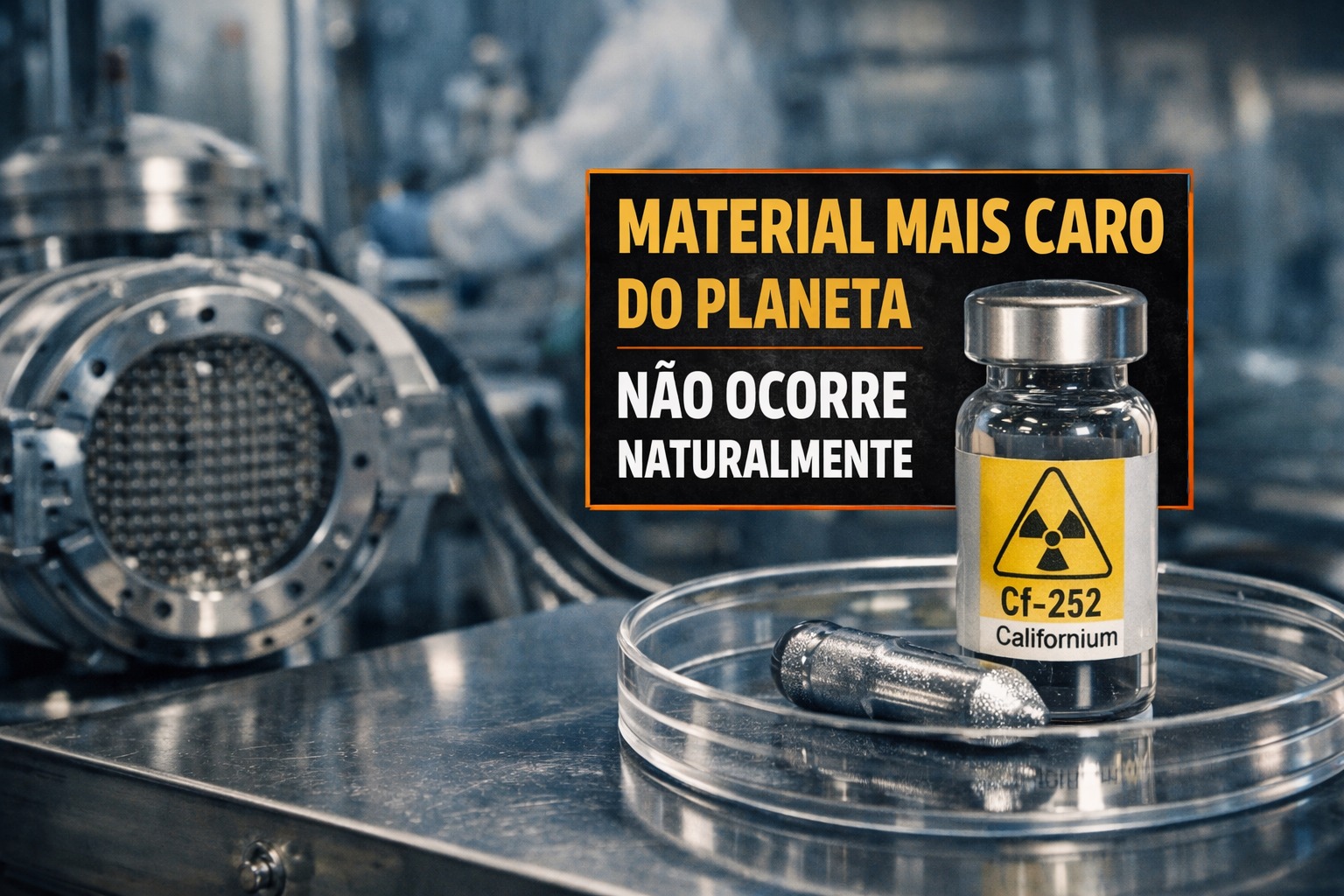


Although Antimatter Reaches Unreachable Values, Californium-252 Concentrates Real Costs, Limited Production, Short Half-Life, Radiological Risks, and Strategic Applications That Explain Its Extreme Price in the Contemporary Global Industrial World
They are not gold, diamonds, or strategic rare earths. According to CERN, the most expensive substance (material) in the world is antimatter, valued at US$ 62.5 trillion per gram, equivalent to about R$ 335.2 trillion, a figure that helps to frame current technological and scientific limits.
Despite the theoretical price of antimatter, its production requires colossal amounts of energy, would take millions of years with current technology, and faces almost insurmountable obstacles for safe storage.
When the criterion becomes the most expensive material actually accessible for industrial use, the focus shifts to Californium-252, an extremely rare and radioactive synthetic isotope.
-
She spent 73 years breathing inside an iron lung, survived the aftereffects of polio, and became the last woman in the United States dependent on the equipment before dying at 78 years old.

-
Brazilian students created a $1 filter using pine bark, cotton, and 3D-printed parts to clean cassava wastewater, reduce the toxicity of a hazardous waste, and transform contaminated water into biofertilizer.

-
Astronaut from Artemis II steps down after mission to the Moon and decision surprises after a record of 406,771 km, a historic 10-day journey, and an unprecedented achievement for Canada.

-
A fossil kept for years in a small museum in Montreal concealed 450-million-year-old soft tissue, a discovery that has only happened once before in history.


An Element That Does Not Exist in Nature
Californium-252 does not occur naturally on Earth and can only be obtained artificially in controlled laboratory environments and specialized nuclear reactors.
It is a highly unstable actinide, produced by complex nuclear processes, which limits its availability and drastically increases the cost of each fraction obtained.
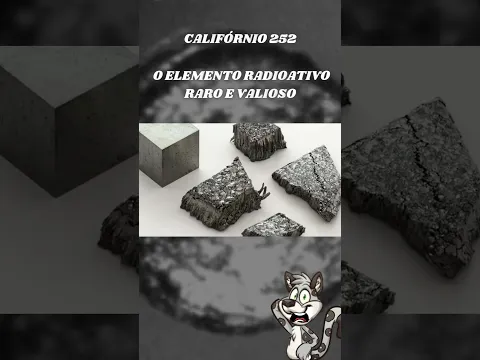
Physically, the element is described as a shiny, soft, silvery-white metal, with theoretical properties of malleability and ductility that are little explored.

Short Half-Life and Continuous Production
One of the central factors of its cost is the half-life of about 2.6 years, which means that half of the material decomposes in that interval.
This characteristic necessitates continuous production to maintain any functional stock, further increasing the operational and logistical costs involved.
Californium was initially synthesized in a laboratory at the University of Berkeley and identified two years later in waste from the Ivy Mike nuclear test.
Nuclear Infrastructure and Few Producers
Commercial production began at the Savannah River Complex in the United States and was later transferred to the Oak Ridge National Laboratory in Tennessee.
Currently, only Oak Ridge and the Dimitrovgrad Institute of Atomic Reactor Research in Russia fully dominate this sensitive technology.
The reactors involved are the American HFIR and the Russian SM3, considered strategic assets due to their complexity and operational costs.
A Long, Costly, and Inefficient Process
Obtaining Californium-252 requires bombarding curium targets for years, resulting in only a few milligrams of usable material at the end of the process.
Additionally, the material needs to be handled with highly shielded equipment, due to the intense radiation emitted throughout its entire life cycle.
This combination of factors leads to an estimated cost of US$ 27 million per gram, about R$ 144.8 million, compared to US$ 148 per gram of gold.
Californium-252: A Pocket Nuclear Plant
The high price is justified by the unique properties of the isotope, which emits alpha particles and approximately 2.3 billion neutrons per milligram per second.
This rate is about 15 to 20 times higher in alpha particles, releasing immense energy with each spontaneous fission event, around 200 MeV.
These characteristics make Californium-252 a compact and extremely powerful source of neutrons, something rare outside of large nuclear facilities.

The “Matchstick” of Reactors
In the nuclear industry, the isotope is known as the “matchstick” used to initiate chain reactions in a controlled and safe manner.
It replaces, in specific applications, nuclear reactors or particle accelerators, offering unmatched portability and efficiency for certain tasks.
This versatility explains its use in multiple highly specialized scientific and industrial sectors.
Strategic Applications and High Risks of the Most Expensive Material
Californium-252 is used in medicine, geochemistry, space research, and security, including cancer treatments via brachytherapy and critical industrial inspections.
It is also employed by NASA in the analysis of planetary surfaces and in the detection of structural flaws and explosives.
However, its greatest virtue is also its highest risk: a microgram emits 170 million neutrons per minute, requiring rigorous protocols for safe transportation, licensing, and handling.
With information from Xataka.