Portuguese
  Spanish


A fossil that spent years stored in a drawer of a small museum in Montreal, maintained by donations, concealed a rare scientific treasure: soft tissue preserved for 450 million years, a find that had only happened once before in the entire history of paleontology.
Science often imagines its great discoveries in distant expeditions, in deserts and remote caves. But sometimes the treasure is right there, forgotten on a shelf, waiting for someone to look closely. That’s exactly what happened with this Canadian fossil.
What makes this find so extraordinary
The revelation came to light on July 6. The fossil is of a crinoid, a marine animal related to starfish, that lived an impressive 450 million years ago, long before dinosaurs even existed. Up to that point, nothing exceptional: crinoids are among the most common fossils in the world.
What changes everything is what was preserved. Normally, only the hard part of these animals reaches us, the calcareous skeleton. But in this case, the soft tissue remained intact, including the tubular feet the creature used to feed. It’s the difference between finding a skeleton and finding the almost entire animal, frozen in time.
-
Engineers spend a decade building a $2.3 million bridge, but the project features a surreal curve, becomes a joke, and ends with seven suspended.

-
7-year-old boy acts without hesitation and saves his 1-year-old brother from drowning in the family pool in Texas: the boy’s courage impressed the sheriff and he may now receive an official police commendation.

-
Three teenagers transform cut cardboard into Japanese origami-style packaging that promises to retire styrofoam and bubble wrap, win a $12,500 prize, and target giants like Amazon, FedEx, and Home Depot after a robot motor arrived broken.

-
The forgotten Atari stock that seemed like something out of a movie: millions of sealed cartridges were buried underground and were sold for very low prices.




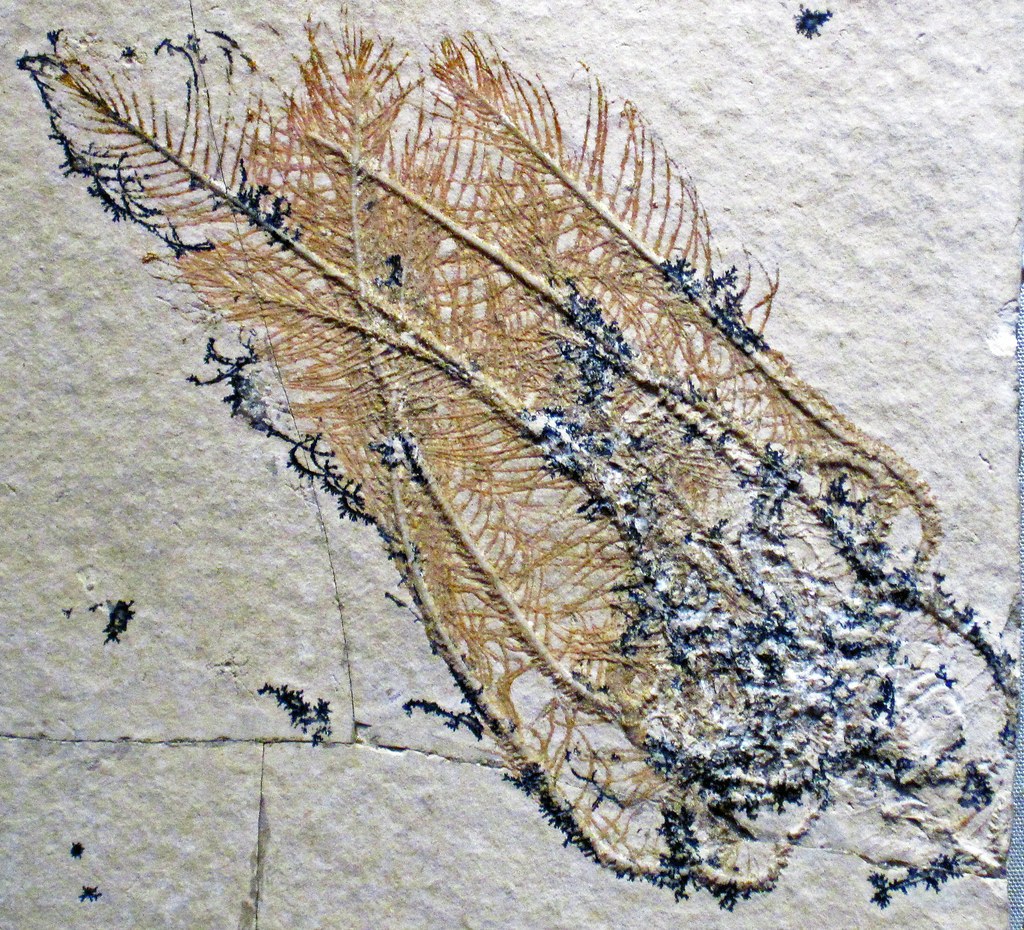
To gauge the rarity: there are millions of crinoid fossils in collections worldwide, but this is only the second with preserved soft tissue ever recorded in history. The chance of something like this surviving 450 million years without decomposing is so small that scientists could hardly believe what they had in their hands.
A natural freezer of 450 million years
How did such delicate tissue survive for almost half a billion years? The answer lies in the exceptional conditions in which the animal was buried. A rare geological process acted as a kind of natural freezer, isolating the tissue from oxygen and bacteria that normally destroy everything soft within days.
This preservation allows something that common fossils could never provide: reconstructing precisely how the creature fed, how it moved its tubular feet, and how it interacted with the ancient seabed environment. It’s like gaining a direct window into the behavior of an animal that no one has ever seen alive.
I imagine the scene at the museum, someone opening an ordinary drawer and realizing that the stone held one of the rarest records of life on Earth. It’s the kind of discovery that reminds us that science doesn’t just happen in shiny laboratories, but also in the patience of reexamining what was already there.
Why a small museum made a giant discovery
There’s a beautiful lesson in this story about the value of small institutions. The museum that housed the fossil is maintained by donations, far from major research centers and million-dollar budgets, and yet it housed a find that any top university would love to have. True science doesn’t just depend on money, it depends on a keen eye.
Discoveries like this also show how old collections remain productive decades after being assembled. Many scientific treasures aren’t waiting to be found in the field, but rather to be rediscovered in drawers and archives, waiting for new technologies and new perspectives to reveal what went unnoticed.
There are countless examples of fossils that were cataloged incorrectly for years, or simply forgotten, until a curious researcher examined them again with modern equipment. More powerful microscopes and imaging techniques that didn’t even exist when these fossils were collected now reveal details invisible to the naked eye, transforming seemingly ordinary stones into windows to the planet’s deep past.
We tend to think that everything that was to be discovered about the remote past has already been discovered. Cases like this prove otherwise: a single fossil, forgotten in a cold Canadian city, was able to rewrite what we knew about the preservation of ancient life and about creatures that populated the seas before any other major animal group.
Creatures that populated the seas before almost everything
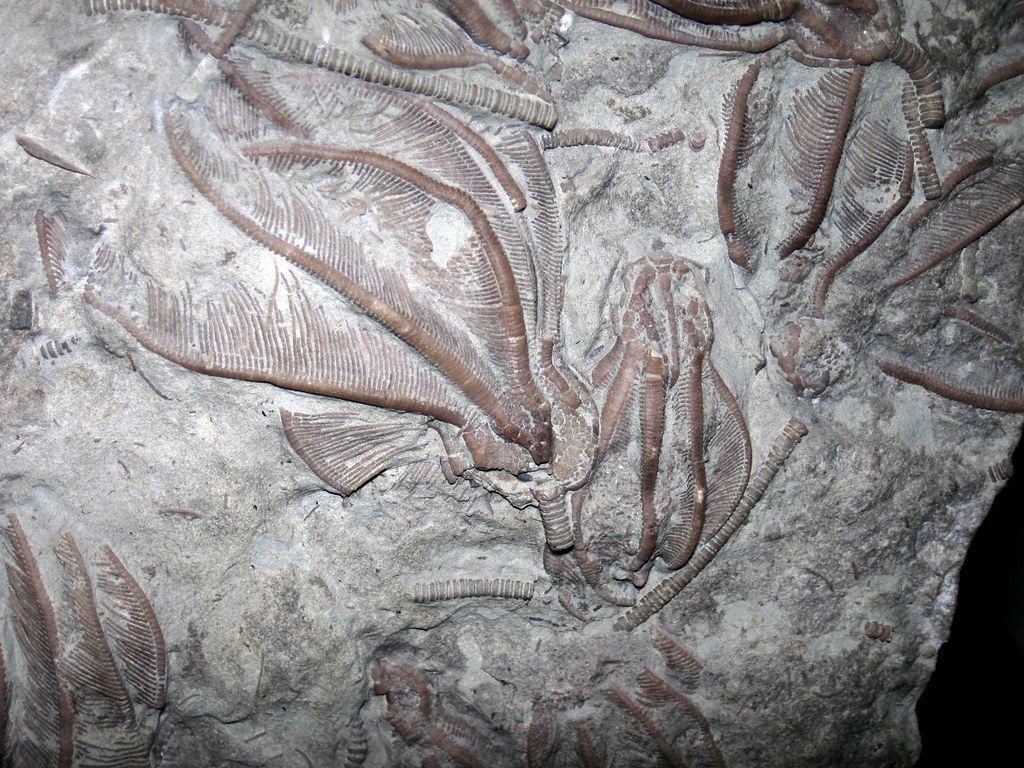
It’s worth learning a bit about this animal that made the news. Crinoids thrived in the seas hundreds of millions of years ago, anchored to the seabed by long stems, with arms that filtered food from the water, looking more like plants than animals. Some call them sea lilies, precisely because of this delicate appearance.
They lived in a time when life was still experimenting with forms that today seem alien to us, long before fish dominated the oceans or anything crawled on land. Studying how these animals fed helps scientists piece together the puzzle of how marine ecosystems evolved over eras that the human mind can barely comprehend.
Curiously, crinoids haven’t disappeared: their relatives still exist in the depths of the sea today. But finding an ancient specimen with preserved soft tissue is like gaining a clear photograph of an ancestor we only knew by silhouettes, and that changes how much we can assert about life in that remote past.
The dating at 450 million years places the animal in the Ordovician period, an era when life was concentrated in the oceans and was undergoing an explosion of diversity. It was one of the most fertile chapters in the history of life on Earth, when the first large reefs emerged and an enormous variety of marine creatures appeared, and each well-preserved fossil from that time is a precious piece to understand where we came from.
It’s a reminder that Earth’s deep time still holds secrets everywhere, even in the most unlikely places. And that just an open drawer with curiosity can bring back, with astonishing details, a little creature that swam in the oceans when the planet was young.
How many other scientific treasures are currently sitting forgotten in some museum drawer?