Portuguese
  Spanish


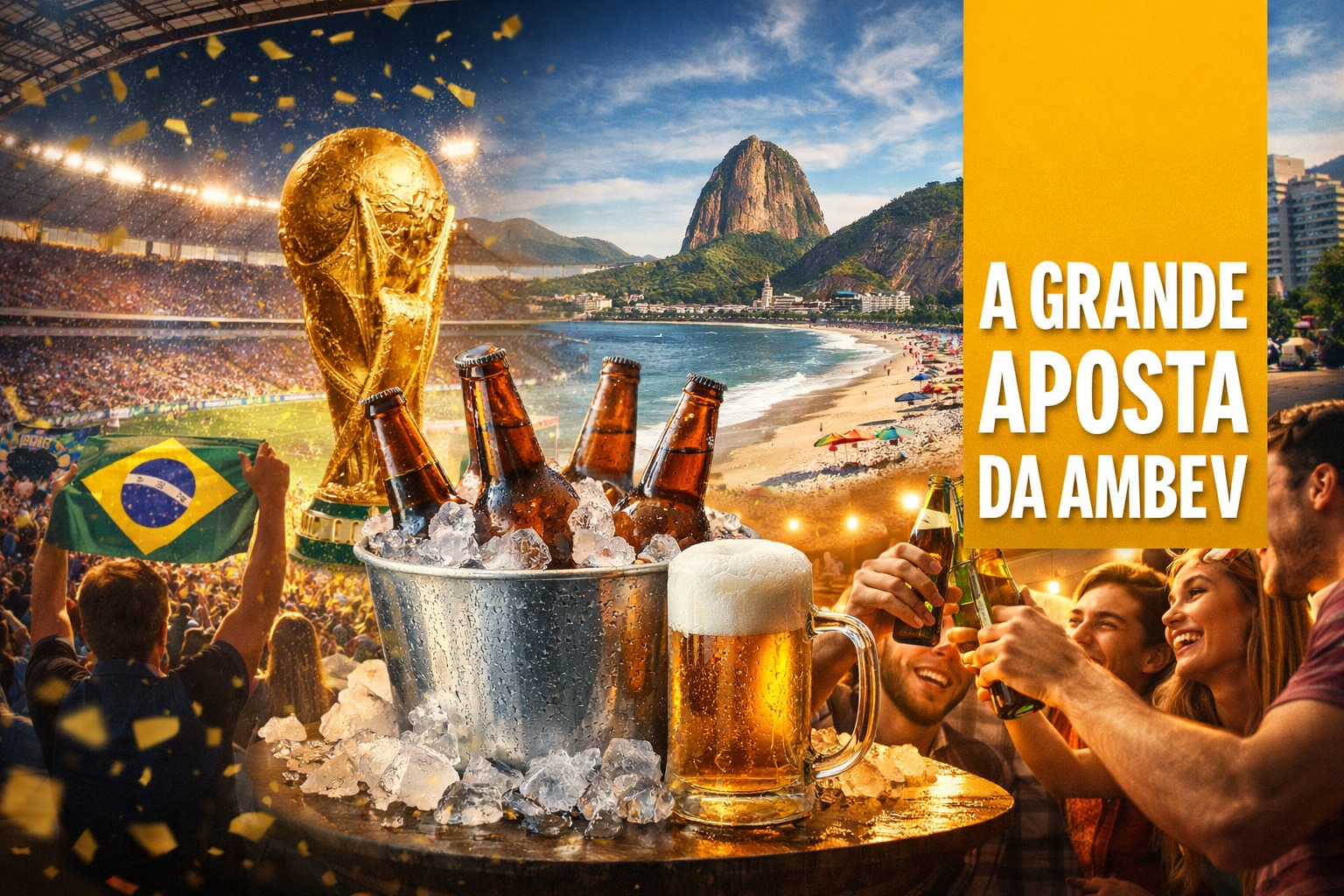


After Decline in Volumes, Ambev Bets on Events, Holidays, and Favorable Weather for Recovery. Zé Delivery Advances, Connects with Young Consumers, and Reinforces Strategy in Popular Brands and the Core Segment
After a period described as having a “bitter taste” for the beer market, Ambev projects a more encouraging scenario for 2026. The company bets that the combination of major events and a generous holiday calendar should rekindle consumption in Brazil, after a year of retraction in volumes sold.
Events and Holidays on the Radar
During a results teleconference held this Thursday, February 12, CEO Carlos Lisboa highlighted factors that, in the company’s view, could change the sector’s rhythm.
“The Carnival is underway in Brazil and in several Latin American markets. Then, we start preparing for the World Cup, which will have a favorable time zone. In Brazil, the calendar is filled with holidays, with several long weekends,” said the executive.
-
As Brazil Expands Social Welfare, Survey Reveals 40% Blame Poverty on Laziness, While 58% Cite Lack of Opportunities

-
China Tightens Control on Antimony, Driving Prices from $22,000 to Nearly $40,000 per Ton as U.S. Rushes to Bolster Strategic Reserves

-
BlackRock Freezes $1 Billion in Brazilian Renewable Energy, Impacting 1.5 GW of Planned Projects and Highlighting Investor Concerns Over Infrastructure Bottlenecks Cutting Up to 25% of Solar and Wind Generation
-
Labor Shortage: Despite Record Average Salary, 90% of Brazilian Bar and Restaurant Owners Struggle to Hire Key Roles Like Sushi Chefs and Head Cooks


The reading is straightforward: more social gathering occasions tend to increase consumption moments. For the company, the last year was adversely affected precisely by the reduction of these opportunities.
The Weight of a Challenging Year
Lisboa attributed the weaker performance to adverse weather conditions and a consumption environment considered more difficult.
According to him, these elements reduced socialization occasions, pressuring both the industry and Ambev’s results.
In the fourth quarter, total volumes fell 3.6% compared to the previous year. In Brazil, the decline was 3.7%.
Beer sales decreased by 2.6%, while non-alcoholic beverages saw a retraction of 6.6%. In 2025, total volumes fell by 3.3%, with a 4.1% drop in Brazil.
“It was the first time we saw such a strong impact on our sector,” said Lisboa. In an analogical tone, he compared 2025 to a difficult season, marked by unstable fields, cold weather, and a constantly changing game.
Fundamentals Preserved
Despite the numbers, the CEO dismissed interpretations that there would be a structural change in consumer behavior.
For him, the movement was cyclical and influenced by specific factors. According to Lisboa, there was no sudden change in the fundamentals of the category.
He emphasized that more engaged consumers got closer to beer throughout the year. What changed, in his words, was how often “the right moment” appeared.
Beer, he stated, remains culturally relevant and linked to socialization.
Zé Delivery in the Spotlight
As an indication of this connection, Lisboa cited the performance of Zé Delivery. The app closed 2025 with the largest result in its history, registering GMV 13% higher than in 2024 and reaching R$ 4.7 billion.
“In strategic terms, Zé Delivery brings us closer to younger consumers, with nearly 80% of them belonging to Gen Z or millennials,” he stated.
For the company, the platform serves as a bridge to audiences that will shape consumption in the coming years.
Ambev’s Strategy for 2026
In the expected recovery for 2026, Lisboa highlighted the role of popular brands, classified as core.
Although premium and super-premium labels have grown “a high single digit,” he stressed that the core is essential to reach the majority of the population, where price is decisive.
According to the executive, most Brazilians still depend on a minimum wage, which makes accessibility a central factor. The core, he said, is the strongest part of the industry.
Ambev closed the fourth quarter with a net profit of R$ 4.5 billion, a decrease of 9.9%. Net revenue fell 8.2% to R$ 24.8 billion, and adjusted EBITDA decreased by 8% to R$ 8.8 billion.
For the year as a whole, profit rose 7.7% to R$ 16 billion, while net revenue fell 1.4% to R$ 88.2 billion. Around 4:09 PM, shares were up 4.44% to R$ 16.47, accumulating a 20.6% increase over 12 months.
Information is from NeoFeed.