Portuguese
  Spanish


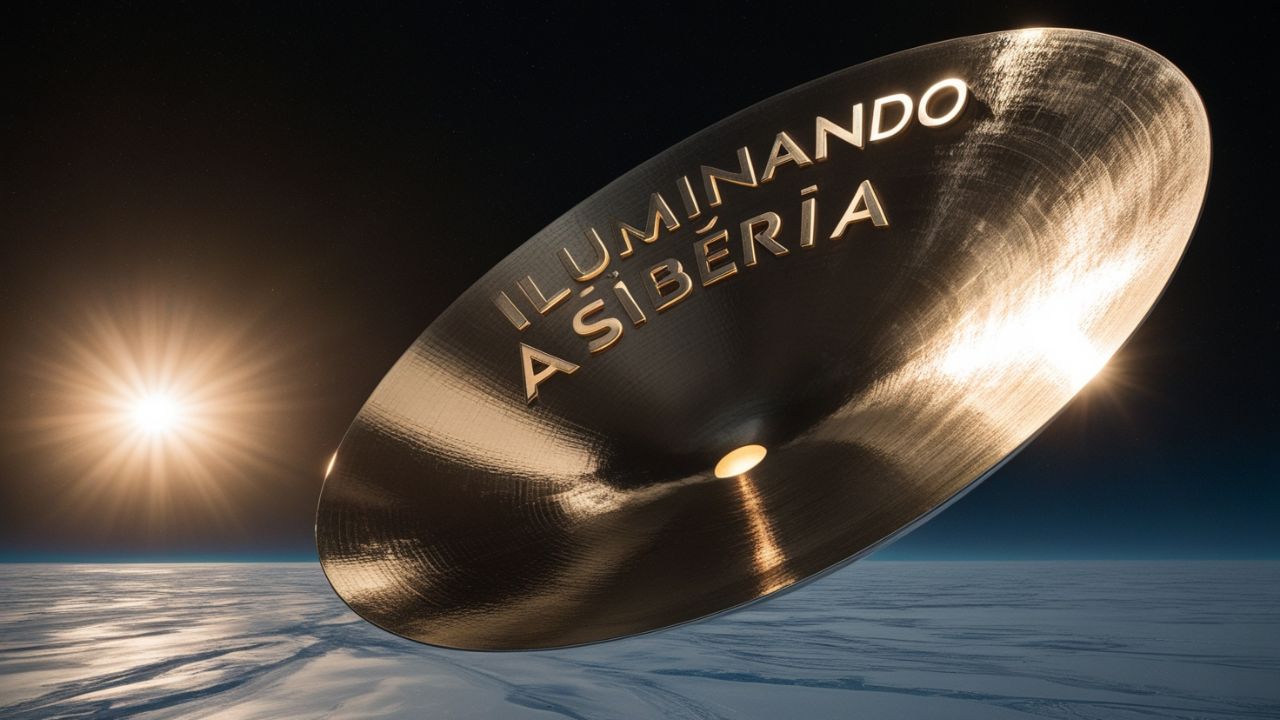

A Bold Bet by Russian Science Tried to Use Space Reflectors to Turn the Polar Night into Day, but Technical Problems, Lack of Funding, and Criticism from Experts Sealed the Fate of the Znamya Project. Learn How Russia Almost Revolutionized Lighting in the Arctic and Why the Idea Was Abandoned.
It Sounds Like Science Fiction: A Giant Mirror in Space Reflecting Sunlight to Illuminate Cities in the Middle of Winter. But This Was Exactly the Idea of the Znamya Project, a Russian Initiative That Attempted to Use Orbital Reflectors to Combat the Extreme Darkness of Siberia. Although It Was a Bold Attempt, the Project Faced Technical Challenges That Prevented Its Success.
The Origin of the Idea: Space Mirrors in History
The Idea of Using Space Mirrors to Reflect Solar Light Was Not New. In 1923, German Scientist Hermann Oberth Suggested That Gigantic Concave Mirrors Could Be Positioned in Space to Reflect Light to Strategic Points on Earth. He Believed This Could Prevent Disasters, Melt Icebergs, and Even Influence the Climate.
During World War II, Nazi Scientists Revived This Idea to Create the “Solar Rifle,” an Orbital Weapon That Would Use Concentrated Sunlight as a Kind of Death Ray. Although the Project Was Never Realized, It Highlighted the Potential of Space Mirrors for Various Applications.
-
Mechanics Retrofit Old Fiat Uno with BYD Electric Motor for Silent, Low-Voltage Operation Reaching Nearly 60 km/h in Home Test

-
Free Internet Begins Testing in São Paulo Metro Stations, Network-Wide Rollout Expected by 2026
-
Man Transforms Desert Ranch into Forest by Harvesting Rainwater, Captures 15,000 Gallons in One Downpour, Builds 100 Dams with 6 Volunteers

-
16 kWh Solar Battery Powers Entire Home Off-Grid, Lasts Over 22 Years with 8,000 Cycles, Delivers 10,000 Watts for Appliances



NASA’s Plans and the Russian Bet

In the 1970s, Engineer Krafft Ehricke, Who Worked in the U.S. After World War II, Proposed the Use of Space Mirrors to Illuminate Cities and Provide Solar Energy Efficiently. NASA Even Studied the Concept but Never Secured Enough Funding.
In Russia, on the Other Hand, Scientist Vladimir Syromiatnikov Saw an Opportunity to Use the Technology to Solve a Practical Problem: Illuminating Regions of Russia Where Night Lasts for Months.
The Development of the Znamya Project
The First Step Was to Test the Feasibility of the Idea in Practice. The Znamya 1 Never Reached Space, Only Serving for Ground Tests. But the Znamya 2, Launched in 1992, Took an Aluminized Mylar Mirror into Space and Managed to Reflect a Beam of Light the Size of a Full Moon onto Earth.
The Experiment Was a Historic Milestone but Revealed Some Limitations: the Reflected Light Was Weak, Diffuse, and Unstable, Making Its Use for Urban Lighting Unviable.
Despite the Challenges, the Partial Success of the Znamya 2 Encouraged the Creation of an Improved Version, the Znamya 2.5, Which Would Have a Larger Mirror and the Capacity to Illuminate an Area of 8 km in Diameter.
The Failure of the Znamya 2.5 and the End of the Project
In 1999, the Znamya 2.5 Was Launched with the Promise of Generating a Brightness Equivalent to Five Full Moons. However, an Error in the Activation of the Spacecraft’s Antenna Caused the Mirror to Get Stuck and Tear Before Fully Deploying. The Project Was Aborted and the Debris Burned Up Upon Reentering Earth’s Atmosphere.
The Next Plan Was the Znamya 3, with an Even Larger Mirror, but the Failure of the Znamya 2.5 Undermined Confidence in the Project. Critics Pointed Out That Artificial Lighting Could Harm Astronomical Observatories and Affect Nighttime Fauna and Flora. Without Funding, the Project Was Discontinued.