






 Portuguese
  Spanish


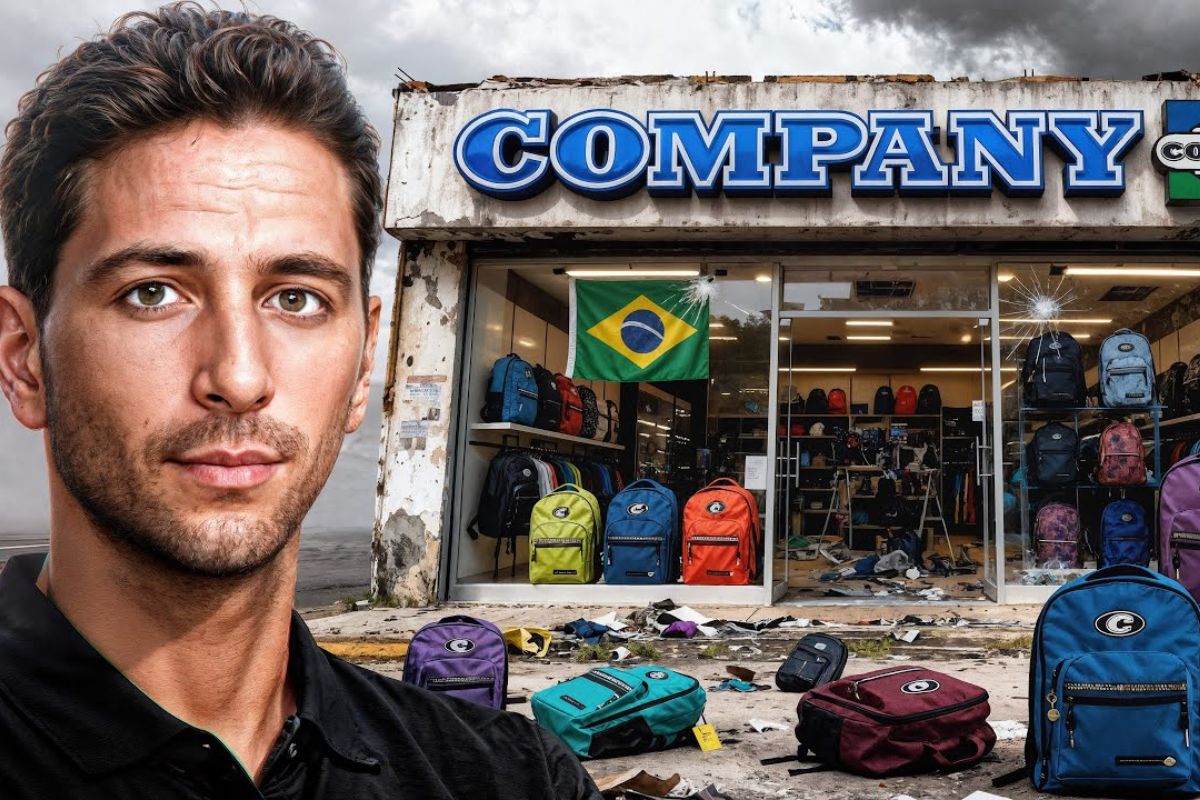


Company: 80s Backpack, Opening to Imports and Corporate Disputes Explain the Decline and Online Survival
The trajectory of Company, from the backpack that became the youth uniform in the 80s to the disappearance from store windows, involves brand choices, competitive shocks from the opening to imports, and corporate disputes after the loss of its main creator. The brand that defined belonging for a generation resurfaced online years later, preserving memory and desire.
Here you will find the story of Company without easy nostalgia: backpack as a symbol, 80s as context, opening to imports as a turning point, corporate disputes as a rupture, and the possible reinvention on the internet. The goal is to separate myth from facts and show how internal decisions and external changes shaped the destiny of an iconic brand.
Origin and Ascent: When the Backpack Becomes Identity
Company is born connected to youth behavior and a beach and urban aesthetic.
-
Rio de Janeiro School’s Listening Program Reduces Dropout Rates and Boosts Literacy, Set to Expand to 350 Municipal Schools

-
Five-Year-Old Turns Crayon Drawings of Colorful Socks into a Brand, Raising $200,000 to Aid Vulnerable Children

-
California Teacher Converts Moving Truck into Spacious, Light-Filled Mobile Home to Overcome Zoning Restrictions and Cut Costs

-
Daughter of a Construction Worker and a Baker, Bruna Achieves Dream of Studying Medicine at Brazil’s Prestigious USP at 21



The rubberized backpack with the distinctive C crosses schools, beaches, and fashion centers, and in the 80s, it transforms a school item into a symbol of belonging.
The strength of the brand was in selling emotion, not just utility, positioning the backpack as an extension of style and status.
At its peak, Company expands stores, diversifies lines, and consolidates a reputation for quality and delivery speed.
In the 80s, the Company backpack appears in windows, editorials, and on the backs of students, surfers, and artists.
Being seen with the backpack meant belonging to the group. The company successfully interpreted the youthful imagination and the need for expression.
This ecosystem of product, iconic displays, and sponsorships creates a spiral of desire that sustains Company throughout the decade, when “80s” meant color, lightness, and novelty.
Opening to Imports: The Competitive Shock
The turning point of the 90s brings the opening to imports and a new measuring stick for comparison.
With foreign models arriving on the shelves, the Company backpack loses its monopoly on modernity.
The opening to imports shifts the reference of design and price, accelerates aesthetic obsolescence, and tightens margins.
Without a clear repositioning, the communication ages.
Direct result of the opening to imports: desire spreads to global brands, and Company must compete in another league.
The death of the main creative engine precipitates reconfigurations.
The corporate dispute among heirs and partners consumes energy and focus, stalls strategic decisions, and delays investments in product and brand.
The prolonged corporate dispute amplifies the loss of timing in an already more aggressive market.
In parallel, the backpack slowly disappears from the displays, reflecting a branding without a unique command and a collection that has ceased to lead trends.
Slow Decline and Disappearance from the Windows
Without renewing narrative and assortment quickly, Company experiences gradual erosion. In the stores, the backpack ceases to be omnipresent; in advertisements, the memory fades.
In the 80s, the brand dictated behavior; in the following decade, it responded to it.
When the corporate dispute and the opening to imports combine, the effect is cumulative: reduction of points of sale, downsizing of staff, and closing of units.
The curve does not break overnight; it is a descent controlled by inertia.
Decades later, Company reappears with online survival. The central asset now is memory: the backpack as an affective icon, the 80s as an aesthetic and cultural reference.
The brand understands that not everything returns, but much remains, and creates space for editions and products that connect with collectors, nostalgics, and new audiences.
In digital times, traffic replaces the physical display, and the story becomes a competitive differential.
What We Learn from the Company Cycle
Three keys help to read the case:
1. Symbol Products Age Without Disciplined Renewal. A backpack can be an icon, but it needs short cycles and constant reading of use and desire.
2. Opening to Imports Changes the Game and the Metrics. It is not enough to “do well”; one must compare oneself to the best in the world.
3. Governance Matters. Corporate disputes destroy invisible value, delay the roadmap, and cost timing, the most scarce asset in fashion and retail.
The story of Company shows how an icon is born, matures, and faces internal and external shocks.
The backpack became identity in the 80s, but the opening to imports and the corporate dispute explain the slow decline and change of course.
Online survival confirms that brands with a strong narrative never disappear completely: they rewrite themselves where the public still finds them.
What is your strongest memory of Company — the backpack at school in the 80s, the wave of opening to imports, or the absence after the corporate dispute?




Company, toulon, sundek, redley, aldeia dos ventos, bad boy, jamf e por aí vai.. Só marca de playboy, mas eram produtos BONS e bonitos, sonho de consumo de toda molecada influenciada nos anos 80/90 no RJ. Bons tempos, quando essa cidade ainda prestava pra alguma coisa.
Comprei uma Company há alguns meses, achei no varejo online. Era meu sonho, ter uma e de quebra, comprei uma carteira também.
A saudades de quando morei no Rio entre anos 86 a 89, tive essa mochila até alguns anos atrás, estava toda remendada, eu adorava ela, era vermelha, ela foi a cara do Rio de janeiro