Portuguese
  Spanish


Where once there was the fourth largest lake on the planet, today there are stranded ships on the sand and clouds of salty dust that make entire populations sick. The bet now is on plants capable of growing in saline soil and solar-powered pumps, although the scientists themselves admit that the sea will never return to its former size.
One of the greatest environmental disasters in history has gained a new front of combat. To contain the salt storms that plague Central Asia, scientists from China and Uzbekistan have joined forces in the former bed of the Aral Sea, planting salt-tolerant species and using solar energy to try to bring life back to a land that turned into a desert, in an effort that mixes science, international cooperation, and realism about the limits of what can be recovered.
The Aral Sea, actually a large saltwater lake located between Uzbekistan and Kazakhstan, was once the fourth largest in the world, but lost more than 90% of its area since the 1960s when it began to dry up. The process, considered a man-made catastrophe, left behind a vast salty desert. Below, we explain what happened to this lake, how the recovery initiative conducted in recent years works, and why, despite the progress, experts preach caution about the results.
How the fourth largest lake in the world turned into a desert
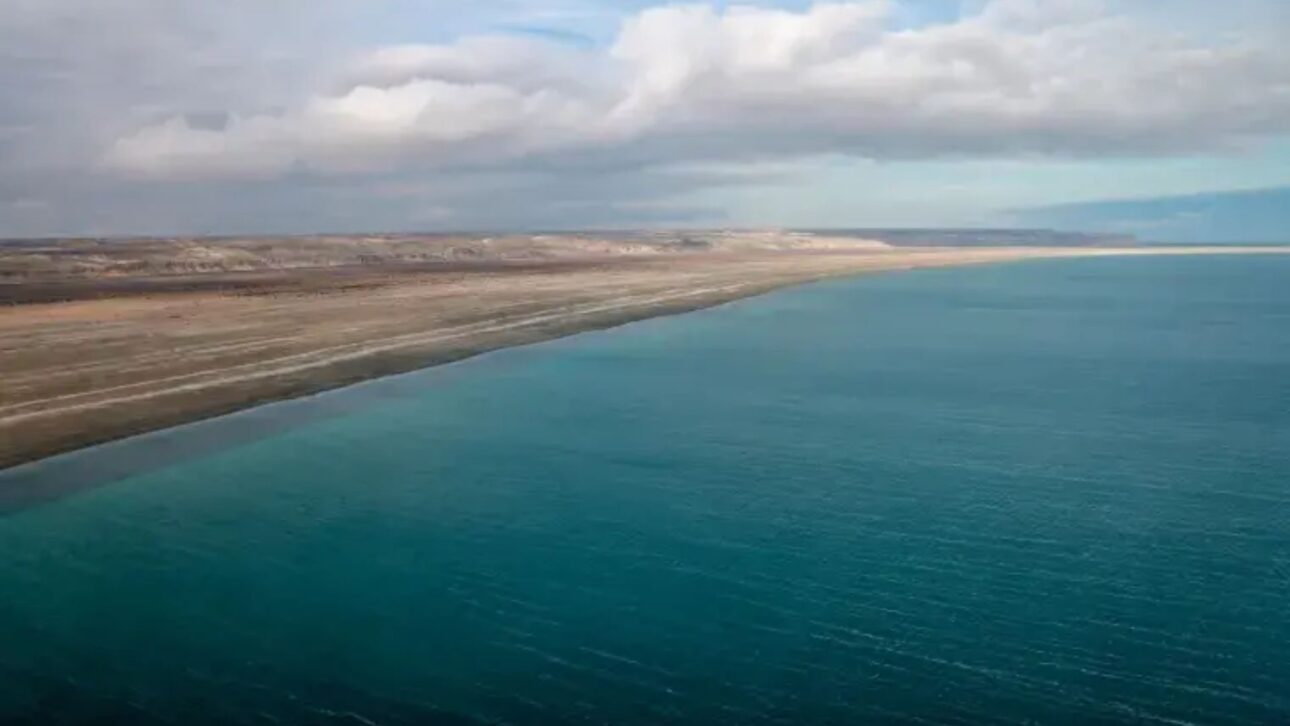
During the Soviet era, the two major rivers that fed the lake were diverted to irrigate crops, mainly cotton, in the middle of the Central Asian desert, and this massive withdrawal of water caused the Aral Sea to shrink rapidly from the 1960s, until it lost most of its original surface.
-
Two Newborns Named Cecília Share Same Birth Minute at Brazilian Hospital, Creating Rare Coincidence

-
Brazilian Couple Turns Property into Culinary Hub, Investing $400,000 to Build a Business Earning $800,000 Annually
-
Couple Quits Jobs, Converts 1981 VW Van into Home, Travels 80,000 Kilometers Across the Americas, and Wins Surprise Tickets to See Messi Make History at the World Cup

-
Rio de Janeiro School’s Listening Program Reduces Dropout Rates and Boosts Literacy, Set to Expand to 350 Municipal Schools


What remained was the Aralkum Desert, an area of about 60,000 square kilometers of soil covered with salt and residues.
Cities that once thrived on fishing, like Moynaq in Uzbekistan, are now dozens of kilometers from the water and today display rusted ships stranded on the sand, in a scene that has become a symbol of disaster and attracts researchers and visitors from all over the world.
The salt storms that make the region sick
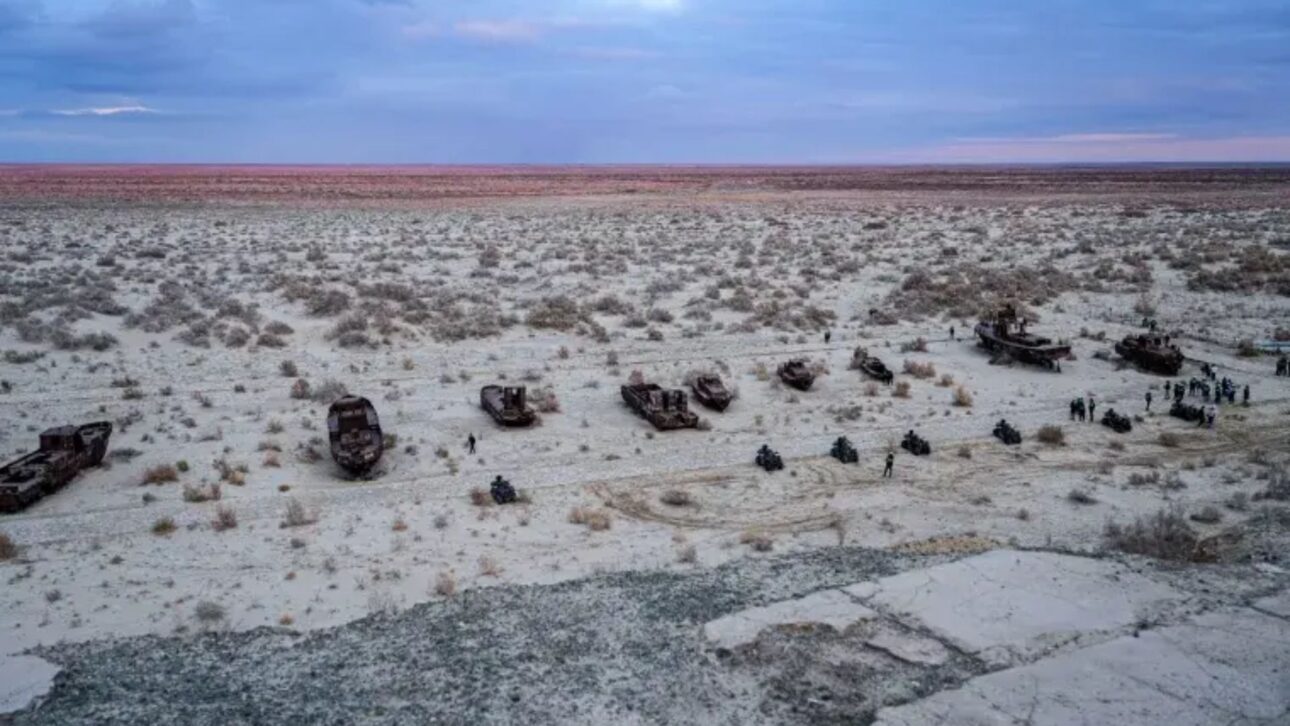
The exposed bed of the former Aral Sea has become one of the main sources of sand and dust storms in the region, carrying salt and toxic substances for hundreds of kilometers, harming the health of populations, air quality, and the local economy of Uzbekistan and neighboring countries.
These storms worsen respiratory problems, contaminate agricultural soil, and make life even more difficult in a region already afflicted by the loss of the lake.
It is precisely to try to contain this phenomenon that recovery initiatives come into play, aiming to stabilize the soil and reduce the amount of salty dust released into the air, even without the expectation of returning the sea to its original size.
The partnership between China and Uzbekistan
This is where international cooperation takes center stage.
Scientists from the Xinjiang Institute of Ecology and Geography, affiliated with the Chinese Academy of Sciences, are working with researchers from Uzbekistan applying Chinese experience in combating desertification and soil salinization, accumulated in arid regions of northwest China, with conditions similar to those of the Aral Sea basin.
According to the Chinese Academy of Sciences, at the beginning of 2025, the Chinese institute sent about 1.5 tons of salt-tolerant plant seeds to Uzbekistan for the creation of a joint saline species garden, in addition to bringing more than 200 varieties resistant to salt and drought.
The idea is to cultivate these plants on the shores and then on the dry bed of the lake itself, supporting ecosystem restoration and serving as a basis for biodiversity research.
Plants that survive salt and solar-powered pumps


The strategy combines biology and clean technology.
The heart of the initiative is the so-called halophyte plants, salt-tolerant species like the saxaul shrub, whose deep roots help fix sandy soil, contain dust storms, and retain water, being one of the main bets to recover the degraded land around the Aral Sea.
To the technology of the plants is added the use of solar energy.
According to the Chinese institute, drip irrigation systems powered by photovoltaic panels have been installed in the region, including a smart model aimed at cotton cultivation, which, according to the institution, has tripled productivity and reduced water consumption and costs.
Clean energy allows efficient irrigation to reach remote and dry areas where no electrical grid is available.
Advances on the Uzbek side and the warning from specialists
Uzbekistan is also conducting its own recovery efforts.
Since 2021, the country has planted more than 45 million trees in about 1.9 million hectares of the dry bed in the Karakalpakstan region and created artificial lakes supplied by one of the basin’s rivers, according to the Ministry of Ecology, in actions also supported by international organizations such as the World Bank and the United Nations Development Program.
Despite the advances, the specialists themselves are keen not to sell illusions.
Researchers and organizations monitoring the region warn that the Aral Sea is unlikely to return to its former size, and that planting trees and shrubs is not a magic solution, but a way to mitigate damage, stabilizing the soil and reducing dust storms.
Many of the species in use, such as the Arundo donax plant, are still in the field testing phase, and the definitive results will depend on years of monitoring.
The history of the Aral Sea is, at the same time, a warning about the impact of human decisions on the environment and an example of how science and cooperation between countries can offer responses, albeit partial, to ecological tragedies.
The use of salt-tolerant plants and solar energy will not resurrect the lake that once existed, but it can make life more bearable for those who remain, reducing salt storms and returning some greenery to a battered land.
It is a reminder that recovering what has been destroyed is often much more difficult, slow, and expensive than preserving.
And you, were you already familiar with the history of the Aral Sea and the environmental disaster that turned it into a desert? What do you think about the use of salt-tolerant plants and solar energy to recover the region? Leave your comment, share your opinion, and help spread the article to those interested in the environment, science, and the great ecological challenges of the planet.