Portuguese
  Spanish


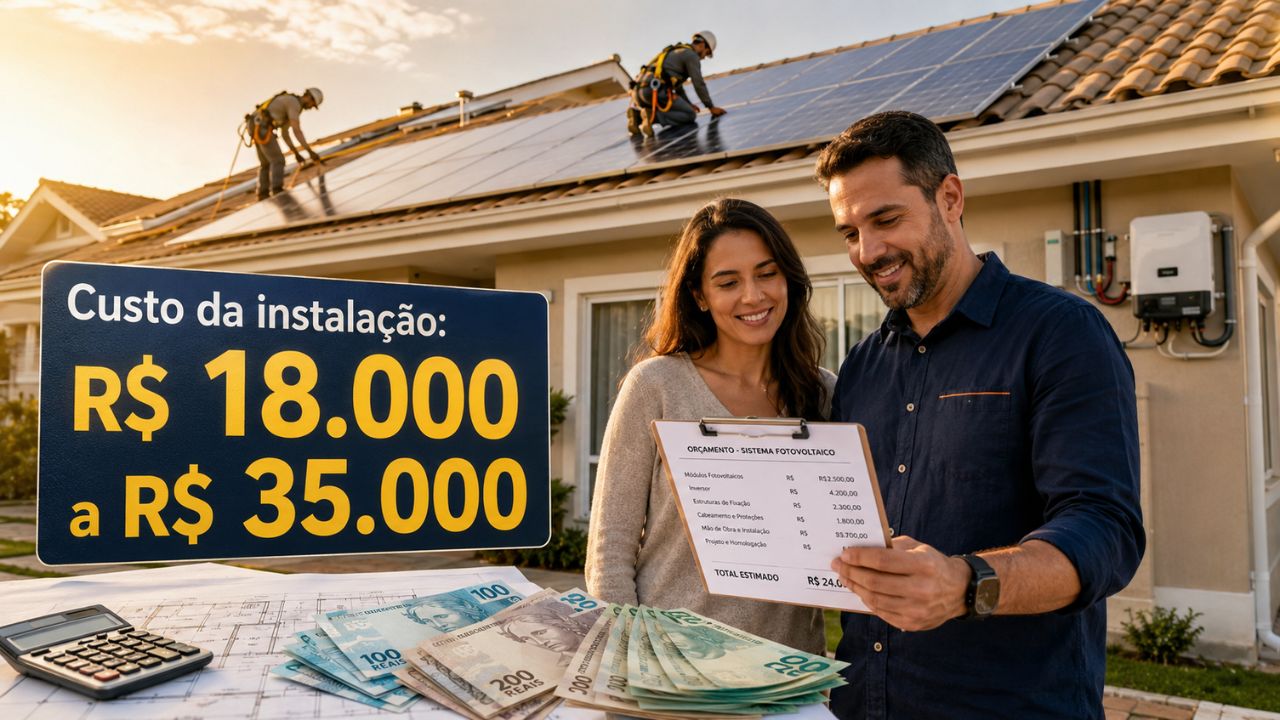

Solar energy: how much does it cost to install panels at home, what factors influence the price, and how long does it take for financial return.
In 2026, the installation of solar energy in homes has attracted consumers interested in reducing electricity costs and mitigating the impacts of tariff variations. According to the Market Monitor, for medium-sized properties, the investment usually ranges between R$ 15,000 and R$ 28,000, depending on the property’s characteristics, monthly energy consumption, and project specifications.
The system is designed to meet the household’s demand and can generate savings over the years after installation. The final cost does not depend solely on the equipment used. Aspects such as roof structure, energy generation needs, and local conditions also directly influence the budget.
How much does solar energy cost for a house with average consumption?
In a home with three bedrooms, the monthly consumption usually revolves around 400 kWh. To meet this need, a system with a capacity between 3 kWp and 4 kWp is typically recommended.
-
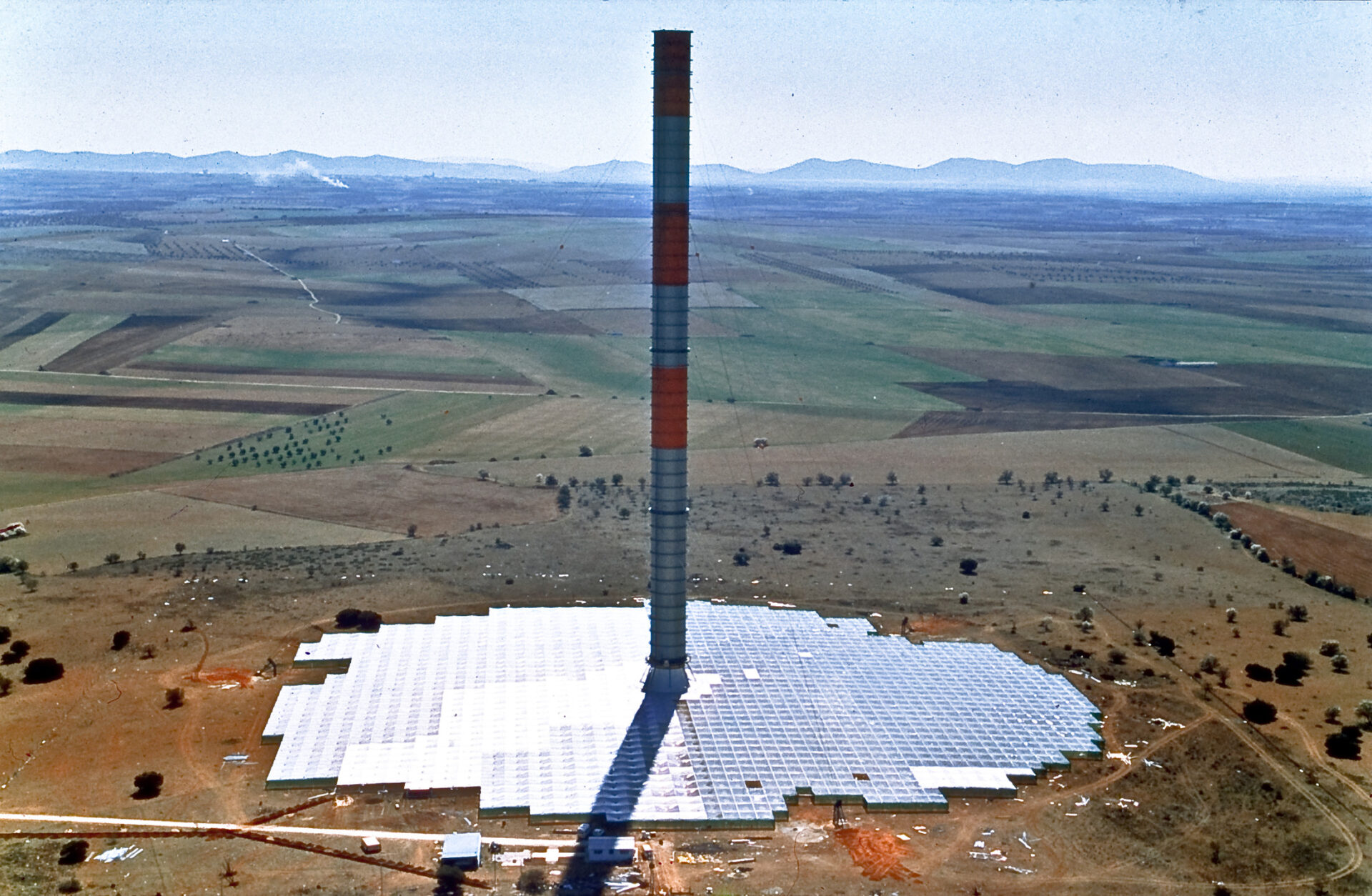
Solar Chimney in Spain Harnessed Sun to Generate Electricity for 7 Years Without Burning Fuel

-
Solar energy reaches 55 GW, becoming the second largest power source in Brazil’s energy mix

-
Solar energy can increase property value by up to 10% and become a selling point.
-
Solar and wind energy surpass natural gas for the first time in the world and accelerate energy revolution

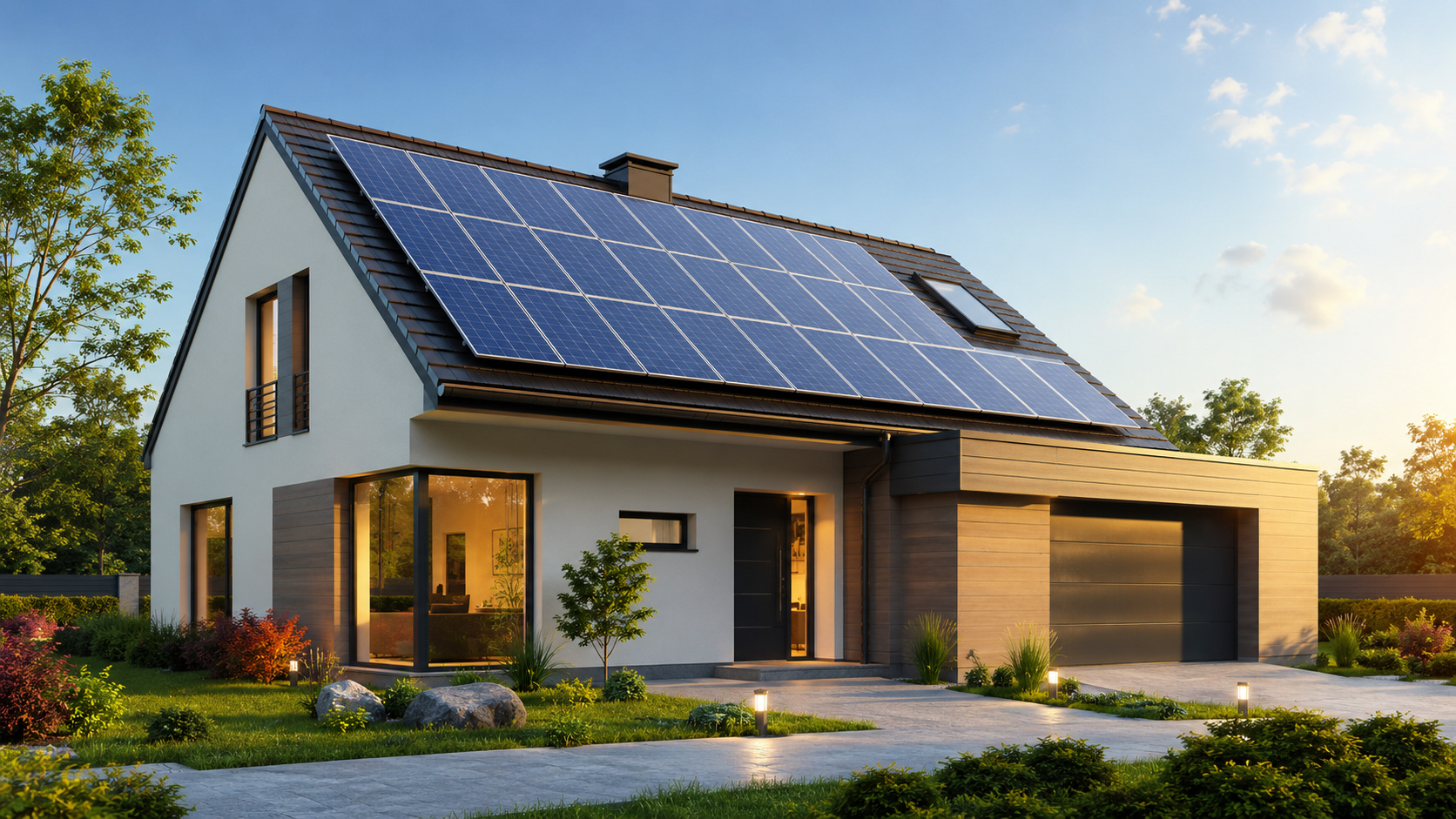

In this usage range, the estimated investment remains between R$ 15,000 and R$ 28,000. Correct sizing is considered important to avoid purchasing equipment beyond the property’s actual needs.
In addition to generation capacity, the project should consider the space available for module installation.
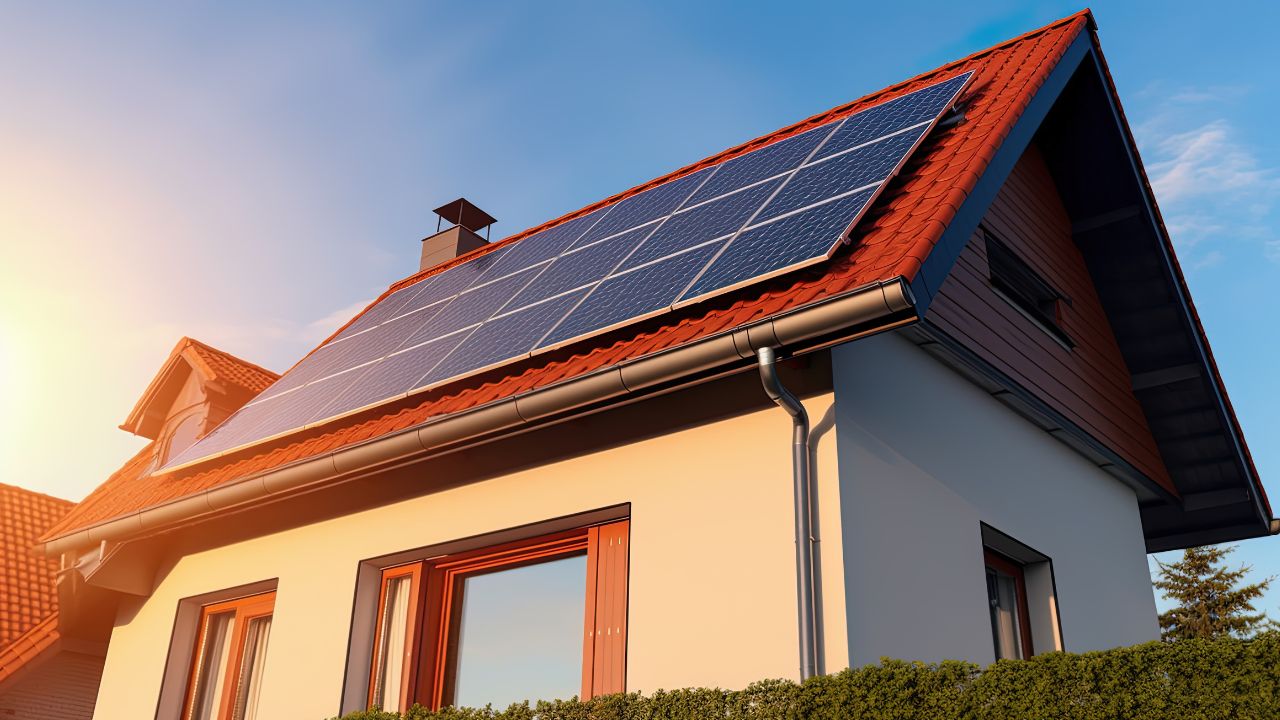
Necessary structure for the system
One of the requirements for system implementation is related to the available area on the house’s roof.
For a property with average consumption, the set of panels usually requires:
- Between 15 and 20 square meters of usable area;
- Generation capacity between 3 kWp and 4 kWp;
- Sufficient production to support continuous-use devices;
- Support for equipment such as televisions and electric showers.
These factors are evaluated during planning to define the appropriate number of modules.
Solar energy: how much does it cost for properties with high consumption
Homes that use higher power equipment tend to require more robust systems. Cases involving consumption above 700 kWh per month generally demand a larger number of components to meet the property’s energy needs.
In these situations, the total cost can exceed R$ 35,000. Market Monitor points to this value as a reference for projects with higher electrical demand. The increase in budget occurs mainly due to the need to expand the installed generation capacity.
Return time
The financial analysis of a photovoltaic system considers the period necessary to recover the amount invested in the installation.
In the sector, this interval is usually called payback. In most residential projects, the financial return occurs between four and seven years.
After this period, the energy produced by the system becomes a direct saving for the property owner. This characteristic is one of the factors driving the demand for the technology.
Rules for energy compensation
The utilization of the generated electricity is also linked to the regulations governing the sector. The rules established by the National Electric Energy Agency allow the use of credits when there is a surplus of generation injected into the public grid.

This mechanism contributes to ensuring the safe operation of the system and is part of the regulatory framework applied to residential projects.
Roof type affects the budget
The shape of the house’s roof can alter the complexity of the installation. Colonial roofs, flat slabs, and metal structures require different solutions for panel mounting. As a result, assembly costs may vary from one property to another.
Moreover, each project needs to consider the specific characteristics of the existing structure before determining the materials to be used.
Location influences the performance of the panels
The incidence of sunlight is not uniform across all Brazilian regions.
Locations that receive more radiation throughout the year can achieve the same energy generation using fewer modules. This can help reduce the initial investment required for system implementation.
On the other hand, regions with different conditions may require project adaptations to achieve the expected performance.
Precautions before hiring a company to install solar energy
Before signing a contract for solar energy installation, some points deserve attention.
Among them are:
- Requesting a detailed project;
- Checking the guarantees offered;
- Identifying the brands of the equipment;
- Confirming the homologation of the components;
- Conducting a technical visit to the property.
This information helps to understand the operation of the proposed system and allows evaluating if the solution is suitable for the characteristics of the residence.
The definition of the ideal system involves analyzing energy consumption, the structural conditions of the property, and the capacity needed to meet the property’s demand. With investments ranging from R$ 15,000 to R$ 28,000 for standard residences and potentially exceeding R$ 35,000 for larger projects, solar energy requires prior planning.

On the other hand, the potential for reducing electricity expenses and the estimated return between four and seven years make the technology an alternative considered by many consumers seeking greater predictability in energy costs.
Source: Monitor do Mercado