






 Portuguese
  Spanish


Historical Discovery Announced by LIGO-Virgo-KAGRA Collaboration Proves Black Hole Area Theory, Reinforcing Hawking’s Legacy and Scientific Revolution
One of the most notable hypotheses of British physicist Stephen Hawking has finally been confirmed, more than half a century after it was formulated. The revelation was announced by the international collaboration LIGO-Virgo-KAGRA (LVK), linked to Caltech, and published in the journal Physical Review Letters on September 10, 2025. The result represents a milestone for modern physics and for the understanding of the cosmos.
According to the team, the confirmation occurred after the detection of gravitational waves on January 14, 2025, when the LIGO observatory recorded the merger of two black holes located 1.3 billion light-years from Earth. The cosmic event, named GW250114, provided the strongest evidence yet obtained for the so-called black hole area theory, formulated by Hawking in 1971.
What the Black Hole Area Theory States
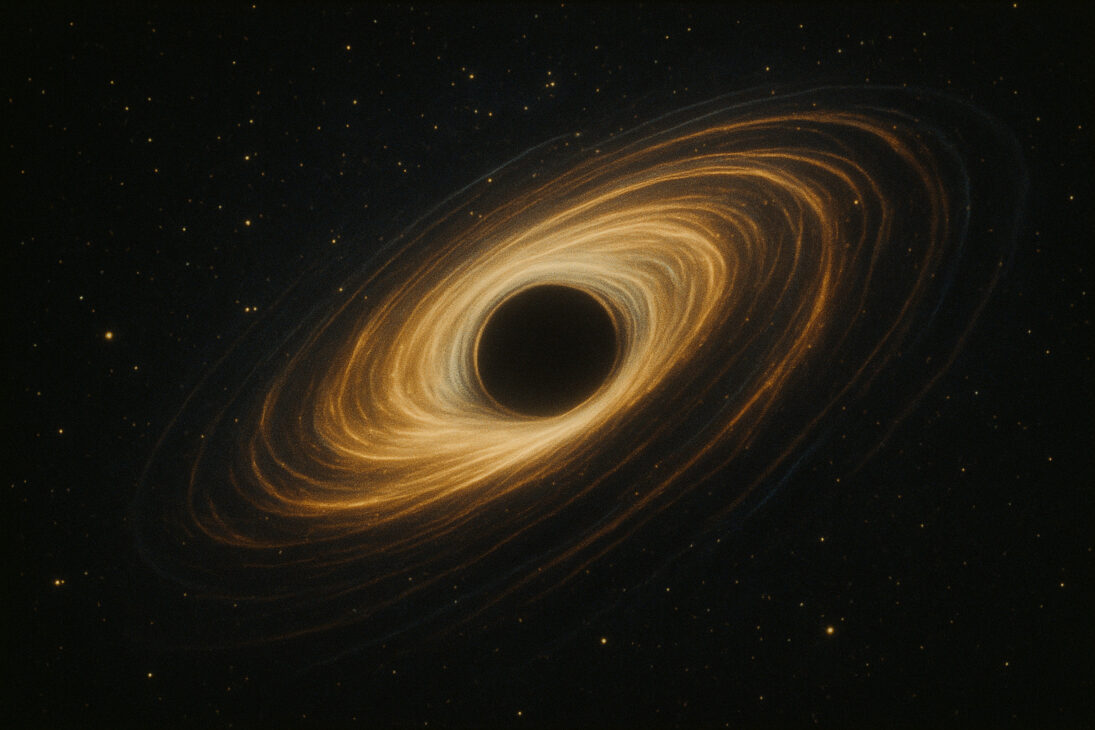
The theory proposed by Hawking establishes that the total area of the surface of black holes can never decrease. This means that even when a collision occurs between two cosmic giants and part of the energy is dissipated as gravitational waves, the end result is always an increase in the sum of the areas.
-
China Develops Custom 140-Ton Electric Mining Truck with 770 kWh Swappable Battery, Deploys 290 Units in Xinjiang’s Largest Zinc Mine

-
Meta to Launch Arena, a New Prediction App Targeting 3.56 Billion Users, Competing with Polymarket and Kalshi

-
Scientist Challenges Famous Human Evolution Theory, Argues Homo Sapiens Evolved Gradually Over Thousands of Years
-
15-Year-Old American Builds Ocean Generator with PVC Pipe and 3D-Printed Propeller for $12, Wins National Prize, Presents at White House, and Makes Forbes 30 Under 30 List




In the case recorded by LIGO, calculations showed that before the merger, the black holes had a combined area of about 240,000 km². After the collision, the newly formed black hole had an area of 400,000 km², nearly double. That is, scientists literally managed to “hear” the growth of the area through the detected gravitational waves.
This observation provided confirmation that mass and rotation combine in such a way that they never reduce the “boundary” of the black hole. For researchers, this represents one of the most important results ever achieved by modern astrophysics.
The Weight of Scientific Confirmation
The confidence level of the study reached an impressive 99.999%, becoming the most robust validation to date of Hawking’s theory. A preliminary test had been conducted in 2021, but with noisier and less precise data. Now, with the technological evolution of LIGO’s detectors, it was possible to measure spacetime variations smaller than a tenth of a thousandth the size of a proton, something unimaginable just a few years ago.
According to an article published by Physical Review Letters and information released by Caltech, the clarity of the signal allowed for rigorous testing of fundamental laws of physics. “We can hear the signal clearly, and this allows us to explore the limits of the theory,” stated Katerina Chatziioannou, a physics professor at Caltech and a member of the team.
The Legacy of Stephen Hawking and the Reaction of the Scientific Community
The confirmation of the hypothesis rekindled global interest in the legacy of Stephen Hawking, who passed away in 2018. Physicist Kip Thorne, a collaborator of Hawking and one of the founders of LIGO, emphasized that the Briton hoped in life for the validation of his theory. “If Hawking were alive, he would have delighted in seeing the prediction confirmed before our eyes,” Thorne stated.
In addition to the emotional aspect, the achievement reinforces the scientist’s role in the attempt to unify general relativity with quantum mechanics, one of the greatest challenges of modern physics. This bridge between theories continues to be the subject of studies in laboratories and universities around the world.
Technological Advances and the New Era of Astronomy
The LVK collaboration explained that the feat was only possible after a decade of improvements in equipment. Today, LIGO’s detectors can measure alterations in the fabric of spacetime so small that they equate to a minimal fraction of the size of a proton. This precision has opened doors to previously unimaginable analyses.
According to Caltech, gravitational wave astronomy has matured extraordinarily since the first detection in 2015. In ten years, around 300 black hole merger events have been recorded, and currently, the observatory is identifying a new case every three days. This accelerated pace promises to revolutionize the way we understand the universe.
A Tribute to the British Physicist and a Milestone for Science
The information was released by the UOL portal based on official communications from the LVK collaboration and recent scientific articles. For experts, the confirmation represents not only the validation of a theory but also a tribute to the physicist who inspired generations.
Scientists emphasize that the relationship between the area of black holes and their entropy, developed in the 1970s by Hawking and Jacob Bekenstein, paved the way for what is now considered the beginning of the search for a unified theory. The result of 2025 is, therefore, a symbolic and practical victory: a piece that connects the past, present, and future of physics.
“I don’t know what will come in the next ten years, but these first years have radically changed what we know about the cosmos,” declared Katerina Chatziioannou from Caltech in an interview following the study’s release.






