






 Portuguese
  Spanish
  4 min of reading
  0 comments


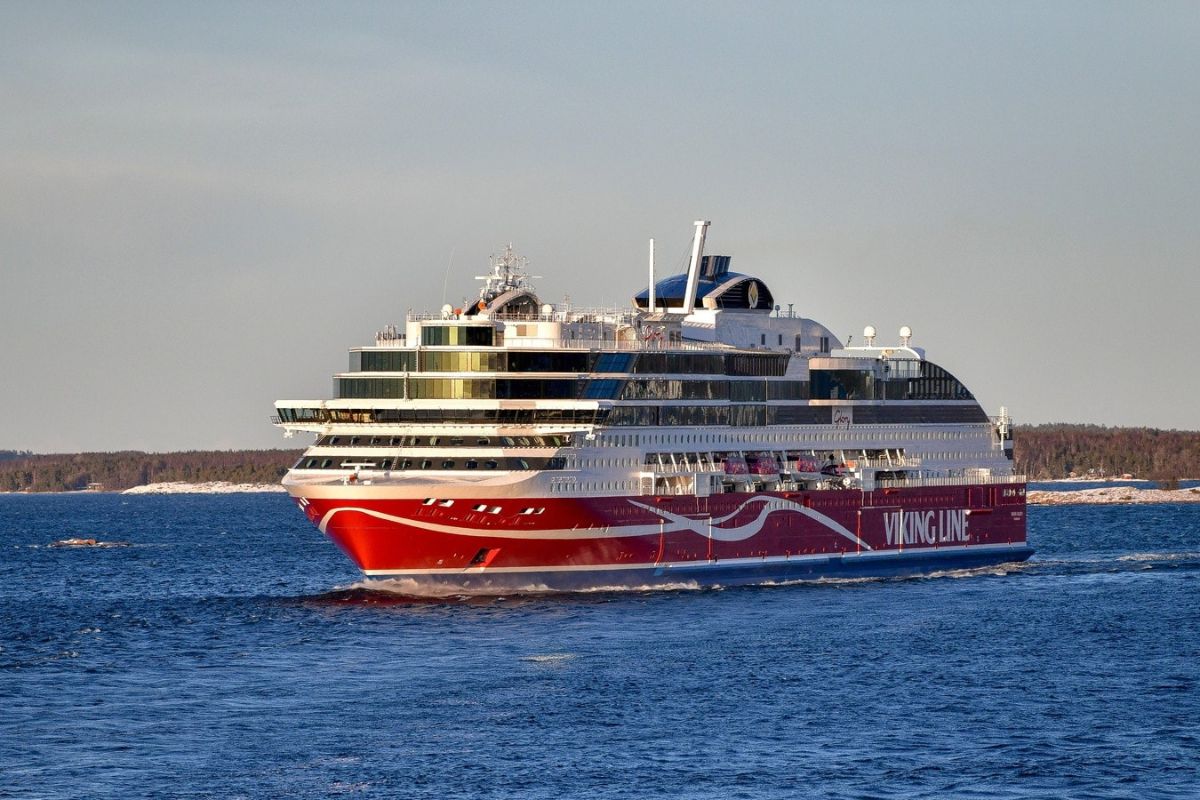
An Electric Ship Almost 200 Meters Long and a Battery the Size of 1,200 Tesla Cars: The Future of Navigation Already Has a Date to Set Sail
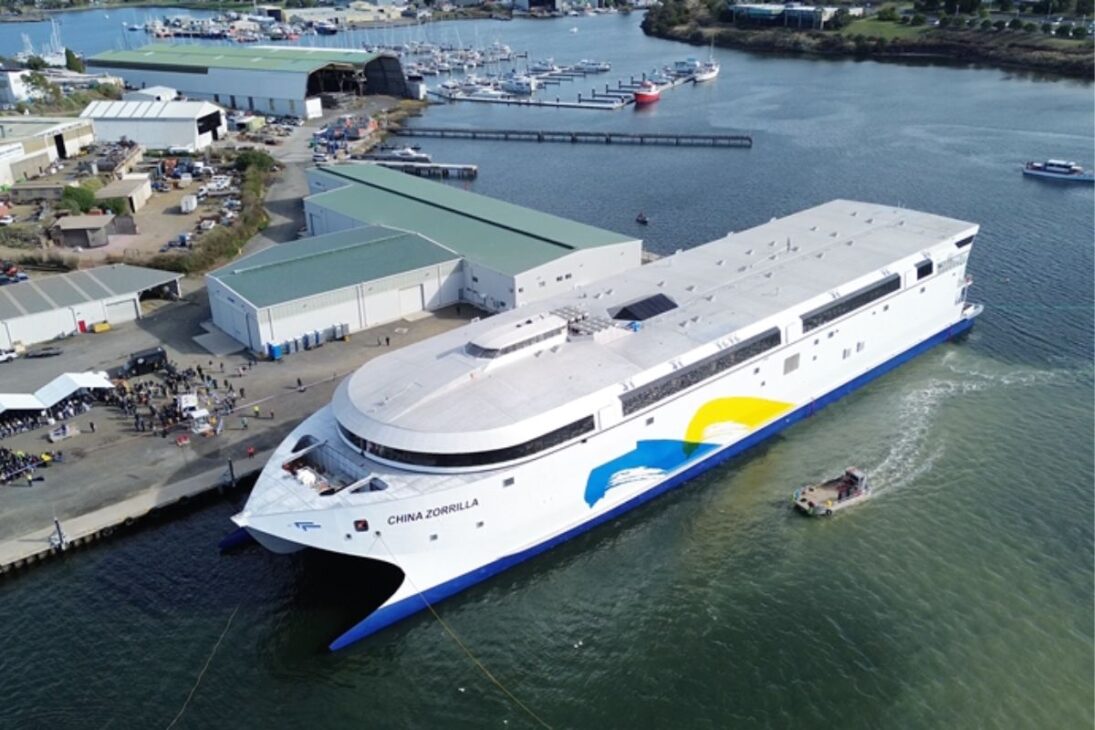
Get ready to meet the colossus that will give a new face to global navigation. With nearly 200 meters in length and a battery that looks like it came out of a power plant, the Helios promises to become the largest electric passenger ship on the planet, easily surpassing all existing projects — including the famous Australian ferry China Zorrilla, which was recently launched.
A Giant Rising in Northern Europe
The feat does not come from China or the United States. The company behind this silent revolution is the Finnish Viking Line, a traditional ferry operator in the Baltic Sea. The Helios vessel, still in the development phase, will have 195 meters in length, capacity for 2,000 people and 650 cars, and is expected to start operating in the early 2030s, connecting the capitals Helsinki (Finland) and Tallinn (Estonia) in approximately two hours of crossing.
The current record holder in the segment is the China Zorrilla, electric ferry from the Australian company Incat, which recently started operating between Argentina and Uruguay. It measures 130 meters, carries up to 2,100 passengers and 225 vehicles, and already impresses with its size. But the Helios aims to raise the bar even higher.
-
Survivor of 1966 SS Daniel J. Morrell Shipwreck in Lake Huron Recounts 38-Hour Ordeal in Extreme Cold

-
The Greatest Hoax in World Cup History? The Film That Denied Brazil’s 1958 Victory and Exposed How Fake Evidence Can Seem Convincing on TV
-
Fake South Korean Online Stores Offer Shopping Thrill Without Spending Money or Receiving Products
-
The War of Jenkins’ Ear: How a Severed Ear Sparked One of the 18th Century’s Most Unusual Conflicts


“The Helios will usher in a new era for maritime transport, just like the first sailing ships, steamships, and motor vessels did,” said Jan Hanses, CEO of Viking Line. “It can no longer be said that large-scale shipping without emissions is a utopia,” added the executive in an interview with the specialized website Ship Technology.
The Most Powerful Battery Ever Placed on a Ship
And what powers this colossal machine? An electric battery of 85 to 100 megawatt-hours (MWh), the largest ever planned for a passenger ship. Just for comparison: the China Zorrilla uses a 40 MWh battery. The energy system of the Helios will be sufficient to navigate the 80 km between Helsinki and Tallinn at a speed of 23 knots, roughly equivalent to 43 km/h.
According to Viking Line, the ship will have fast electric charging stations in both ports, with a capacity of 30 MW. This means that, during a 3-hour stop, the vessel could fully charge the battery — although the expectation is for partial charges on regular routes to avoid unnecessary delays in operations.
A study by DNV, a Norwegian consultancy specializing in maritime sustainability, indicates that battery systems of this scale can be decisive in accelerating the decarbonization of the naval sector, especially on fixed and predictable routes like that of the Baltic.
The Tide of Electrics Is Rising
The Helios is the largest example, but it is not alone. Norway, a reference in electric mobility, already operates dozens of electric ferries on short routes, with proven performance. Denmark and Germany also have similar projects in operation. And the success is attracting new players.
The shipyard itself, Incat — responsible for the China Zorrilla — has already announced a new smaller electric ferry, scheduled for delivery in 2026. The trend is clear: diesel engines, for decades the industry standard, are beginning to lose ground to clean propulsion systems.
In Brazil, the movement is still in its infancy, but there are pilot projects in states like Pará and Amazonas aimed at using electric vessels on rivers. And the National Agency for Waterway Transportation (ANTAQ) is discussing new environmental guidelines to encourage the energy transition in Brazilian ports.
A Silent and Smokeless Future at Sea
The Helios is still on paper, but its dimensions and ambitions already make it a milestone in the maritime industry. An electric ship, silent, large, and with a high-capacity battery, capable of making international trips with zero emissions, is more than an innovation: it is a clear sign that the era of dirty engines is coming to an end.
If everything goes as planned, by the end of the decade we will have ferries almost 200 meters long gliding over the waters of the Baltic Sea without spilling a drop of diesel oil into the ocean. The question now is: who will be the next to follow this path?





-

-

-

-

-

10 people reacted to this.