Portuguese
  Spanish


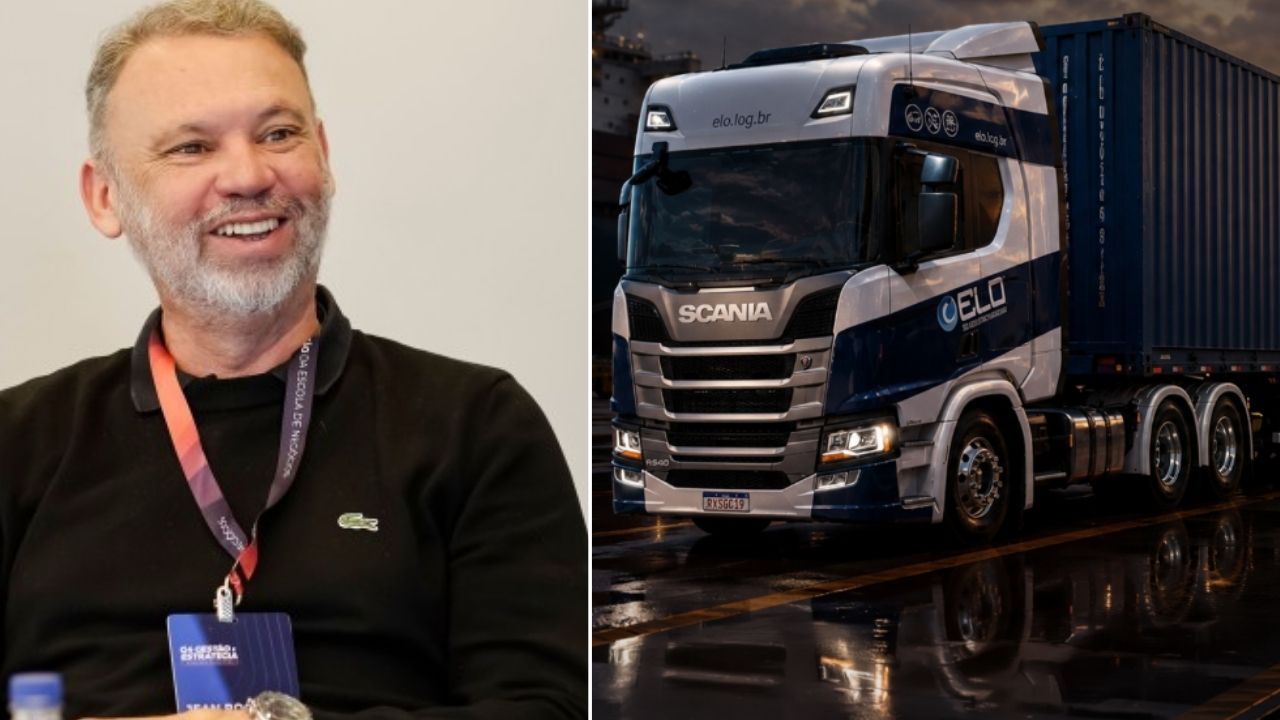

Exame report published on 07/01/2026 tells how Jean Carlos Rocha, CEO of ELO Integrated Logistics Solutions, transformed his experience as a former truck driver into a company based in Itajaí, with a goal of R$ 360 million in 2026, 300 employees, 11 branches, 700 clients per month, and expansion in Mercosur, according to data provided by the company.
The former truck driver Jean Carlos Rocha, from Santa Catarina, became the protagonist of a business story marked by integrated logistics, geographical expansion, and fleet investment. According to a report by Exame published on July 1, 2026, he leads ELO Integrated Logistics Solutions, a company that projects to bill R$ 360 million in 2026.
The company was born in 2018 in a 40 square meter room, with four people, and today operates with 11 branches, 300 employees, and about 700 clients per month. The central point is not just the personal journey, but the strategy of transforming operational experience into a complete logistics chain company.
Former truck driver started in transportation in childhood
Jean Carlos Rocha’s relationship with the sector began at age 12, when he followed the routine of his grandfather’s transport company in Joinville, in the interior of Santa Catarina. The company once had 32 trucks, 60 trailers, and about 60 affiliates.
-
World’s First Plasma Dress Turns Fashion Show into Scientific Spectacle with Controlled Electric Discharges and Ionized Gases in Iris Van Herpen’s Groundbreaking Tech-Fashion Creation

-
Phone Falls from Plane at 300 Meters in Rio de Janeiro, Continues Recording for 15 Seconds, Found by Environmentalist Next Day in Unbelievable Twist

-
8-Year-Old Finds 900-Year-Old Viking Bronze Buckle on Swedish Beach While Fossil Hunting
-
8-Year-Old Who Ran Barefoot Wins Race in Brazil with Shoes Gifted by Famous Athlete, Becomes Symbol of Hope but Family Seeks Support to Sustain Athletic Dream



However, the transport company closed in the 1990s after losing its main client, a home appliance manufacturer in Joinville. This experience became a business lesson that Rocha claims to apply at ELO: avoiding dependence on a single contractor and maintaining a diversified portfolio.
Driving helped to understand the operation from the inside
At 18, Rocha bought his first truck. After an unsuccessful attempt in a small plastics industry, he returned to the transport sector in 2004, when only six trucks remained in his grandfather’s old company.
He took the wheel of one of them and spent about a year and two months traveling across the country. In the interview with Exame, he stated that the experience behind the wheel provided a practical view of the problems and needs of the operation. This road knowledge later influenced how the company designed its services.
ELO was born in a 40 m² room with four people
In 2018, Rocha and three other partners decided to start a new company. ELO Integrated Logistics Solutions was born in a 40 m² room, with four people and the proposal to solve gaps that the founders saw in Brazilian logistics.
The identified problem was the fragmentation of the chain. In many cases, a company needs to hire different suppliers for storage, transportation, customs clearance, and other stages. ELO’s proposal was to bring these services together in a single operator.
Company bets on end-to-end logistics
ELO operates in the management of the end-to-end logistics chain. According to the report, the services include road transport, bonded warehousing, cabotage, international freight, and container rental.
Rocha states that the intention is to deliver a complete solution, reducing the need for the client to manage multiple suppliers. The logic is to transform logistics into an integrated operation, with fewer loose ends and more control over each stage.
Diversified portfolio became a strategic decision
The loss of the main client at the grandfather’s former transport company appears as one of the most important experiences of the journey. Rocha reports that this episode showed the risk of a company depending on a single source of revenue.
Today, ELO serves about 700 clients per month. This number reinforces the diversification strategy: instead of concentrating operations on a few contracts, the company seeks to reduce risk by distributing revenue among a larger client base.
Operation already extends from Rio Grande to Pará
ELO operates from Rio Grande, in the south of Rio Grande do Sul, to Vila do Conde, in the north of Pará. The company maintains about 10 thousand square meters of storage, performs between 70 and 80 trips per day, and moves about 2 thousand containers per month in bonded warehousing.
These data show that the company has ceased to be a small operation and has started to operate in relevant logistics corridors. The scale also explains why the company targets growth with technology, fleet, and regional expansion.
Proprietary technology entered the growth plan
To support expansion, the company develops technology internally. One of the bets is ELO360, a platform that integrates systems and allows real-time monitoring of logistics operations.
According to Rocha, future growth involves the intelligent use of technology, with more technical people and less focus on repetitive activities. Digitization appears as part of the strategy to gain efficiency in an operation that involves transportation, warehousing, containers, and international freight.
Mercosur and São Paulo have become new fronts
ELO also started international road freight operations in Mercosur, serving flows between Brazil, Argentina, Uruguay, and Paraguay. Additionally, it began offering cabotage for cargo transportation along the Brazilian coast.
Another front is commercial. The company is opening an office in São Paulo and plans to launch new operations in Minas Gerais and Rio de Janeiro later this year, as reported in the article. The expansion shows that the plan is not limited to growing the fleet but also to expanding geographic presence and service offerings.
Investment of R$ 50 million targets fleet and emissions


In 2025, ELO recorded revenue of R$ 292 million. For 2026, the projection is to reach R$ 360 million in revenue. The company also foresees approximately R$ 50 million in investments in fleet renewal and expansion.
The company has started purchasing the first trucks powered by natural gas and plans to renew about 20% of the fleet, as well as increase the number of vehicles by another 20%. Rocha states that the choice of gas is mainly linked to emission reduction, not financial savings. The fleet is treated as a growth asset and also as part of the environmental agenda.
Goal of R$ 1 billion postponed to five years
In a five-year horizon, ELO aims to reach R$ 1 billion in revenue. The initial goal was to reach this level in three years, but the company decided to extend the timeline to balance growth, cash flow, and investment capacity.
Rocha states that the company chose to advance responsibly, focusing not only on revenue but also on financial sustainability. This detail avoids the perception of growth at any cost and places expansion within a management logic.
What this story reveals about logistics in Brazil
A journey of the former truck driver Jean Carlos Rocha shows how practical experience, a diversified portfolio, proprietary technology, and integrated services can transform a small operation into a national logistics company. ELO went from a 40 m² room to 11 branches and aims for R$ 360 million in 2026.
The question is which factor weighs more in this type of growth: knowing the road from the inside, integrating services, investing in technology, or avoiding dependence on a few clients? Do you believe that Brazilian logistics still has room for new companies to grow in this model? Leave your opinion in the comments.