






 Portuguese
  Spanish


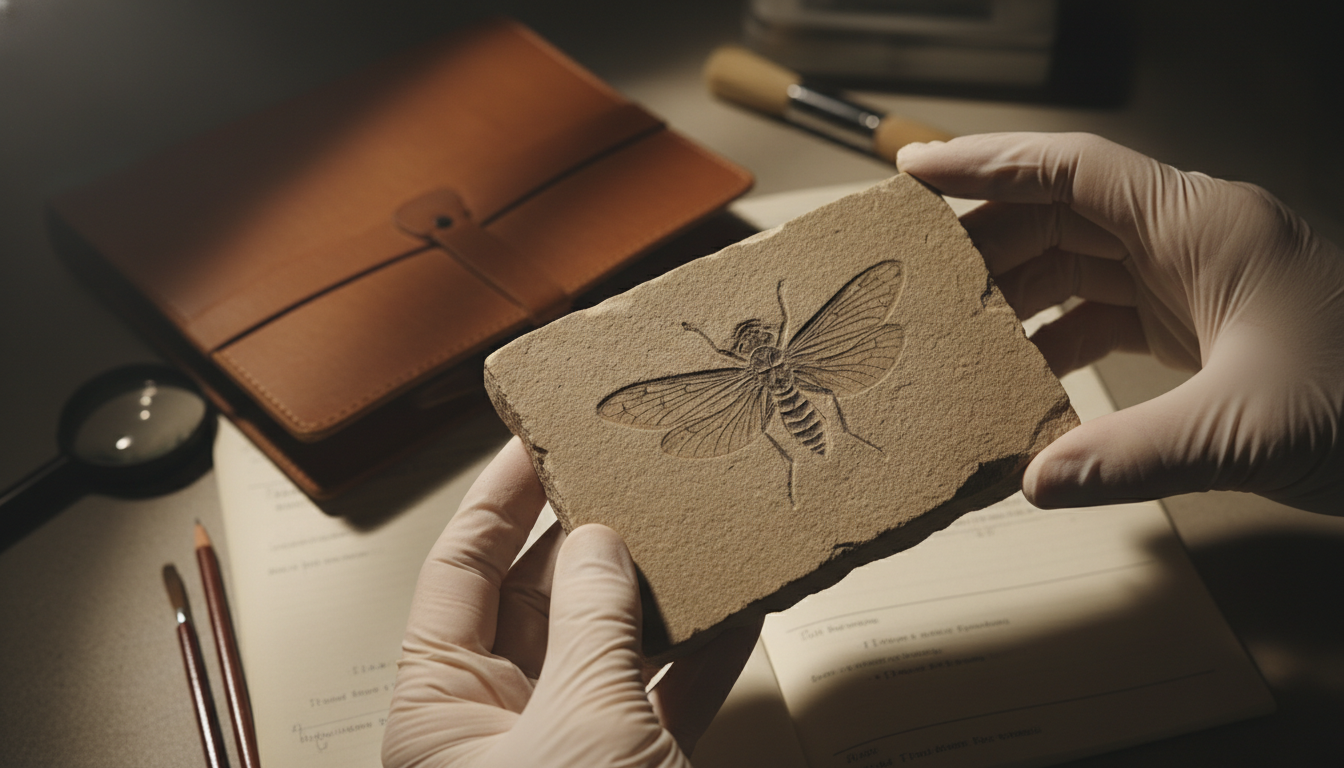

Researchers from the Regional University of Cariri (URCA), in the interior of Ceará, described a new species of fossil burrowing bug that lived more than 110 million years ago in the Araripe Basin. According to a report from Portal Miséria, the work was published on May 4, 2026, in the international journal Historical Biology.
The species was given the scientific name Eurydicoris tabulatus. It belongs to the group of insects popularly known as “burrowing bugs”. The specimen was found in a controlled excavation in the municipality of Nova Olinda (CE), in the layers of the famous Cariri Stones.
The fossil came from the laminated limestone of the Crato Formation. It is one of Brazil’s richest paleontological sites. The Cariri Stones preserve delicate invertebrate tissues in three-dimensional detail — something rare in the global fossil record.
-
China Develops Custom 140-Ton Electric Mining Truck with 770 kWh Swappable Battery, Deploys 290 Units in Xinjiang’s Largest Zinc Mine

-
Meta to Launch Arena, a New Prediction App Targeting 3.56 Billion Users, Competing with Polymarket and Kalshi

-
Scientist Challenges Famous Human Evolution Theory, Argues Homo Sapiens Evolved Gradually Over Thousands of Years
-
15-Year-Old American Builds Ocean Generator with PVC Pipe and 3D-Printed Propeller for $12, Wins National Prize, Presents at White House, and Makes Forbes 30 Under 30 List




How the burrowing bug was identified by URCA
The discovery resulted from the master’s thesis of student Gustavo Pinho, supervised by paleontologist Álamo Saraiva. Both are affiliated with URCA’s Postgraduate Program in Biological Diversity and Natural Resources (PPGDR).
The analysis combined electron microscopy and computed microtomography. This second technique allows the insect to be reconstructed in three dimensions without destroying the fossil. As a result, it was possible to identify anatomical characteristics that separate Eurydicoris tabulatus from already known species.
According to the Brazilian Society of Paleontology, this type of advanced imaging has become standard in Brazilian discoveries over the last decade. Microtomography reveals scales, bristles, and even internal cavities of the exoskeleton.
Why a 110-million-year-old insect matters
Despite its age, the Eurydicoris tabulatus belongs to the same large group of bugs found today in various regions of Brazil. Unlike modern relatives that transmit Chagas disease, this ancient bug was harmless to humans. It fed only on plant sap.
In other words, the group’s evolution is longer and more branched than previously thought. According to the URCA team, cited by Blog Cariri, the discovery also helps to piece together the puzzle of the Cretaceous climate in Brazil’s Northeast.

110 million years ago, the Cariri region was a shallow lake surrounded by tropical forests. The ecosystem produced what paleontologists today call a Lagerstätte — a deposit of exceptional preservation. This quality explains why the site yields new species every year.
Cariri in an international paper
The journal Historical Biology is one of the world’s leading publications in evolutionary paleontology. Accepting work from a university in the interior of Brazil’s Northeast in a publication of this category shows the leap in regional science. Despite this, URCA does not have the budget of a USP or UFRJ.
On the other hand, the university’s location is an asset. The Crato campus is located a few kilometers from the outcrops of the Crato Formation. In fact, it is easier to research fossils from there than to send samples to large centers — the material is fragile and transport is expensive.
Ultimately, the burrowing bug joins the growing list of discoveries that reposition Cariri on the world scientific map. Before came complete pterosaurs, feathered dinosaurs, and rare plants. Now a small insect, but with its name etched into an international paper.






