Portuguese
  Spanish


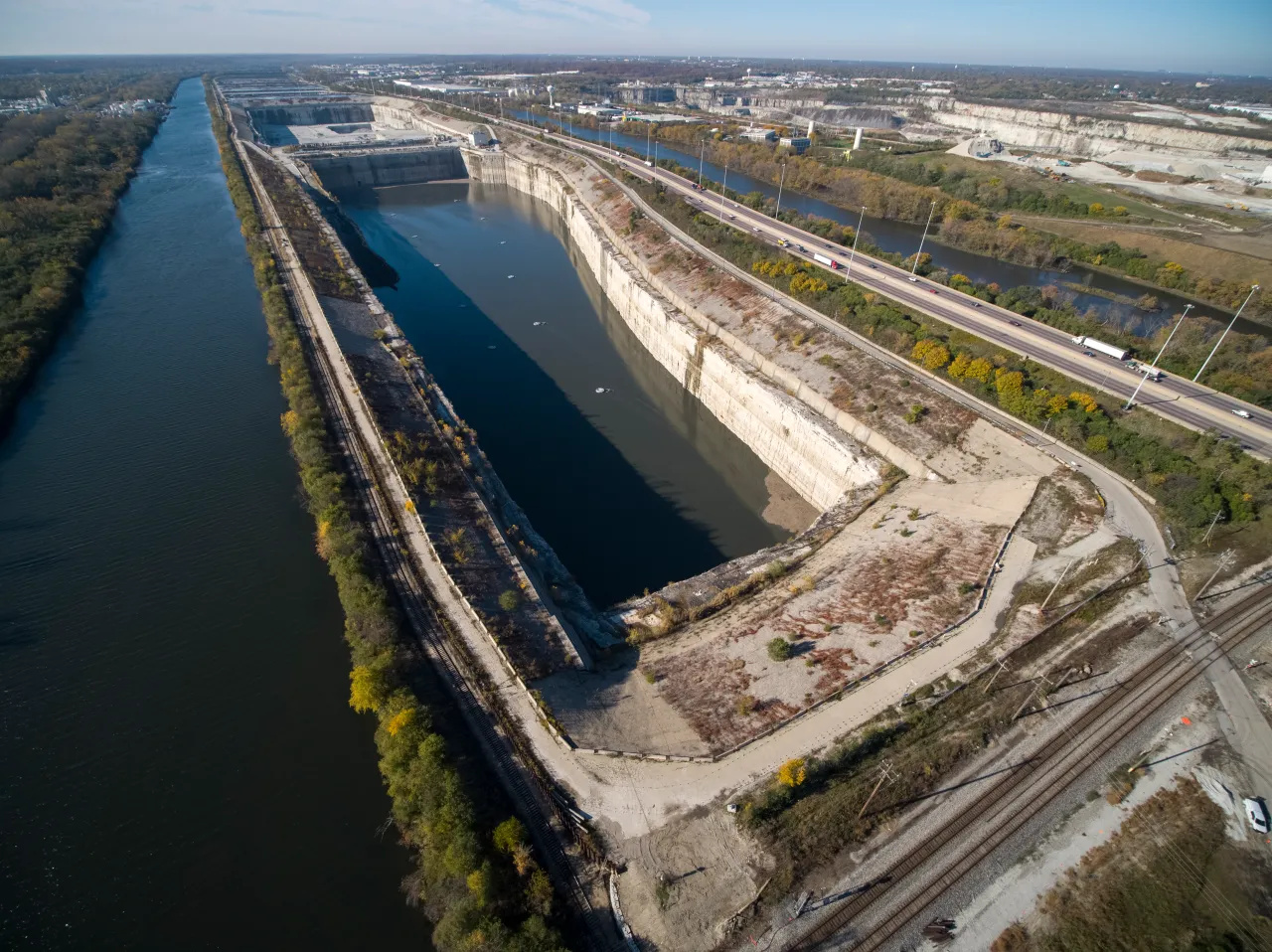


Chicago Created TARP, An Underground System of Tunnels and Reservoirs with 69 Billion Liters to Control Flooding and Prevent Sanitary Crises.
Chicago is a city built on a paradox. Located on the shores of Lake Michigan and intersected by rivers that were artificially diverted in the 19th century, it has always had an abundance of water. However, when urbanization accelerated in the 20th century, water became a problem not due to lack but due to excess during the worst times. Intense storms, sealed soil, overflowing rivers, and outdated sewage systems put the city at recurring risk: urban flooding combined with sewage backup in the streets and even inside homes.
The crisis critically revealed itself in the 1960s and 1970s when severe rains caused heavy economic losses, contamination, and health consequences. It was in this context that TARP (Tunnel and Reservoir Plan) was born, one of the largest underground urban drainage systems in the world and one of the most impressive examples of how civil engineering can redefine the fate of a metropolis.
A System Designed for the 21st Century
TARP began to be planned in the 1960s when engineers and hydrologists realized that merely expanding surface drainage would not solve the problem.
-
81-Meter Bridge Made from Over 7 Tons of Recycled Plastic Connects Isolated Communities in Panama Canal Basin, Allowing Safe Passage for Over 300 Residents

-
Australia’s First Two-Story 3D-Printed House Built in 18 Hours, 22% Cheaper Than Traditional Methods, Uses Concrete That Hardens in 3 Minutes
-
Architect Converts 1955 Grain Silo into 31m² Home with Full Amenities, Including Kitchen, Bathroom, Curved Living Room, and Loft Bedroom

-
Egypt Partners with China to Build 2 GW Wind Turbine Factory and 2,000 MW Wind Farm in Gulf of Suez, Aiming to Export Across Africa


Chicago needed something that no city had attempted before: a deep system, capable of capturing stormwater and excess sewage during storms, safely storing it, and only then releasing it for treatment.
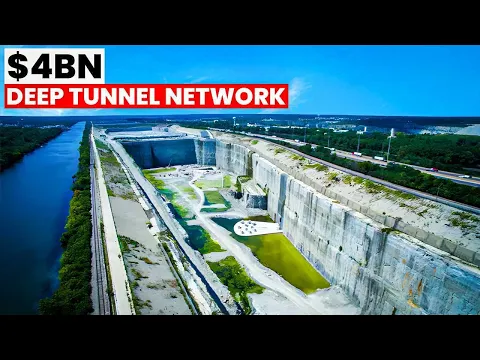

This approach would eliminate the direct contact of contaminated water with the urban environment, preventing overflow, reducing river pollution, and protecting the city’s infrastructure.
The technical concept was bold: to create gigantic tunnels, excavated in rock, dozens of meters below the surface, interconnected to colossal reservoirs.
Gigantic Tunnels in Solid Rock
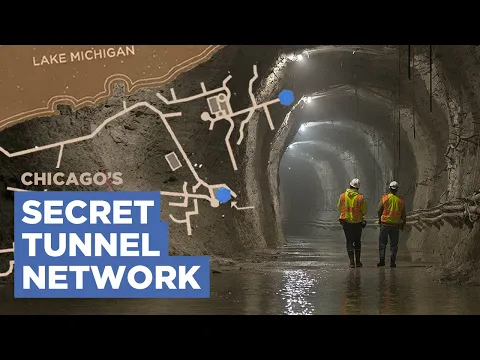
The first phase of TARP consisted of excavating approximately 175 km of deep tunnels, with diameters ranging from 6 to 10 meters, in some sections comparable to the width of subway tracks. These tunnels function as high-capacity collectors, absorbing the excess that the surface system cannot handle.
The depth was not an aesthetic choice but geological and urban. Excavating deeply allows crossing solid rock, avoiding collapses, interfering with foundations, pipes, cables, and subways. Furthermore, gravity becomes an ally: the entire system is designed for water to flow and drain without intensive pumping during the collection phase.
Reservoirs that Function as “Hidden Lakes”
The most impressive aspect of TARP appears when the tunnels reach the final reservoirs. The system includes monumental structures, including quarries converted into gigantic retention pools.
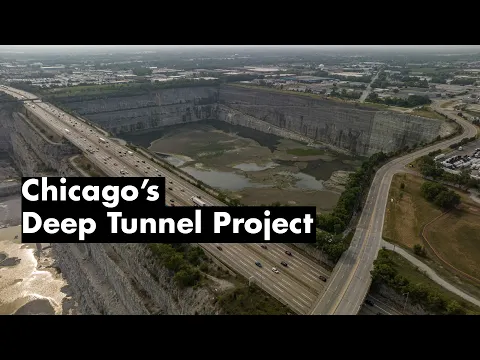
Combined, these reservoirs can hold about 69 billion liters, creating a buffer capable of supporting rainfall events that previously flooded entire neighborhoods.
During severe storms, this capacity is vital. Instead of urban rivers surging to the surface, the system absorbs the volume, safely stores it, and, in the following days, slowly sends the contents for treatment.
An Impact That Goes Beyond Drainage
The numbers explain why TARP has become a global reference. Over the past decades, the system has diverted more than 1 trillion gallons of water and sewage during storms, breaking a historic cycle of flooding and contamination. The consequence is not only urban but sanitary and environmental.
Before TARP, extreme rainfall events caused discharges of partially treated sewage into the rivers that cross the city, polluting the local ecosystem and, in severe cases, reaching Lake Michigan, which is responsible for supplying drinking water.
With the deep system, these discharges have become rare, and the quality of the water and urban rivers has significantly improved.
The Strategic Logic of Invisible Infrastructures
What makes TARP fascinating is its invisibility. Tourists walk over pristine sidewalks, have coffee on historic streets, and observe the skyline reflected in the lake without imagining that, dozens of meters below, a second system circulates like the respiratory apparatus of a city.
The lesson is clear: megacities cannot rely only on surface infrastructure. Urban space is saturated, and complex problems like flooding, sewage, water filtering, and mobility require structures that disappear from the landscape but support metropolitan life.
An Exportable Model for a Warming World
With the intensification of extreme events associated with climate change, systems like TARP must become increasingly relevant. London, Tokyo, Singapore, and New York are already studying or implementing deep drainage solutions, combining tunnels, reservoirs, and automatic control systems.
Chicago was a pioneer out of necessity, and that necessity may become universal. As cities seal the soil, straighten rivers, and expand neighborhoods, water will always demand its price. Building invisible infrastructure before collapse is, perhaps, the greatest urban challenge of this century.
In the end, TARP tells a unique story: when storms threatened, Chicago responded by digging down — building a system that does not appear on postcards but ensures that the city remains alive, dry, and functional when the weather decides to test its limits.