Portuguese
  Spanish


Hydrogen Storage Innovation: Hydrogen-Resistant Stainless Steel Increases Safety in Tanks, Pipelines, and Hydrogen-Powered Vehicles
Hydrogen stands out as one of the most promising and clean energy sources within renewable alternatives. However, its large-scale use faces a fundamental challenge: safety in storage and transportation.
The risk of hydrogen embrittlement, which can damage materials and cause explosive leaks, is one of the biggest obstacles to the development of this technology.
To address this issue, a team from National Cheng Kung University (NCKU) in Taiwan, led by Professor Hong Feiyi, created an innovative stainless steel that can ensure greater safety in the hydrogen industry.
-
Xiaomi Unveils Smart Pressure Cooker That Cooks Meat Up to 40% Faster

-
Antarctic Mystery: Study Uncovers Over 500 Hidden Earthquakes 150 km Deep, Challenging Traditional Theories
-
Excavation for Solar Park in Germany Uncovers Rare Celtic “Princely Tomb” with Elite Warrior Buried with Gold, Weapons, Etruscan Jug, and Two-Wheeled Chariot in Bad Camberg

-
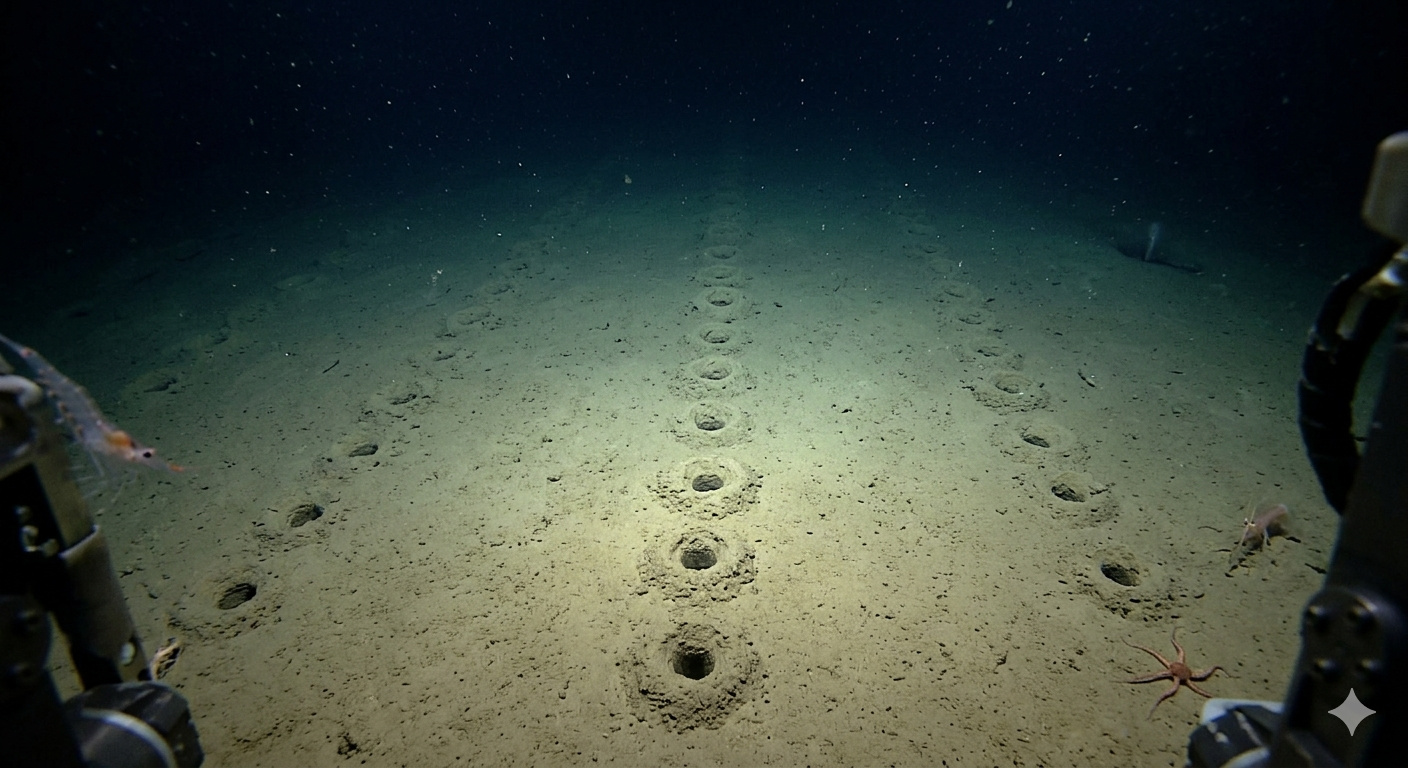
NOAA Scientists Discover Mysterious, Perfectly Aligned Holes on the Mid-Atlantic Ridge Seafloor, Origin Still Unknown



The Issue of Embrittlement
Embrittlement occurs when hydrogen atoms penetrate metals, weakening their structure and causing cracks.
This can be fatal for infrastructures that handle hydrogen, such as storage tanks and pipelines, where damage can lead to leaks and even explosions.
According to Professor Hong Feiyi, traditional stainless steels, such as grades 309 and 316, offer good corrosion resistance but are vulnerable to hydrogen embrittlement.
These factors make these materials unsuitable for critical applications, such as in hydrogen-powered vehicles, where accidental impacts can cause ruptures and dangerously release gas.
Solution: Stainless Steel 416B
To combat this problem, the NCKU team developed stainless steel 416B, which not only resists hydrogen penetration but also has high resistance to impact and wear.
This material is heat-treated to create a structure of acicular crystals, increasing its hardness and ability to resist hydrogen at the atomic level.
The result is a steel that can be used in components that are in direct contact with hydrogen without compromising safety.
The Importance of Welded Joints
Another crucial point in protection infrastructure is welded joints. These connections between materials are often vulnerable to embrittlement, which can compromise the entire structure.
To improve this aspect, the NCKU team developed weldable material 420L, capable of resisting hydrogen penetration in the welds.
This innovation is currently undergoing patenting and promises to significantly enhance the safety of pipelines and pressure vessels used in the storage and transportation of hydrogen.
Specialized Laboratory and Rigorous Testing
To ensure the effectiveness of their new materials, Professor Hong Feiyi’s team built a specialized laboratory for hydrogen embrittlement.
This center is one of the few in Asia and features a high-temperature electric tensile fatigue machine, unique of its kind in Taiwan.
In this laboratory, researchers conduct tests of exposure to concentrated hydrogen, simulating real prolonged usage conditions.
Results show that steel 416B is more than twice as resistant to hydrogen embrittlement than traditional stainless steels used in the industry.
Advances in the Transition to Green Hydrogen
The creation of steel 416B and weldable material 420L represents a significant advance in the search for safer and more efficient solutions for using hydrogen as an energy source.
This type of material can be applied in storage and transportation systems for the gas, such as tanks and pipelines, as well as components for vehicles.
With the growing global interest in reducing greenhouse gas emissions and phasing out fossil fuels, green hydrogen emerges as a vital alternative.
Produced from water electricity using renewable energy, green hydrogen generates no polluting emissions, becoming an important pillar for a sustainable economy.
However, for this vision to become reality, it is essential to rely on safe and resilient materials, such as those developed by NCKU.
These materials are crucial to ensure the transport and storage of hydrogen over long distances, even exceeding 1,000 kilometers.
With information from Ecoinventos.