






 Portuguese
  Spanish
  5 min of reading
  0 comments


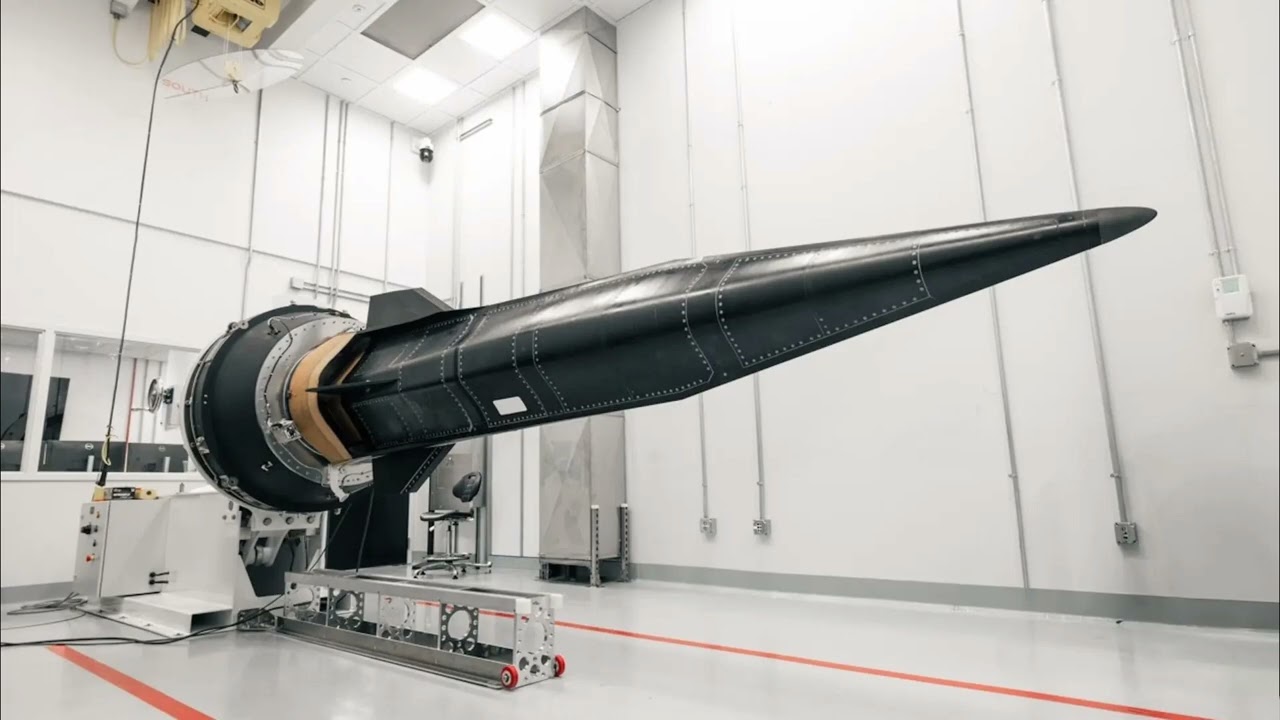
DART AE completes first hypersonic flight with 3D-printed scramjet, hydrogen-powered engine, and Pentagon support to expand high-cadence testing.
According to CompositesWorld, the Australian startup Hypersonix Launch Systems completed on February 27, 2026 the first flight of the DART AE, in the mission called Cassowary Vex, launched at 7 PM from Wallops Island, Virginia, aboard the HASTE rocket, by Rocket Lab. The flight took place within the HyCAT program, from the Defense Innovation Unit of the United States Department of Defense, which selected the company in 2023 and allocated US$ 46 million for development and testing.
According to CompositesWorld, the DART AE is 3.5 meters long, weighs 300 kg, has a range of 1,000 km, and uses the SPARTAN engine, a fully 3D-printed, reusable scramjet with no moving parts, fueled with gaseous hydrogen. In this configuration, the system can accelerate from Mach 5 to Mach 7, with future versions designed to reach Mach 12.
3D-printed scramjet changes cost and speed of hypersonic development
According to CompositesWorld, the major contribution of Hypersonix is not in discovering the physics of hypersonic flight, but in tackling the industrial bottleneck that has limited this sector for decades. The central problem is the time and cost required to design, manufacture, and fly new tests in sequence.
-
Leaving the charger plugged in without a phone consumes energy or is it a myth? Experts call the phenomenon “phantom consumption” and warn that dozens of devices on standby can add up on the bill over the year.

-
It accompanies Earth, but it is not a moon: Chinese probe reaches Kamo’oalewa and begins an unprecedented mission to investigate where the strange asteroid came from, what its internal structure is like, and whether its origin is linked to an ancient collision that launched fragments of the lunar surface into space.
-
Space technology used to search for water on Mars is now hunting for invisible leaks under the streets of São Paulo, using satellites, AI, and chlorine signals to help Sabesp recover up to 6.7 billion liters of water.

-
Japan sends ship to extract mud rich in rare earths at nearly 6,000 meters deep in the Pacific, attempts to lift 350 tons per day from the seabed, and transforms sediments near Minamitori Island into a strategic weapon to reduce dependence on China.


A conventional scramjet relies on precision machining in exotic metal alloys, processes that take months, require complex tooling, and make each prototype too expensive for frequent test campaigns.
According to the publication, this model helps explain why the United States, despite being pioneers in scramjet physics, have tested hypersonics at a slower pace than China in the past decade.


A additive manufacturing changes this logic. According to CompositesWorld, the SPARTAN engine uses nickel-chromium Inconel alloys in the structure and ceramic matrix composites, or CMCs, on the leading edges, precisely the areas of highest temperature. This reduces the design-to-flight cycle from months to weeks and places high test cadence at the center of the strategy.
SPARTAN engine uses supersonic combustion and operates differently from a common ramjet
According to CompositesWorld, the SPARTAN is a scramjet, an acronym for supersonic combustion ramjet. This means it keeps the air at supersonic speed inside the combustion chamber, instead of decelerating it to subsonic speed as a conventional ramjet does.

This difference is crucial because, at speeds above Mach 5, decelerating the air for subsonic combustion generates too much heat and destroys the engine. The scramjet solves this by burning fuel with the flow still supersonic, which reduces the thermal penalty but makes mixing and ignition much more difficult.
According to CompositesWorld, this is why the scramjet does not work when stationary or at low speed. It needs to be accelerated first by another system. In the case of the DART AE, this function was fulfilled by the HASTE, which took the vehicle to the upper atmosphere before the actual hypersonic mission.
SPARTAN can turn on and off multiple times in the same flight, something rare in scramjets
According to CompositesWorld, what distinguishes the SPARTAN from other scramjets is its ability to be turned on and off multiple times during a single flight. This feature is relevant because restarting supersonic combustion is one of the most difficult tasks in hypersonic propulsion.

Traditional scramjets tend to operate more limitedly, with less flexibility for reactivation and control throughout the mission profile. In the case of Hypersonix, this throttle capability allows the DART AE to execute planned maneuvers of changing direction and altitude, instead of following only a fixed ballistic trajectory after ignition.
This point enhances the military and technological value of the system because it brings the vehicle closer to a more controllable flight regime, with greater potential for real missions and not just short speed demonstrations.
Hydrogen provides more range and better cooling for the hypersonic engine
According to CompositesWorld, the choice of gaseous hydrogen was not made solely for sustainability. The fuel was selected for its physical properties that make it superior to kerosene in long-duration hypersonic applications.

Hydrogen has three times the energy density per mass compared to kerosene, which means more energy for the same weight carried. In hypersonic vehicles, where every kilogram is costly in terms of acceleration and thermal management, this difference is decisive for extending range and performance.
According to CompositesWorld, hydrogen also offers better regenerative cooling because it can circulate through the walls of the combustion chamber, absorb heat before burning, and help the engine survive in extreme conditions. The February 2026 flight served precisely to validate this concept in a real condition.
HyCAT program aims to increase the frequency of U.S. hypersonic flights
According to CompositesWorld, the HyCAT program was created by the Defense Innovation Unit in 2022 with a very specific goal: to increase the cadence of hypersonic tests in the United States. The idea was not to immediately develop a unique weapon, but to create industrial and technological infrastructure to fly more, learn faster, and reduce the interval between tests.
The Pentagon recognized that China had been flying hypersonics more frequently, not necessarily by mastering physics better, but by operating a faster and cheaper industrial chain.
HyCAT emerged as a response, seeking non-traditional commercial companies capable of accelerating this cycle of testing and learning.

Hypersonix received the first contract of the program in 2023. According to CompositesWorld, the flight on February 27, 2026 was the second launch of HASTE within the DIU logic, reinforcing the goal of creating a more frequent platform for hypersonic experiments.
After the DART AE, Hypersonix aims to reach Mach 12 with new autonomous aircraft
According to CompositesWorld, the DART AE is just the first-generation demonstrator. The company is already working on a class of autonomous hypersonic aircraft capable of sustaining flight up to Mach 12, using the same SPARTAN as the central engine, but with a redesigned structure to withstand even greater thermal loads.

Kratos Defence & Security Solutions has been designated to acquire and operate DART AEs for multiple clients of the U.S. Department of Defense, using its Zeus engine family as a booster.
This arrangement combines startup innovation with an already established military distribution chain.
According to CompositesWorld, the program’s proposal is clear: fly faster, for longer, and with real mission payloads, using exactly the technological base validated in the flight over the coast of Virginia on February 27, 2026. It is this transition, from demonstrator to operational system, that now defines the next stage of Hypersonix.








-

1 person reacted to this.