Portuguese
  Spanish


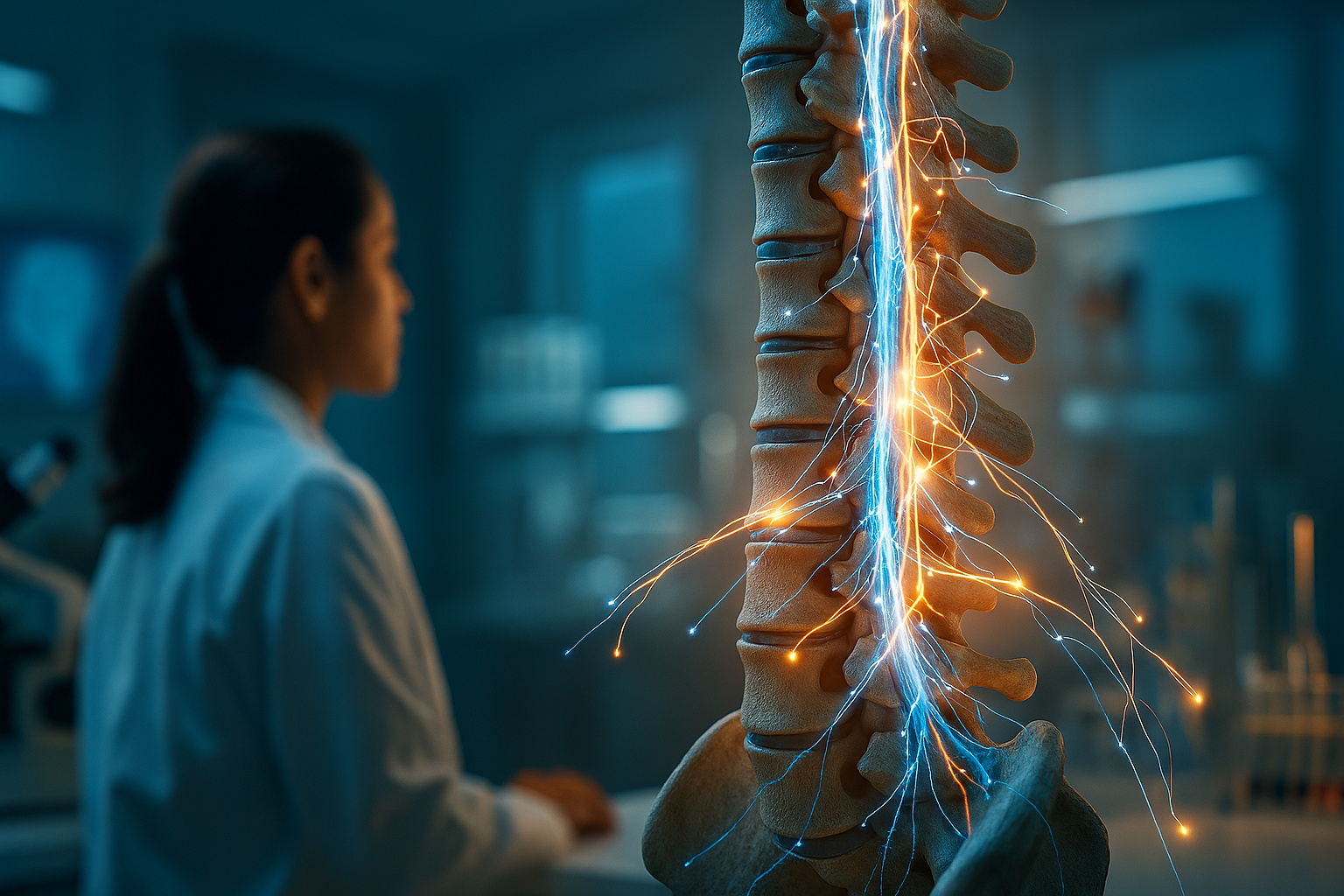

Research Led by Scientists from UFRJ, USP, and Unicamp Advances in Spinal Cord Regeneration and May Restore Movement to People with Paralysis.
Brazilian researchers from public universities such as UFRJ, USP, Unicamp, and other neuroscience centers have been placing Brazil at the center of one of the most challenging areas of modern medicine: spinal cord regeneration. In a field that has been viewed as an insurmountable limit for decades, these scientific groups have presented experimental results indicating the real possibility of recovering movement in people with paralysis caused by spinal cord injuries.
The advancements do not come from miraculous solutions, but from in-depth research funded by public agencies such as CAPES, CNPq, and FAPESP, and conducted by multidisciplinary teams made up of neuroscientists, biologists, doctors, and biomedical engineers.
The Role of UFRJ and Research on Regenerative Proteins
One of the Brazilian projects that has caught the attention of the international scientific community is led by researchers from the Federal University of Rio de Janeiro (UFRJ). In this study, scientists investigate the use of polylaminin, a stabilized form of laminin, a protein naturally present in the human body.
-
UK Selects Abandoned Nuclear Island for Rolls-Royce Reactors to Test Mini-Plant Viability Over 60 Years

-
12-Year-Old Indian Girl Invents FreshPaper, a Spice-Inspired Sheet That Extends Fruit Freshness by Four Times, Now Patented in the U.S.

-
South Korea Tows 18 Concrete Blocks Weighing Up to 48,000 Tons Over 36 km to Construct a 3.2 km Underwater Tunnel Between Busan and Geoje, Installed Nearly 50 Meters Deep

-
Chinese Tianwen-2 Mission Targets Near-Earth Asteroid After 1 Billion Kilometer Journey to Collect Ancient Samples, Aiming to Uncover Clues About Water, Organic Compounds, and Solar System Origins Before Heading to a Comet




The experiments conducted at UFRJ showed that this protein can stimulate the growth of neurons, reduce inflammation at the injury site, and create a more favorable environment for neural reconnection. In experimental models, the combination of protein application and rehabilitation resulted in partial recovery of movement, considered highly relevant in neuroscience.
USP and Unicamp Advance in the Use of Biomaterials
In addition to UFRJ, groups from the University of São Paulo (USP) and the State University of Campinas (Unicamp) have been developing complementary research, especially in the area of biomaterials applied to neural regeneration.
These studies investigate biocompatible structures, such as hydrogels and microscopic supports, which serve as true “bridges” for the growth of neurons through the injured area of the spinal cord. The aim is not to replace nervous tissue, but to guide and support cell growth, which is essential for any attempt at functional recovery.
An important aspect that is often overlooked is that Brazilian women scientists are among the leading figures in these projects. They coordinate laboratories, lead teams, and publish results in international scientific journals, reinforcing the female leadership in national science.
These researchers advocate for a realistic approach: spinal cord regeneration does not happen in isolation but requires combined strategies, involving biochemistry, tissue engineering, and intensive rehabilitation.
Regenerating the Spinal Cord Is Not Treating Common Back Pain
The scientists themselves emphasize that this research does not focus on lower back pain, herniated discs, or common orthopedic issues.
The target audience comprises individuals with spinal cord injuries, many of whom are paralyzed or quadriplegic, having lost movement and sensation after severe accidents.
The expected benefits are primarily related to:
- Partial recovery of voluntary movements
- Return of sensation
- Improvement in motor control
- Advancements in autonomic functions
Even small achievements already represent a radical change in quality of life.
Stem Cells as Part of the Strategy, Not as an Isolated Solution
Research conducted at Brazilian universities also analyzes the use of stem cells, but always as part of a larger set of strategies. The current understanding is that they help to reduce inflammation and release growth factors, but do not solve the problem on their own.
The consensus among Brazilian scientists is clear: there is no functional regeneration of the spinal cord without a favorable biological environment and without associated intensive rehabilitation.
What Phase Are These Research Studies in Brazil?
Despite the encouraging results, the research groups themselves stress that the studies are still in experimental and pre-clinical phases. This is not a treatment available in the healthcare system, but a scientific pathway that requires rigorous validation, safety testing, and controlled clinical trials.
Nonetheless, the fact that these advancements are being led by Brazilian public universities places the country in a prominent position in one of the greatest challenges of contemporary medicine.
A Scientific Advance with Deep Human Impact
For people today living without movement, the possibility of recovering part of motor function represents much more than a technical advancement. It signifies autonomy, dignity, and new perspectives on life.
What these Brazilian scientists are building is not an empty promise, but a slow, complex, and real new scientific horizon.