Portuguese
  Spanish


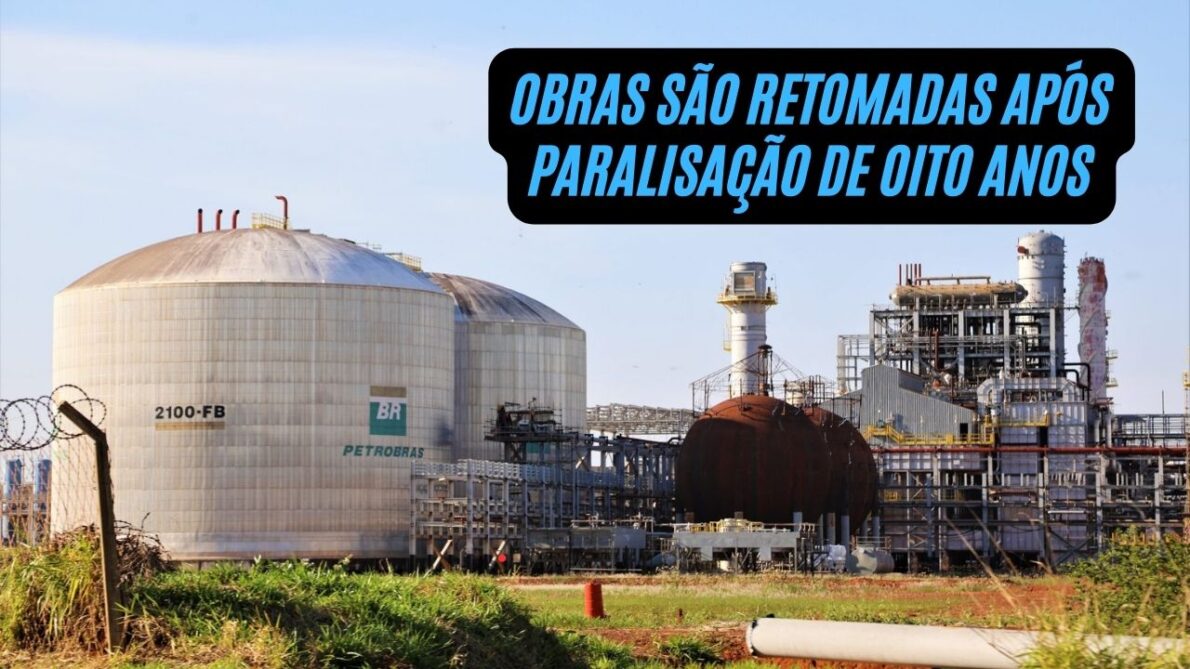

Petrobras Finally Announced Approval of a Colossal Investment of R$ 3.5 Billion to Resume Works at Its Fertilizer Plant in Três Lagoas, Mato Grosso do Sul, Stopped for Eight Years. The Decision, Marking a Strategic Turning Point, Aims to Reduce Brazil’s External Dependency on Fertilizers and Give New Breath to the National Agribusiness, a Sector Hungry for Agricultural Inputs.
The fertilizer plant, known as UFN-3, had over 80% of its construction completed when, in 2015, work was halted amid the developments of Operation Car Wash, which revealed large-scale corruption schemes involving Petrobras and other companies. Since then, the project has been abandoned, and Petrobras even attempted to sell the unit, including to the Russian company Akron, but the war in Ukraine in 2022 interrupted the negotiations.
Petrobras’ Billion-Dollar Investment and Strategic Planning
With the approval of Petrobras’ Board of Directors,which included dissenting votes from two independent directors, Marcelo Gasparino and Francisco Petros, the resumption of work at the fertilizer plant is now part of Petrobras’ Strategic Plan for 2024-2028, to be announced in November. According to Petrobras, the project underwent a “thorough reassessment,” confirming its economic attractiveness in the current scenario.
Production Capacity and Boost to Agribusiness
With the resumption, the Três Lagoas plant will have the capacity to produce 1.2 million tons of ammonia and 70,000 tons of urea annually, both essential inputs for large-scale agriculture in Brazil.
-
Brazilian Fishing Couple Spends 4 Years Building Solar-Powered Floating Home on the Paraguay River, Now a Navy-Approved Vessel with Leisure Area and Tour Demand

-
While the World Opens New Airports and High-Speed Trains, Brazil Rushes to Complete Projects Stalled for 40 Years
-
Brazil Invests in Massive Waterway to Transport Soybeans by Barge, Reducing Costly Truck Reliance
-
Bridge Rebuilt in Just One Year Reconnects Two Brazilian States


The demand for these products is growing as agribusiness advances, and today the country imports a large part of these inputs. This initiative also represents a reinforcement of the food security and self-sufficiency policy advocated by the federal government.
Government Strategy for Self-Sufficiency in Fertilizers
The resumption of Petrobras’s operations in the fertilizer segment aligns with the strategy of President Luiz Inácio Lula da Silva’s government, which has entrusted the company’s president, Magda Chambriard, with the mission of expanding national fertilizer production. The Ministry of Mines and Energy, led by Alexandre Silveira, emphasizes the use of natural gas as an alternative to reduce Brazil’s external dependency.
The news that work at the fertilizer plant in Três Lagoas will resume comes at a crucial time for the agricultural sector, which heavily relies on fertilizers to maintain the competitiveness and productivity of crops.
Petrobras thus strengthens its role in supplying strategic inputs, which could further enhance the weight of agribusiness in the Brazilian economy. With the completion of the work, the UFN-3 unit will be an important step for the sector, which is already celebrating the prospect of reduced fertilizer imports.
With the new influx of resources, Petrobras not only resumes a long-awaited project but also places Brazil on a more sustainable and independent path regarding agricultural inputs.