






 Portuguese
  Spanish


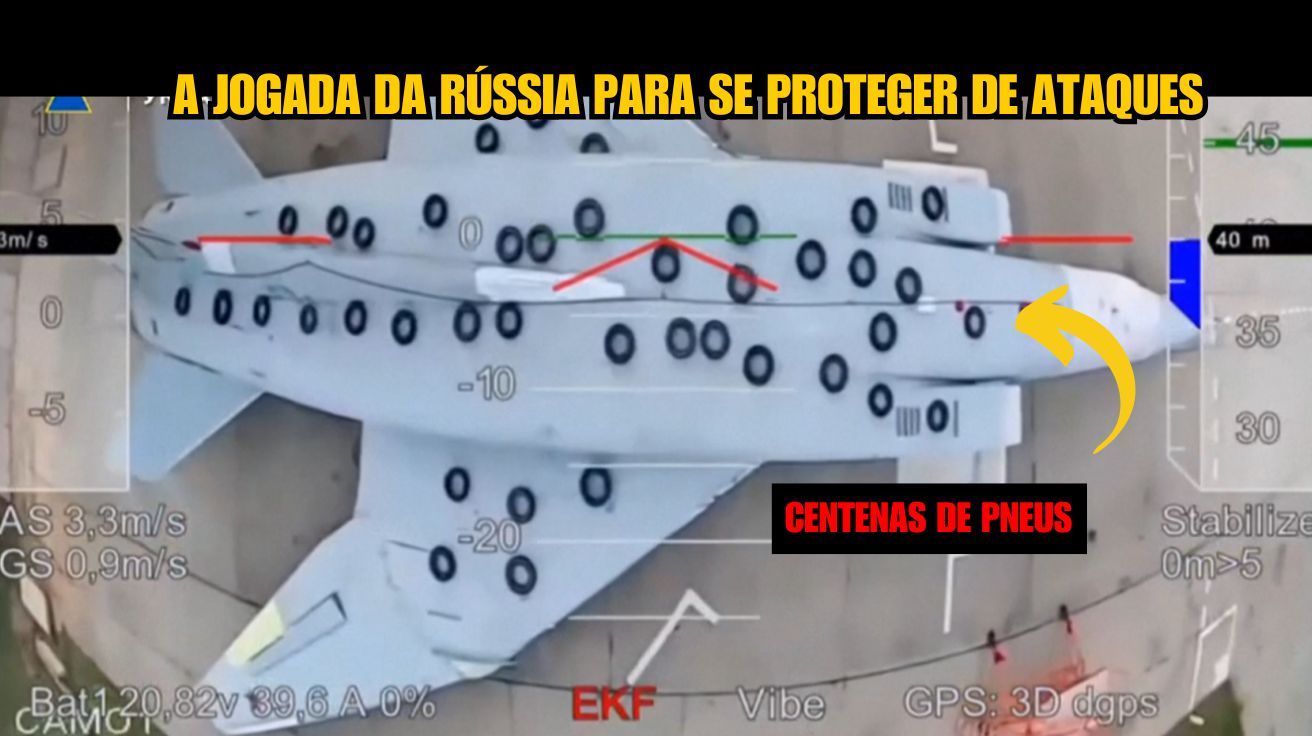


Discover An Unexpected Technique That Blends Improvisation and Technology to Protect Modern Airplanes Amid Sophisticated Drone Attacks in the Current War Scenario of Russia and Ukraine.
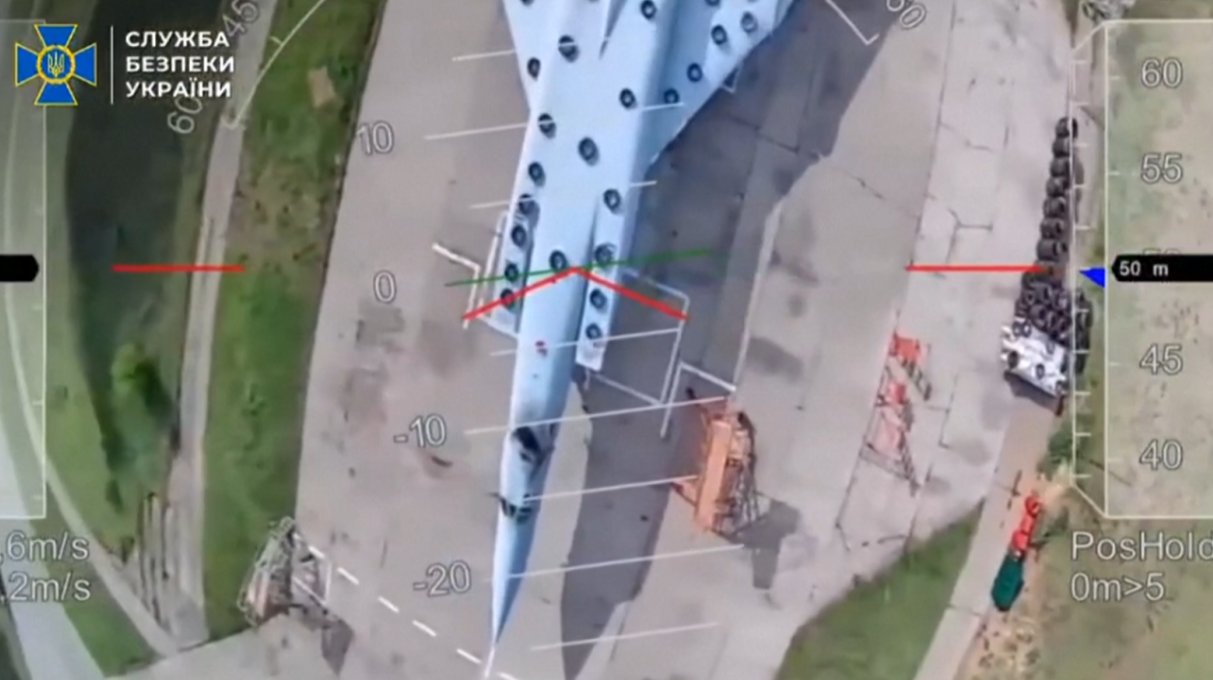
The Russian strategy of covering airplanes with tires to protect them from Ukrainian drone attacks has drawn attention and raised questions in the military and technological fields.
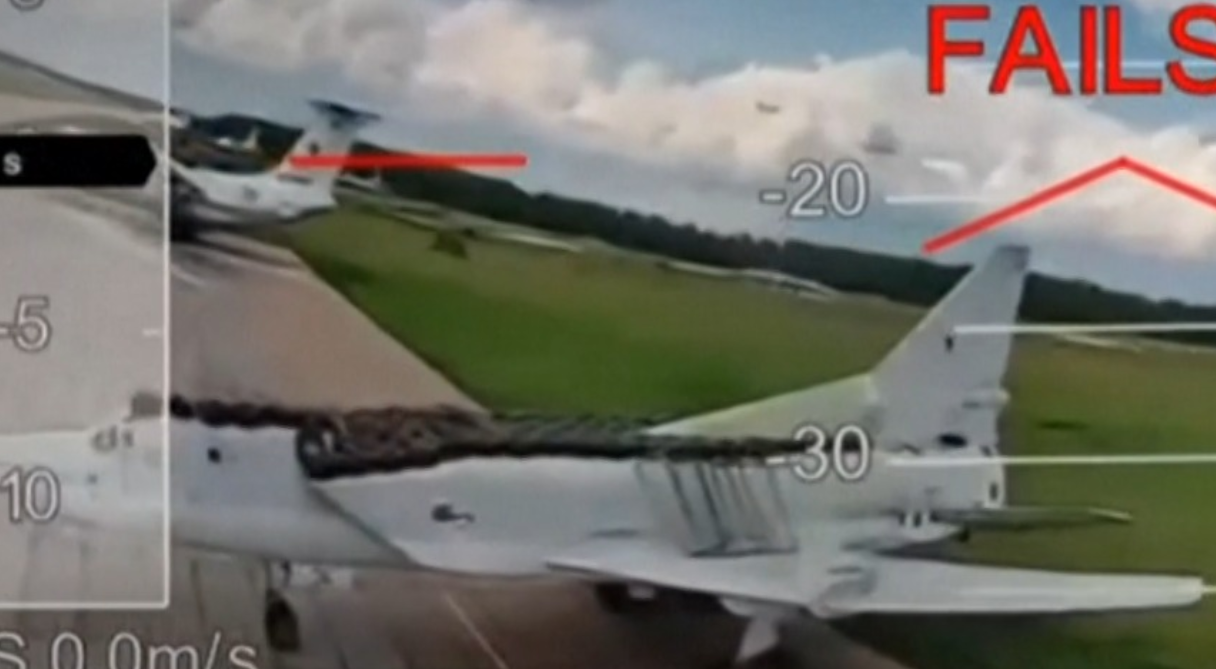
Last weekend, the Security Service of Ukraine (SBU) released new footage showing drones approaching various Russian aircraft within the country’s territory and exploding upon contact.
According to the SBU, the targets included models such as the A-50, strategic bombers Tu-95, Tu-22, and Tu-160, as well as military cargo planes like the An-12 and the Il-78.
-
Phone Falls from Plane at 300 Meters in Rio de Janeiro, Continues Recording for 15 Seconds, Found by Environmentalist Next Day in Unbelievable Twist

-
8-Year-Old Finds 900-Year-Old Viking Bronze Buckle on Swedish Beach While Fossil Hunting
-
8-Year-Old Who Ran Barefoot Wins Race in Brazil with Shoes Gifted by Famous Athlete, Becomes Symbol of Hope but Family Seeks Support to Sustain Athletic Dream
-
Brazilian Innovator Transforms 1962 Mercury Comet with Nissan Leaf Electric Motor, Achieving 125 km Range for Under $6,000


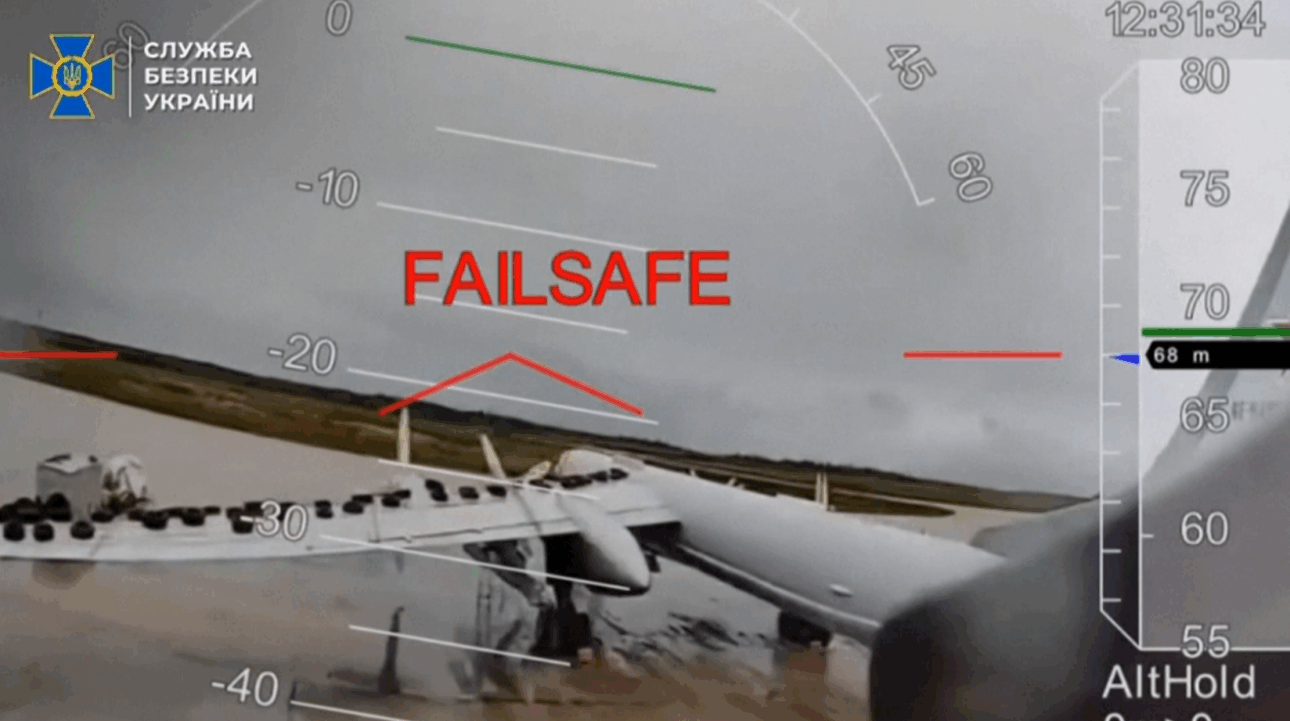
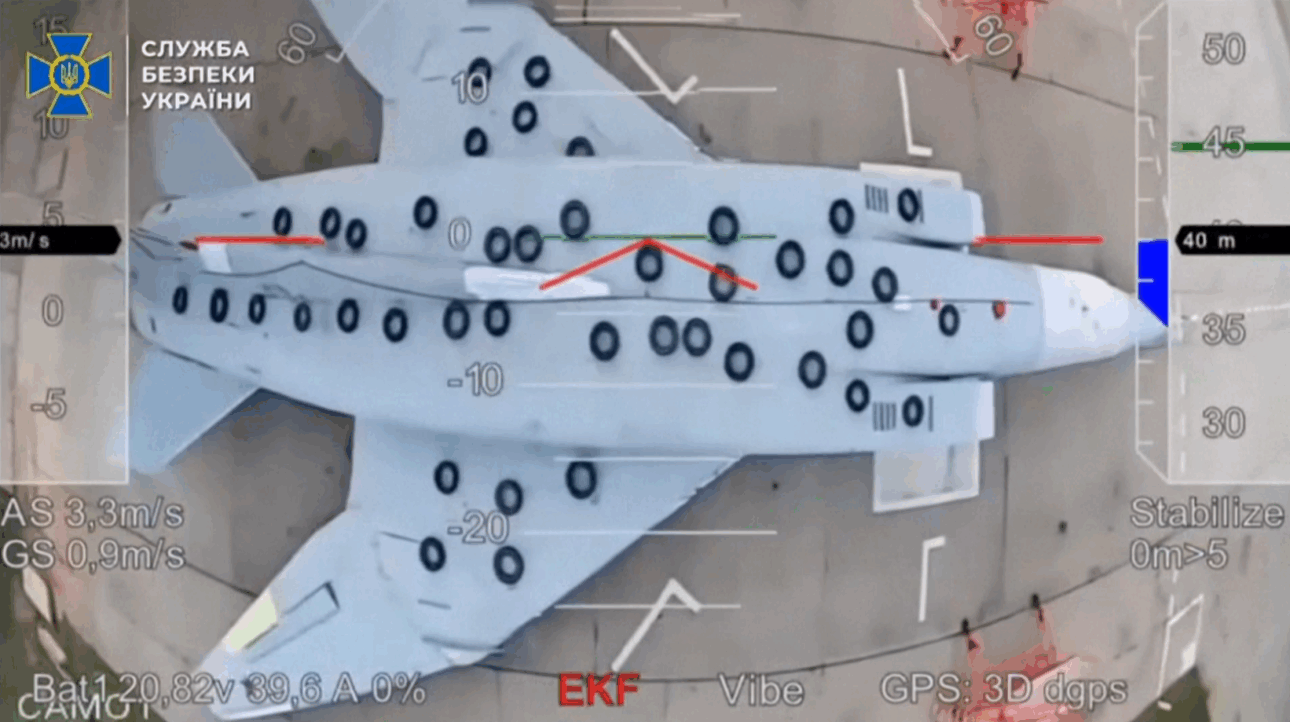
The Russian response to try to minimize the impact of these attacks involves an unusual tactic: covering parts of the aircraft with used tires, primarily over the fuselage and sensitive areas.
Improvised Defense with Tires
According to Sandro Teixeira, a professor of Military Sciences at the Army Command and General Staff School, “the tires represent a simple, low-cost, and improvised solution to reduce damage caused by drones, which usually employ explosives that detonate only upon direct contact.”
Moreover, Teixeira points out that the layer of tires can act as a cushion to lessen the effects of direct drone impacts on the surfaces of the aircraft.
But it is not just physical protection that motivates this strategy.
The tires can also confuse the sensors onboard the drones, which rely on advanced technology to identify and attack specific targets.
Drone Technology and Sensors
With the increasing use of drones in recent conflicts, especially in the war between Russia and Ukraine, artificial intelligence has been applied in training these devices to enhance visual target identification and avoid enemy interference.
“The sensors of the drones operate based on various image and data spectrums, such as infrared, radar, and optical recognition. The covering with tires can make it difficult to identify vulnerable points on the aircraft, confusing the systems that feed the artificial intelligence,” explains Teixeira.
Leandro Consentino, an expert in International Relations and a professor at Insper, corroborates this view, adding that the maneuver may also complicate the identification of airplanes by reconnaissance satellites.
According to Consentino, “the tactic can hinder the visual reading of satellites, complicating the exact location of the aircraft and, consequently, the precision of the attacks.”
An Old and Limited Practice
This practice is not exactly new.
As previously reported by CNN, satellite images from the company Maxar have shown strategic bombers Tu-95 covered with tires at the Engels Air Base in Russia since 2023.
At that time, experts assessed that the improvised protection could have limited effects, especially considering the advancement of military technology.
“Although the layer of tires may reduce the thermal signature of the airplanes, making them harder to detect in infrared spectrums, more advanced sensors can identify targets even with these barriers,” analysts warned at the time.
Furthermore, modern missile guidance systems utilize various data sources to track and attack their targets, reducing the efficacy of simple visual or physical camouflage.
Technological Advances and Limitations
In the following months, drone technology evolved significantly, making them even more precise, resilient, and lethal.
Russia, in turn, has been seeking quick and economical strategies to minimize losses in the conflict scenario, which explains the use of tires as an immediate solution.
The adoption of tires in aircraft exposes a lesser-known face of technological warfare: creativity and improvisation in defense against modern weapons.
Defense and technology experts emphasize that, although it is not a definitive solution, this tactic indicates the growing complexity of contemporary conflicts, where drone attacks and electronic countermeasures define the course of battles.
In addition to physical protection, the use of tires can be understood as a move to reduce the nighttime visibility of aircraft, complicating their detection by optical systems and thermal sensors during nighttime operations or in low-light conditions.
However, even with this strategy, Ukrainian attacks continue to hit Russian targets frequently, showing that improvised measures have evident limitations.
With the ongoing advancement of artificial intelligence, multispectral sensors, and electronic warfare, the technological race between attackers and defenders intensifies, forcing military forces to develop increasingly sophisticated and innovative solutions.
In this scenario, creativity in defense may involve everything from physical coverings to digital interference and the use of electronic countermeasures to deceive drones and guided missiles.
The use of tires in airplanes is an emblematic example of how modern war quickly adapts to threats, using unexpected resources to try to preserve valuable equipment in a conflict that blends advanced technology and improvisation.
Do you think that this improvised tactic by Russia could evolve into more effective techniques against drones or will it just be a temporary measure in light of the technological advancement of weaponry?


