Portuguese
  Spanish




Massive Seagrass Seed Planting in Coastal Ponds Led to the Formation of Extensive Submerged Meadows, with Improved Water Clarity, Return of Associated Organisms and Recovery of Ecological Functions Lost for Decades in a Region of the Virginia Coast.
In four coastal ponds that had been virtually devoid of submerged vegetation for decades, researchers and volunteers began to launch eelgrass seeds, a plant that forms meadows on the seafloor and serves as shelter, nursery, and feeding area for numerous species.
What started as an attempt to replace a vanished plant turned into one of the most documented cases of large-scale marine restoration, with natural habitat expansion, improved water clarity, and increased organisms associated with this type of environment.
Direct Impacts on the Ecosystem and Ecosystem Services
The most cited result involves the extent achieved by the restored meadows and what they trigger in the ecosystem: more physical structure on the bottom, less sediment resuspension, and an environment with better conditions for the plant to continue spreading.
-
Cape Verde’s World Cup Surprise: Betting on Electric Cars, a 5 MW Solar Plant, and an Ambitious Plan to Transform Energy for 600,000 Residents

-
Man Finds 1,469 Ancient Roman Silver Coins While Metal Detecting in Romania
-
Young Brazilian Siblings Go Viral for Catching Giant Fish, Launch Sport Fishing Project
-
72-Year-Old Retired Professor from Rural Brazil Recites 247 Digits of Pi in One Minute, Setting National Memory Record


In parallel, long-term monitoring recorded impacts on ecosystem services that are often difficult to recover when a habitat disappears, such as the sustaining of fish and invertebrate populations and the retention of nutrients and carbon in the sediment.
An Environment That Lost Habitat for More Than Half a Century
The restoration focuses on the ponds along Virginia’s eastern shore, in an area of shallow and relatively protected waters.
The area has been without eelgrass for more than half a century after a collapse that occurred last century, attributed to a disease affecting seagrasses, compounded by a hurricane that completed the loss of the remaining plants.

Without the presence of adult beds capable of producing seeds, the ponds remained with a predominantly muddy bottom and little structured habitat.
The Bet on Seeds as a Trigger for Recovery
The turning point began when scientists identified that local environmental conditions still allowed for eelgrass growth, but lacked a basic element: a source of seeds in sufficient quantity to reoccupy the pond bottoms.
The work then began to combine collection of reproductive material and sowing in target areas, repeated over the years, with monitoring to assess whether the plantings were sustaining and expanding.
Unprecedented Scale: Over 70 Million Seeds
In this process, the scale was decisive.
Throughout the project, more than 70 million eelgrass seeds were launched in the four ponds, with sowing distributed across hundreds of restoration plots and an accumulated effort of thousands of hours of collection.
Some of the seeds came from material collected in the coastal region itself, while another portion was obtained from shoots and reproductive structures harvested to take advantage of the production period and maximize the volume designated for planting.
Scientific Monitoring and Measurable Results


A long-term monitoring study conducted by researchers at the Virginia Institute of Marine Science, linked to William & Mary, described that the restoration was not limited to the return of the plant.
The research tracked how the meadows alter physical and biological processes, including improved water clarity, increased abundance of fish and invertebrates, and greater ability to retain carbon and nitrogen in the coastal environment.
How Eelgrass Changes Water Dynamics
The explanation begins with how eelgrass modifies the medium itself.
In shallow areas, waves and currents can stir up bottom sediment, making the water murkier and reducing light penetration, a critical factor for submerged plants.
When patches of eelgrass establish, they dampen water movement, stabilize sediment, and reduce turbidity, allowing light to reach the bottom more consistently.
This increase in clarity creates a favorable circle, as more light facilitates eelgrass growth and increases the chance of natural seed production, which in turn feeds the expansion of the meadow.
Persistence as a Key Factor of Success
The project also highlighted that success depended on repetition and persistence.
One-time sowing would not suffice to maintain the habitat in the face of natural variations, such as tide events, seasonal changes, and fluctuations typical of coastal ecosystems.
The strategy adopted was to renew planting over several cycles, reinforcing fragile areas and expanding introduction points so that patches could merge and form a continuous meadow.
Biological Infrastructure and Practical Utility
In addition to the ecological dimension, there is a component of practical utility that helps explain the interest in the case.
Eelgrass meadows function as biological infrastructure, as they support food webs, provide shelter from predators, serve as nurseries, and contribute to the stability of areas used for fishing and recreation.
When this type of habitat disappears, impact chains can affect food availability, organism diversity, and environmental stability.

The Historical Link Between Seagrasses and Scallops
The history of the Virginia ponds illustrates how a plant can be the foundation of a system.
With the loss of eelgrass last century, previously structured environments became exposed bottoms, with less complexity and fewer places for attachment and shelter of organisms.
The return of the meadows reopens this ecological space and recreates conditions for the presence of species that depend on the habitat to complete their life cycles.
Repopulation of Scallops as an Associated Effect
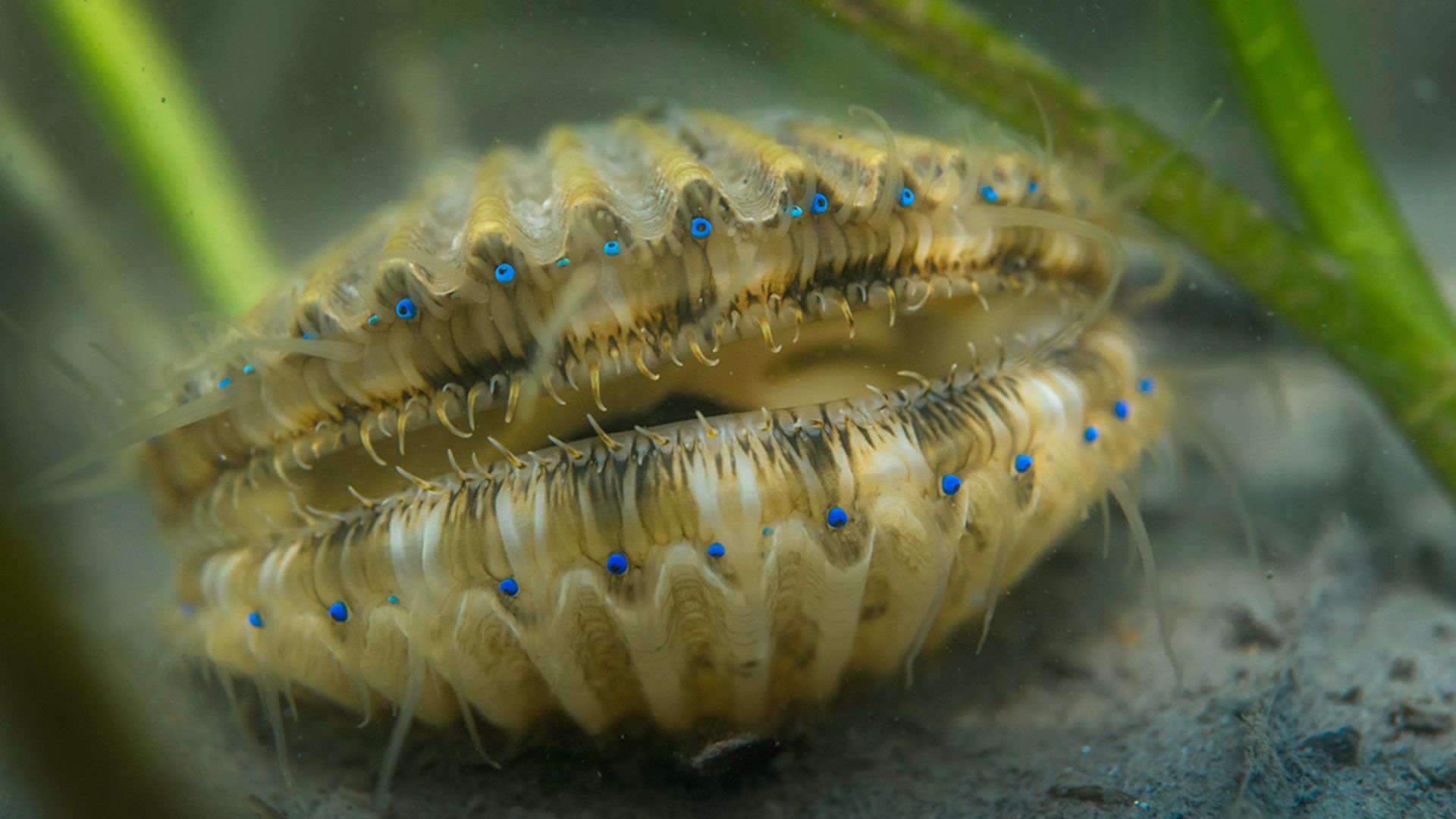
An associated consequence of the project was the encouragement of initiatives for restoration of bay scallops, mollusks historically linked to environments with seagrasses.
Some of the researchers involved in the work with eelgrass launched a program to repopulate the ponds with juvenile scallops, maintaining regular releases and monitoring signs of dispersion and presence beyond the introduction points.
The logic is straightforward: without the structural habitat, the mollusk is less likely to establish; with the meadow back, the availability of shelter and suitable conditions increases.
Time, Management, and Continuity
The case also draws attention for occurring within a coastal area managed for long-term conservation and research, which facilitates continuity of monitoring, coordination of partners, and annual repetition of effort.
In ecological restoration, the time factor is often as decisive as the technique, as many effects appear only after successive cycles of growth, reproduction, and physical stabilization of the environment.
Reactivating Systems, Not Just Planting Species
What the experience of the Virginia ponds highlights is the difference between planting a species and reactivating a system.
By reintroducing a plant that alters the movement of water, the stability of sediment, and the availability of light, the project ended up triggering cascade changes, with measurable effects on associated organisms and on ecosystem functions.
Rather than relying on large artificial structures, the restoration bet on a biological element capable of reconfiguring the environment based on its own growth and expansion dynamics.