






 Portuguese
  Spanish


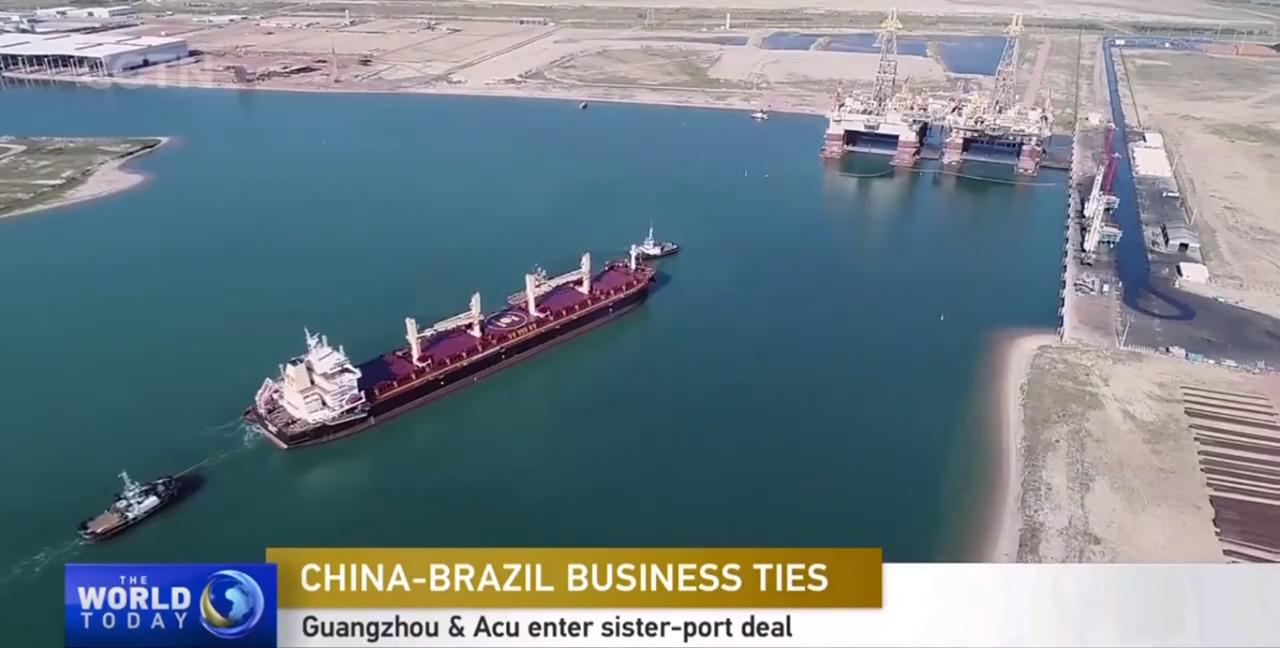

Açu Port Made International Headlines in CGTN Report, China’s Leading English Language Channel, Highlighting Great Business Opportunities and Port Activities Between the Two Nations
China and Brazil signed a special relationship between the sister ports of the Chinese port of Guangzhou and the Açu Port, the busiest in Brazil. Lucrecia Franco from CGTN discusses this new partnership. Below is the full transcript of the report, the original CGTN link is in the comments box at the end of this article.
“This is Açu Port, the largest port complex in Latin America. Located in São João da Barra, in the state of Rio de Janeiro, the complex covers a total area of 130 square kilometers and has nine terminals. And this is the Guangzhou port, which became Açu’s sister port in May. Guangzhou is the fifth largest port and regional hub in the world in southern China, handling more than 600 million tons of cargo in 2018.
-
Lenovo Unveils Legion Y700 Tablet with RGB Backlighting, 5G, and SIM Card Support
-
Lenovo Unveils Legion Y700 Tablet with RGB Backlighting, 5G, and SIM Card Support
-
Northern Brazilian City Prepares Task Force to Mitigate El Niño Impacts with Stockpiled Fish, Drone Monitoring, Firefighting, and Water Supply Reinforcement in Remote Areas

-
Brazil to Issue “Panda Bonds” in China, Aiming to Raise Up to 5 Billion Yuan at Lower Interest Rates Than Dollar Debt

Maartje Driessens, Strategic Partnerships Manager, Açu Port said, “When we look at the port of Guangzhou, they have about fifty sister ports. They are connected, for example, with Africa, with the port of Lagos in Nigeria. They are connected with ports in Indonesia, in the United States, in Asia, in Europe. So, being part of this club is a real privilege because it really allows us to become one of the best in this category, basically, Guangzhou opens the doors to many port authorities around the world.”
And there are more good reasons for this port’s interest in China: iron ore. Brazil is the second largest supplier of iron ore to China. This port has a dedicated terminal for exporting raw iron ore, which is critical for China’s industrial expansion.
Luiz Francisco da Silva, Terminal Operations Manager at Açu Port says, “It’s the most advanced technology for exporting iron ore, from stock to the requester of materials because we check all parts of the process, from the quantity of materials we receive to the quality of the product we have in stock.”
The port has an automated system that can handle more than 26 million tons of iron ore per year. The ore comes from nearby mines through pipelines. And after a drying process, it is ready to load onto giant ships that mainly sail to China, including Guangzhou, its new sister port.
Lucrecia Franco, São João da Barra, Brazil: “But China’s demand for Brazilian commodities is not the only reason for the partnership. The concept is to share knowledge and also attract Chinese companies to operate within this new industrial complex.
MAARTJE DRIESSENS STRATEGIC PARTNERSHIPS MANAGER, AÇU PORT: “We are a new port, we have state-of-the-art infrastructure, which ensures high productivity and high efficiency. Also, we are already operating, we have terminals. So basically, Chinese companies that want to import and export and produce have all the infrastructure they need.”
A clear indication of how much interest Brazil has in deepening cooperation with China, Brazil’s main trading partner, with nearly US$ 100 billion in bilateral trade last year. Lucrecia Franco, CGTN, São João da Barra, Brazil.”


