





 Portuguese
  English
  Spanish
  3 min of reading
  0 comments


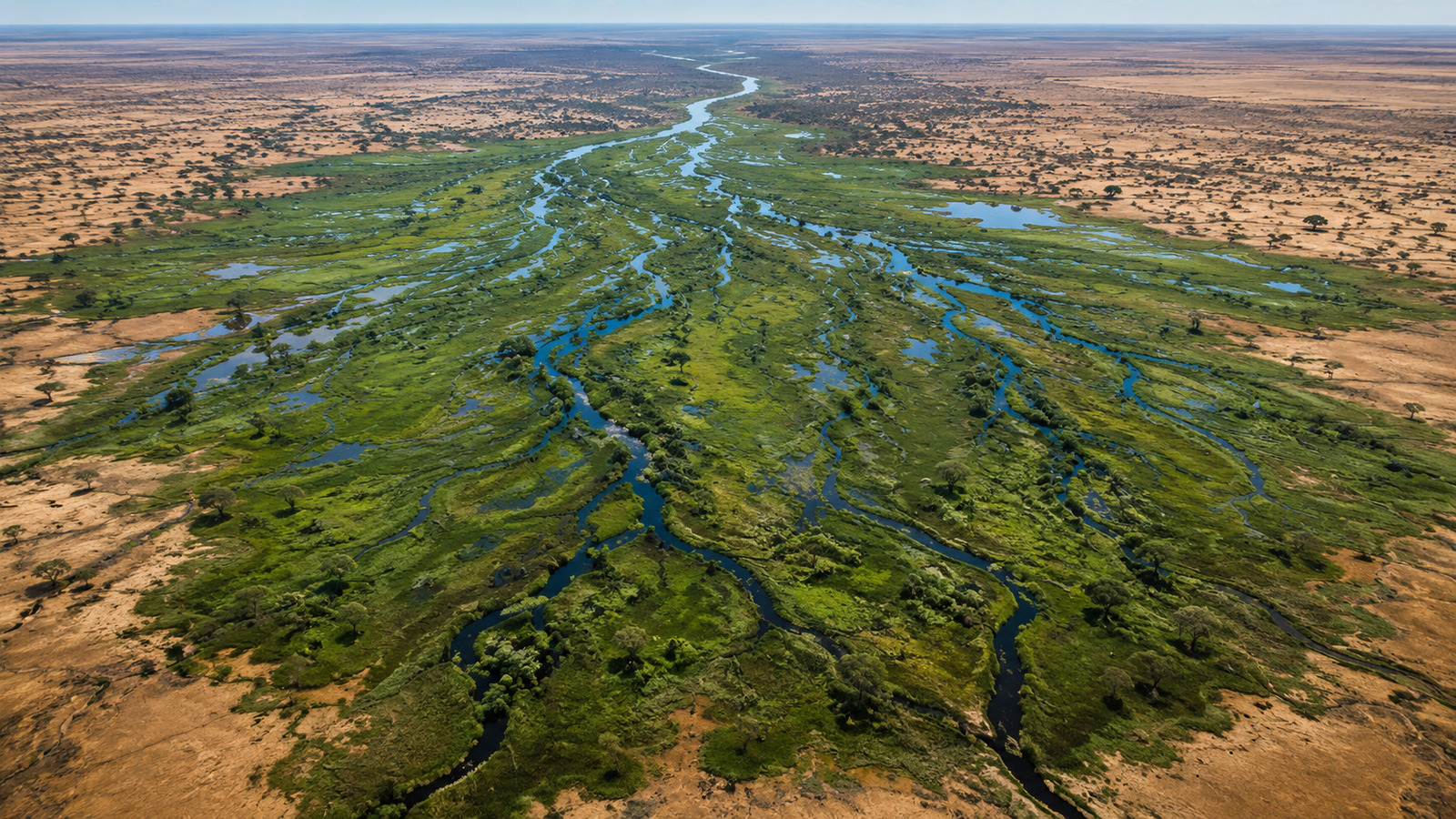
The Okavango River originates in Angola, crosses increasingly dry areas, and disappears in the Botswana desert, forming an inland delta that supports animals, plants, fish, and migratory birds
The Okavango River draws attention for following a rare path: it originates in the wet areas of western Angola, moves towards southern Africa, and instead of reaching the sea, it spreads in Botswana until it disappears in the desert, forming an inland delta that supports animals, plants, fish, and migratory birds.
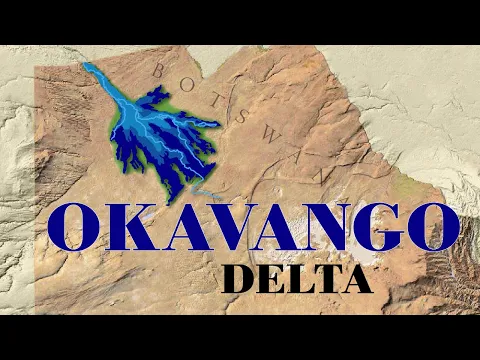

Okavango River originates in Angola and changes upon reaching arid areas
The river’s journey begins in the swamps of western Angola, where rain feeds a network of rivers that slowly move south. One of the main channels of this system is the Okavango River.
Along the way, the water leaves a very wet landscape and enters increasingly dry regions. This transition is crucial to understanding why the river behaves so differently from other river systems.
-
A pedestrian who passed by construction work on a highway in Switzerland noticed stones arranged in a strange way on the ground, and what seemed like construction debris was actually the foundation of a Roman building buried just centimeters from the asphalt, which no one had been able to locate since it was partially excavated for the first time in 1860.

-
A homeless man became the only “resident” of London’s most expensive mansion, a £210 million house with 45 rooms that remains empty while he lives at the entrance.

-
What happens when coffee grounds end up in the toilet and why so many people are using this residue against bad odors
-
Mirror in the elevator seems like mere vanity, but it exists for 5 reasons that almost no one notices: a common detail in buildings changes the experience inside the cabin and hides a logic related to fear, safety, accessibility, and psychological comfort without you noticing.


In most cases, rivers grow along the way and flow into the sea. The Okavango breaks this logic. Its course does not end in the ocean but in a large internal area of channels, lagoons, and islands.
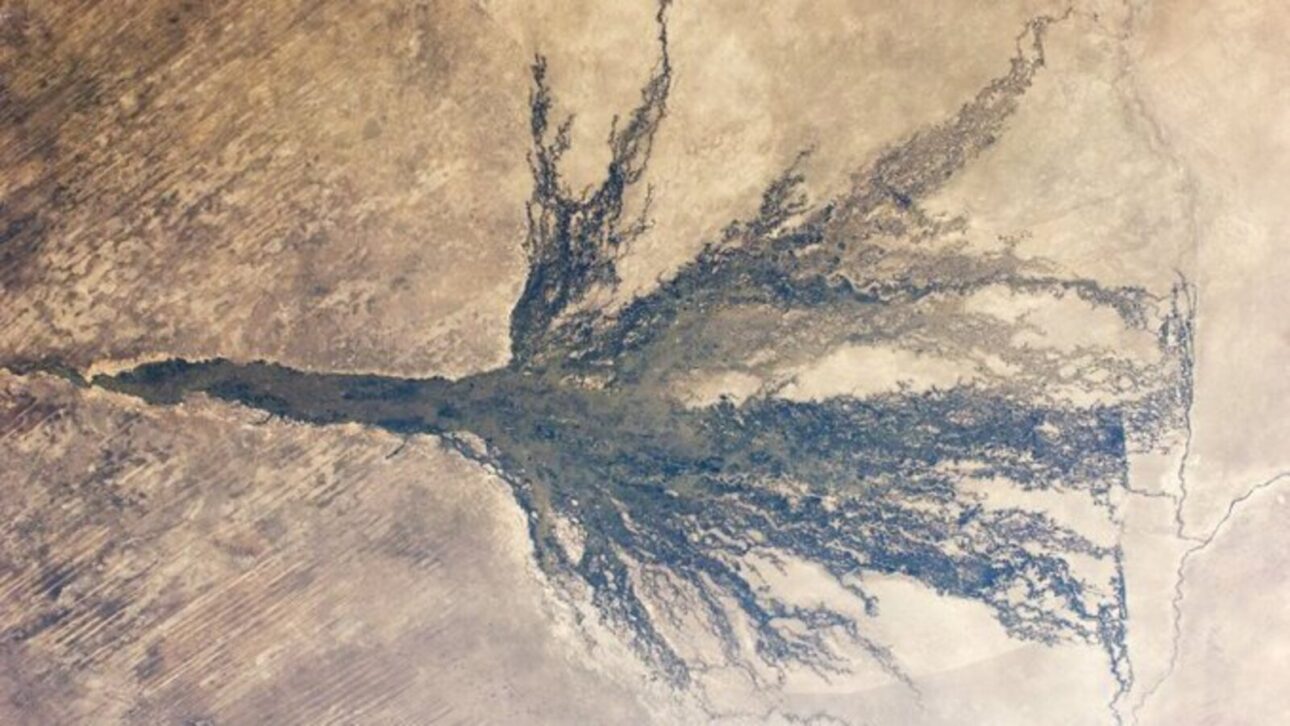
Inland delta expands and contracts with the seasons
When it enters Botswana, the river spreads out and forms the Okavango inland delta. The water does not follow a single path to the sea but divides into a vast network that changes with the time of year.
This formation is not fixed. During floods, the delta expands and occupies a larger area. In the dry season, it contracts, with periods of reduced flow.
This movement transforms the delta into a pulsating system. The annual arrival of the waters revitalizes the surface and activates a chain of life that directly depends on this rhythm.
Floods sustain plants, fish, birds, and large mammals
The Okavango Delta sustains one of the richest and most complex ecosystems on the planet, even though it is located in an arid region. Plants, insects, fish, and large mammals depend on water variation.
Elephants, hippos, buffaloes, lions, and leopards use the delta as a feeding and refuge area. Migratory birds also take advantage of the region, described in the base material as one of the most important wetlands in Africa.
The functioning of the system does not depend solely on local rain. Precipitation that occurred months earlier in Angola influences the water cycle in Botswana, like a kind of hydrological memory of the landscape.
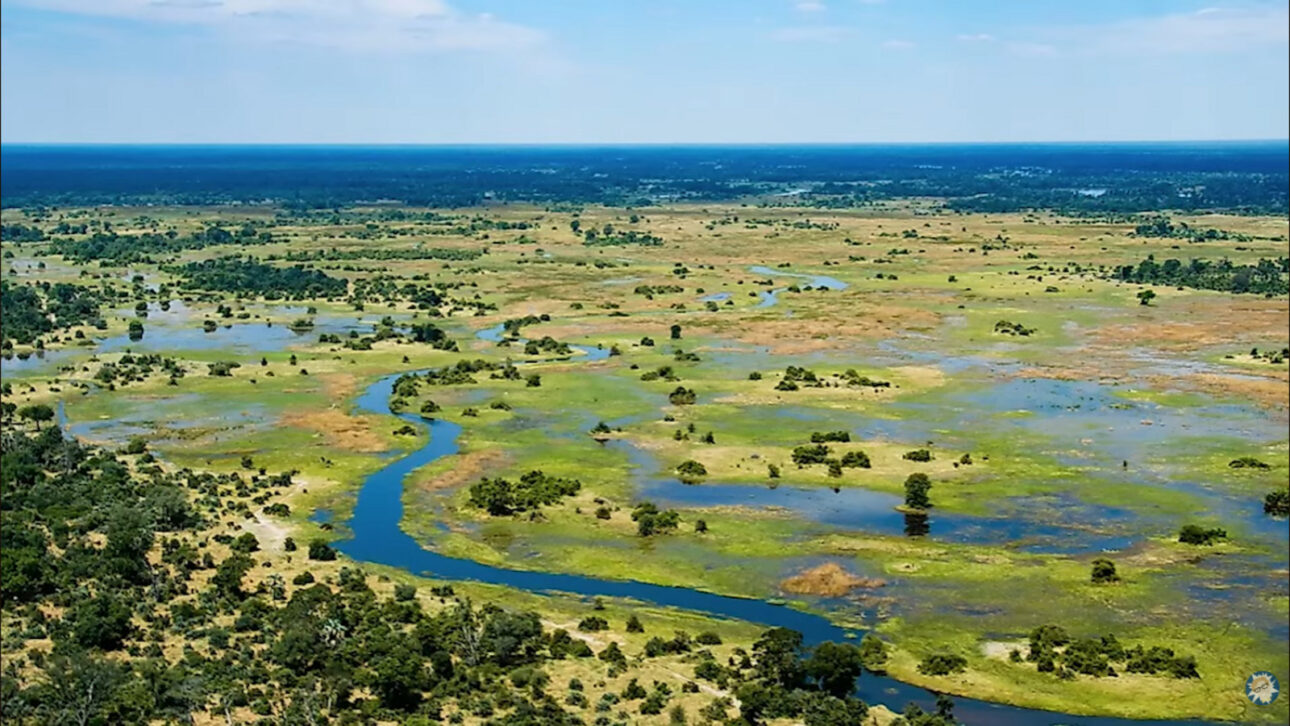
Expeditions in mekoro help document little-explored areas
For more than a decade, specialized teams have been exploring the Okavango system from the interior, using small traditional boats called mekoro. The expeditions are linked to the Okavango Wilderness Project.
This work has allowed the documentation of areas that remained practically unexplored until recently, mainly due to the difficulty of access. The journeys combine science, direct observation, and physical endurance.
During fieldwork, researchers observed how small changes in the landscape can affect the entire system downstream.
This helps explain the complexity of the Okavango, a river that disappears in the desert while keeping an extensive network of environments alive.
This article was prepared based on information from the base material provided about the Okavango River and the Okavango Wilderness Project, with data, numbers, and statements preserved as per the consulted material.






Be the first to react!