





 Portuguese
  English
  Spanish
  3 min of reading
  0 comments


Meet the Casa de Sal, a sustainable 7-room residence built with over 8,000 recycled containers on the coast of Pernambuco.
An innovative initiative caught attention on the coast of Pernambuco in recent years. Between 2019 and the following years, socio-environmental educator Edna Dantas and her daughter, fashion producer Maria Gabrielly Dantas, decided to act against local pollution and built a habitable house of 70 square meters using more than 8,000 discarded glass bottles.
According to Gazeta de SP, the project was executed at Praia do Sossego, located on the Island of Itamaracá, motivated by the excessive disposal of waste in mangroves and regional forests.
Without resorting to million-dollar investments or sponsorships, the duo worked for just over two years to erect the property, proving that reused materials can generate safe and functional homes.
-
Construction material store starts selling modular units that resemble small houses, assembled in a few days in the backyard, as the housing crisis pushes families towards unconventional solutions in Australia.

-
India approved the country’s first submerged road-rail tunnel, 15.8 kilometers dug under the bed of the Brahmaputra River.
-
A 90-ton steel ring erected in 57 days stands tall in a city in Santa Catarina, the R$ 50 million Ferris wheel that will reach 60 meters in height in Itapema.

-
The largest treated water reservoir in Latin America, made with double steel technology, is completed in Curitiba, receives an investment of R$ 40 million, and promises to strengthen the supply for 130,000 residents in five neighborhoods of the capital.



Meet the Casa de Sal
Upon moving to the Island of Itamaracá in 2019, mother and daughter encountered a serious environmental problem: the accumulation of improperly discarded waste in natural areas.
Knowing that glass is among the least collected raw materials by conventional urban recycling networks, they developed a creative solution.
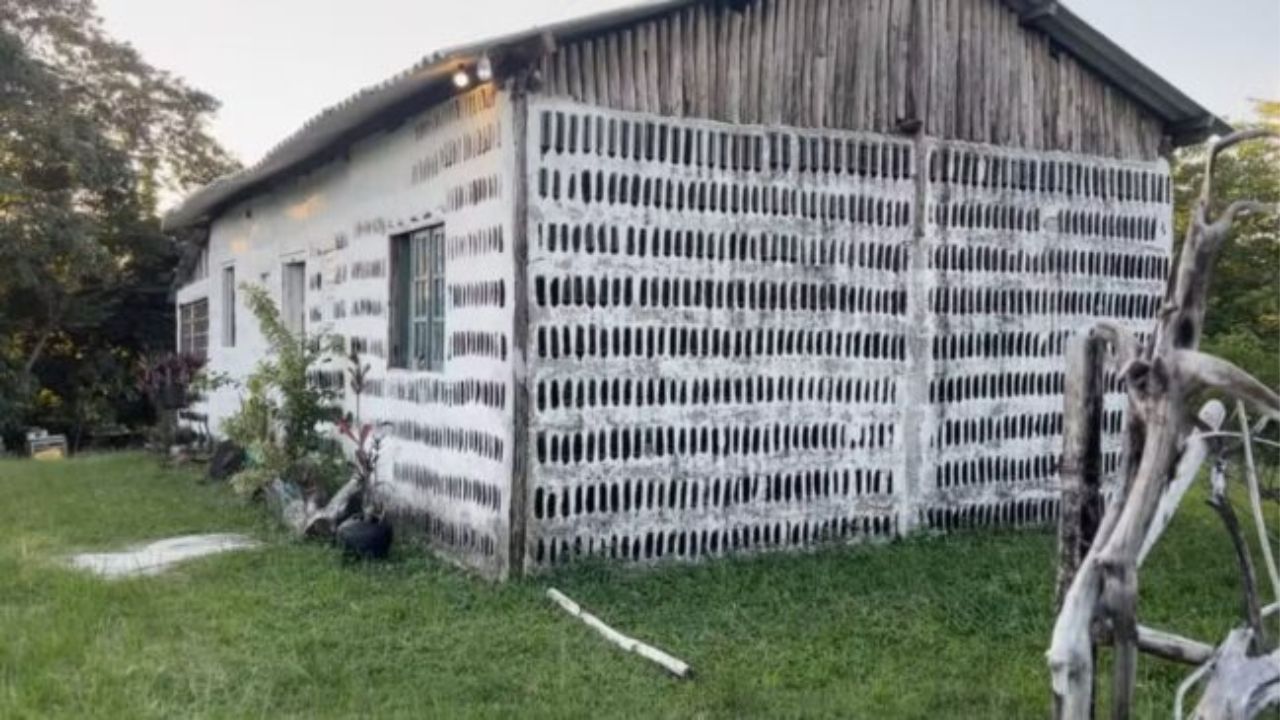
To achieve the goal of erecting the structure, the duo organized a large collection effort. The community activity had the direct support of local businesses, hotels, neighborhood residents, and also tourists visiting the paradisiacal region.
The initial months of the journey required a lot of resilience. While the walls of the main dwelling were progressively raised, the two women resided in a very small provisional space, only 17 square meters, which did not have a traditional bathroom.
The building was officially named “Casa de Sal”. This conceptual choice directly references the elements that make up the original glass recipe, which includes salt, sand, and soda ash in its manufacture.
The collection of bottles was an essential stage of the project. All the material used came from the island itself, obtained with the help of residents, tourists, hotels, and bars in the region.
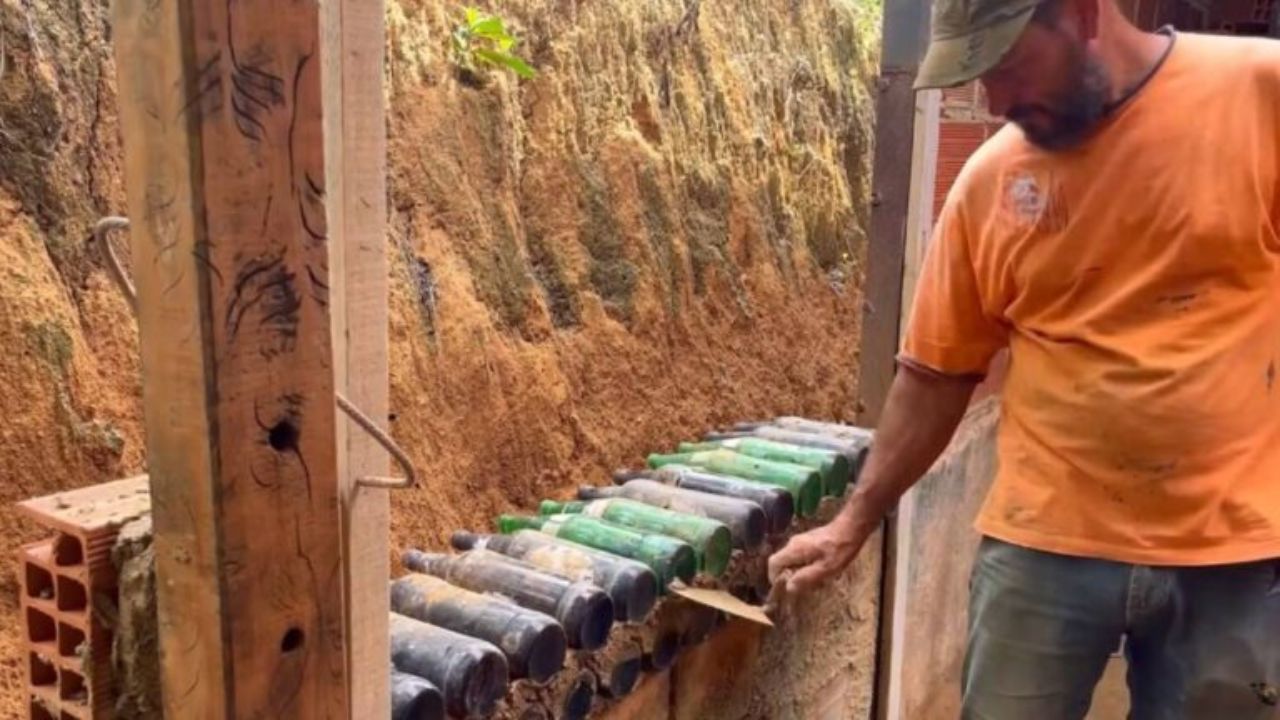
To transform the containers into safe and functional building elements, mother and daughter resorted to specific bioconstruction techniques. The bottles were installed in a vertical position and fixed with mortar, a solution that helped reinforce the strength of the walls.
Moreover, the way the glass was distributed favored the entry of natural light, creating an interior effect similar to stained glass windows.
The work began in May 2020 and extended for about two years. During this period, most of the construction was carried out manually, with little professional assistance.
How the house with glass bottles promotes social impact
Currently, the physical space serves multiple functions in the community and features seven fully structured rooms.
The existence of the place stimulates deep discussions about the lack of decent housing in Brazil, as well as raising questions about daily waste in cities.
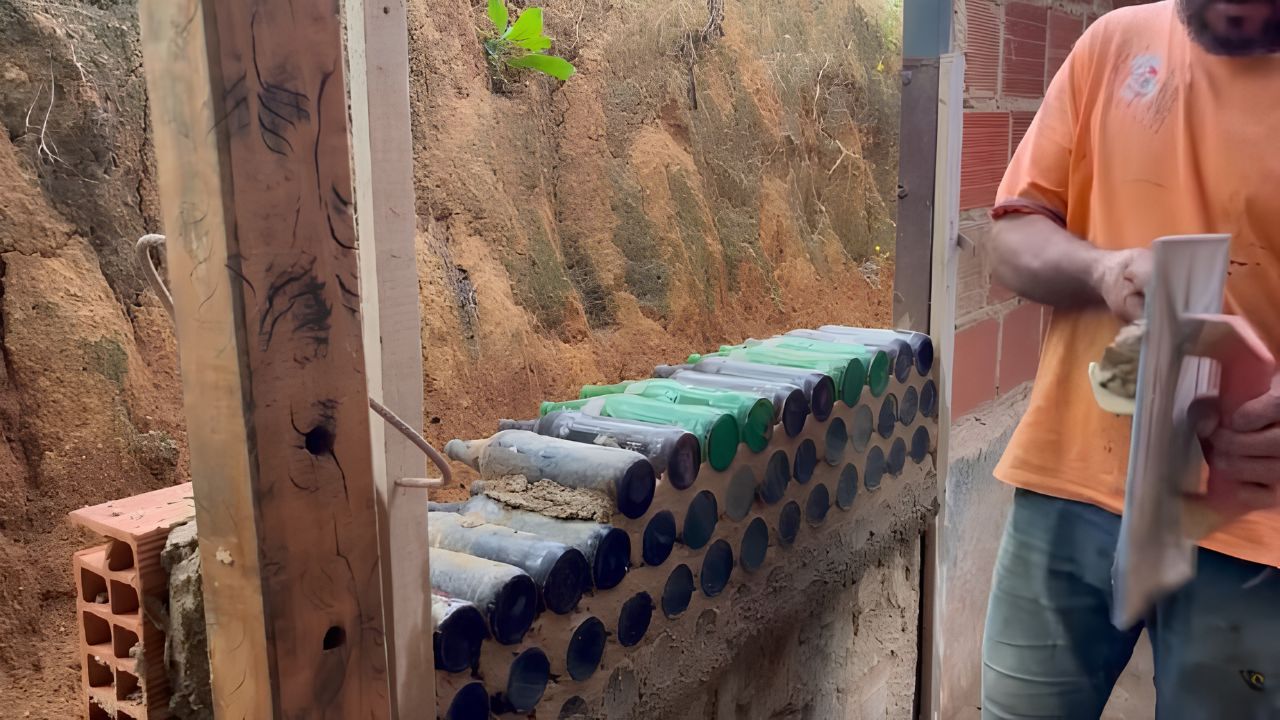
Thus, the manual effort of Edna and Maria Gabrielly transformed what was considered a pollutant, the glass bottle, into a 70 square meter home that shines under the sun, serving as an inspiration for new practices of material reuse in national civil construction.
With information from Gazeta de SP





Be the first to react!