






 Portuguese
  Spanish


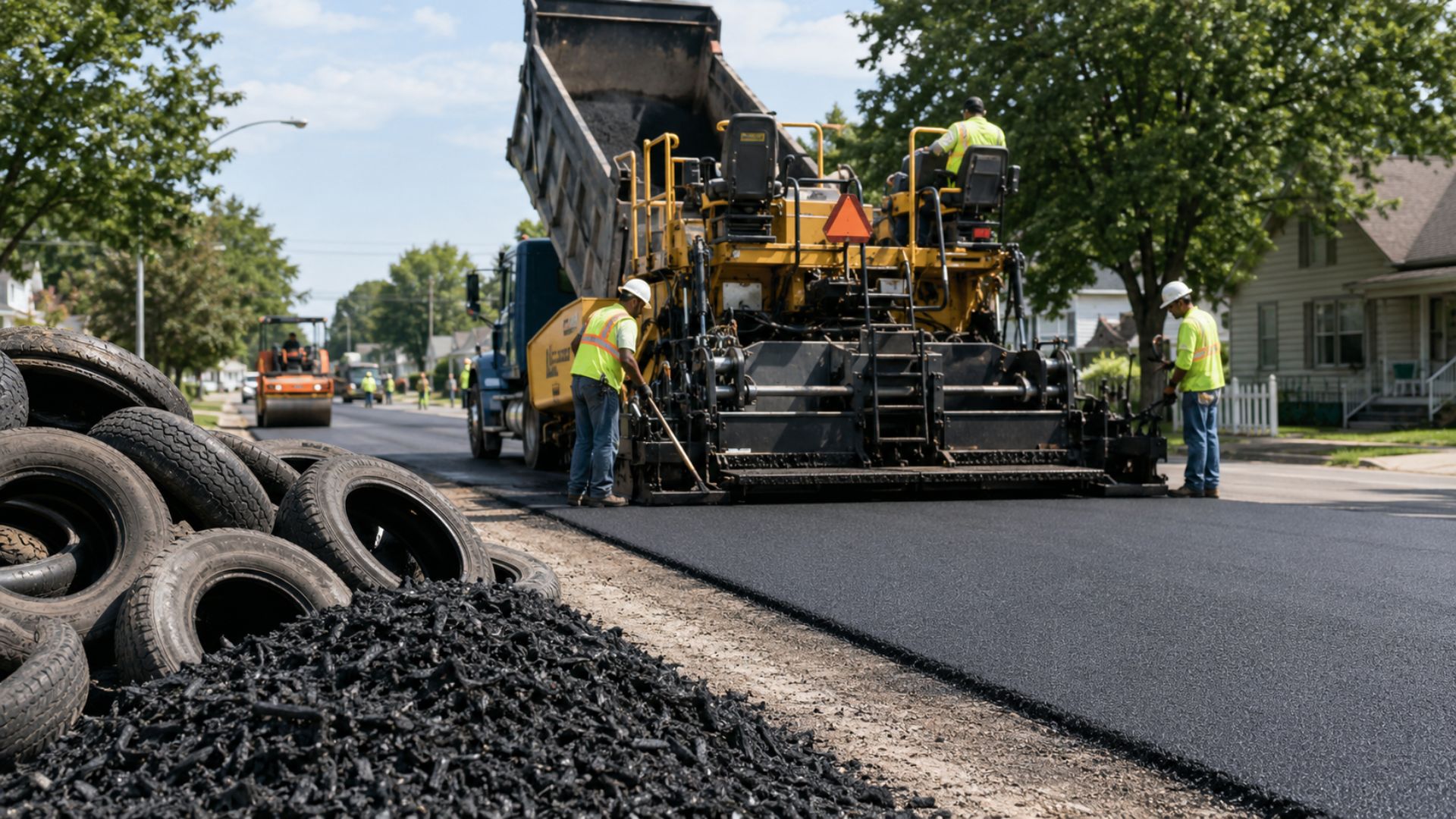


The American city has launched a pilot project that mixes recycled tire rubber with regular asphalt. The promise is for more durable and quieter streets, but the real result will still be measured throughout the test, which compares the new sections with conventional pavement.
The city of Ann Arbor, in the U.S. state of Michigan, has started transforming about 2,000 old tires into pavement, instead of sending them to landfills or burning them. The construction of the city’s first rubber asphalt sections began on May 30, 2026, carried out by the company Cadillac Asphalt, and is part of a pilot project that seeks to assess whether the material delivers more durable and quieter streets than conventional asphalt.
The initiative mixes ground rubber from discarded tires with traditional asphalt on two city roads that serve as test tracks. The chosen sections were West Oakbrook, between Main and Sumark streets, and Northbrook Place, between Eisenhower and West Oakbrook, with a control segment in regular asphalt for comparison purposes. The goal is to measure, with data collected from the works and plants, whether the investment in recycled tires is justified for the region’s harsh climate.
How tires become pavement
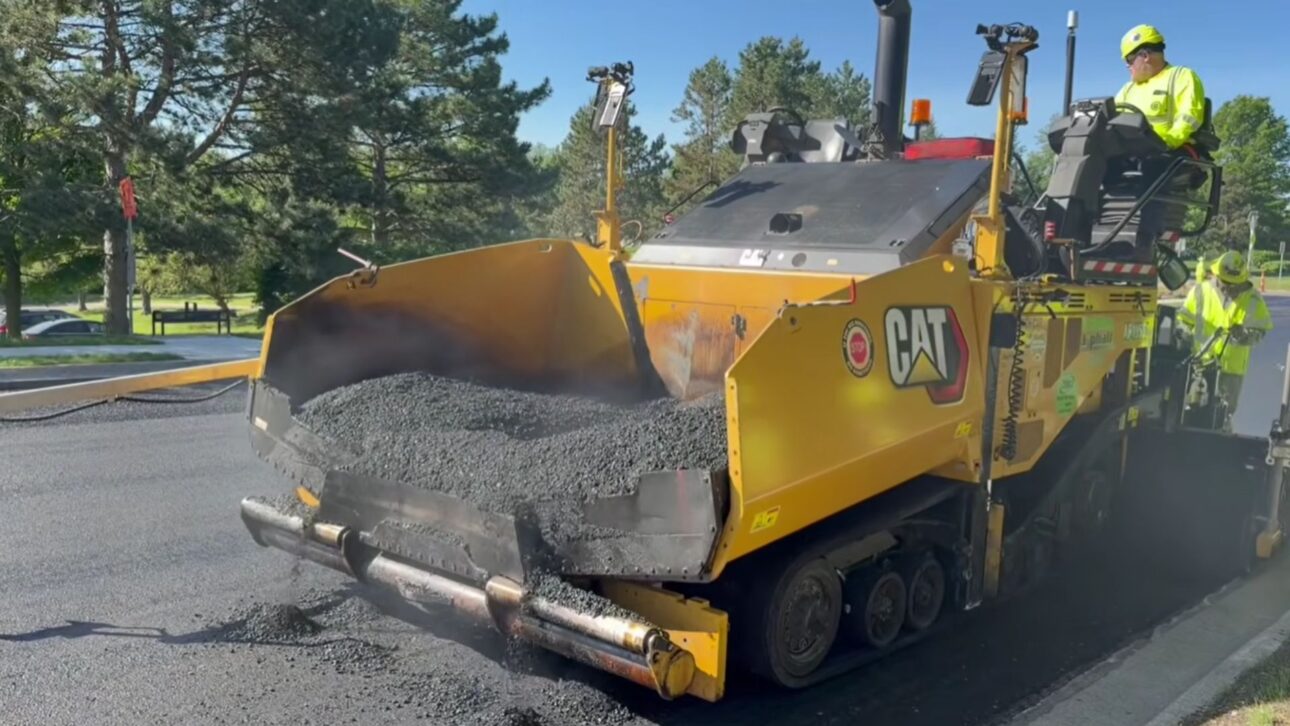
This rubber, technically known as ground tire rubber, is incorporated into the asphalt binder or aggregate, in processes that engineering divides between wet and dry methods.
-
Tired of Seeing Homelessness, New Westminster in Canada to Open Region’s First Tiny Home Village: 30 Container Homes with Central Kitchen, Meals, and Facilities

-
Brazil’s Santa Catarina Port Drives 770 Tons of Steel Piles into the Sea, Reaches Midpoint of $100 Million Project to Dock Two Ships Simultaneously by October
-
Expanded Polystyrene Gains Ground as a Lightweight Alternative to Traditional Masonry in Construction
-
Abandoned Brazilian Coastal Stadium, Once Hosting Major Soccer Matches, to Be Demolished for $10 Million NASCAR-Inspired Racetrack


The result is a pavement that, according to the technical literature of the sector, tends to reduce cracks and deformations and to decrease traffic noise.
In the Ann Arbor project, the volume of material gives the dimension of the reuse involved.
According to city information, about 9,300 tons of asphalt mixtures will be applied by the end of the test, of which approximately 3,730 tons correspond to the specific mixture with rubber, equivalent to about 2,000 recycled passenger car tires.
It’s an impressive number for an initial phase, even though it’s small compared to the city’s annual backlog.
An environmental problem the city wants to solve
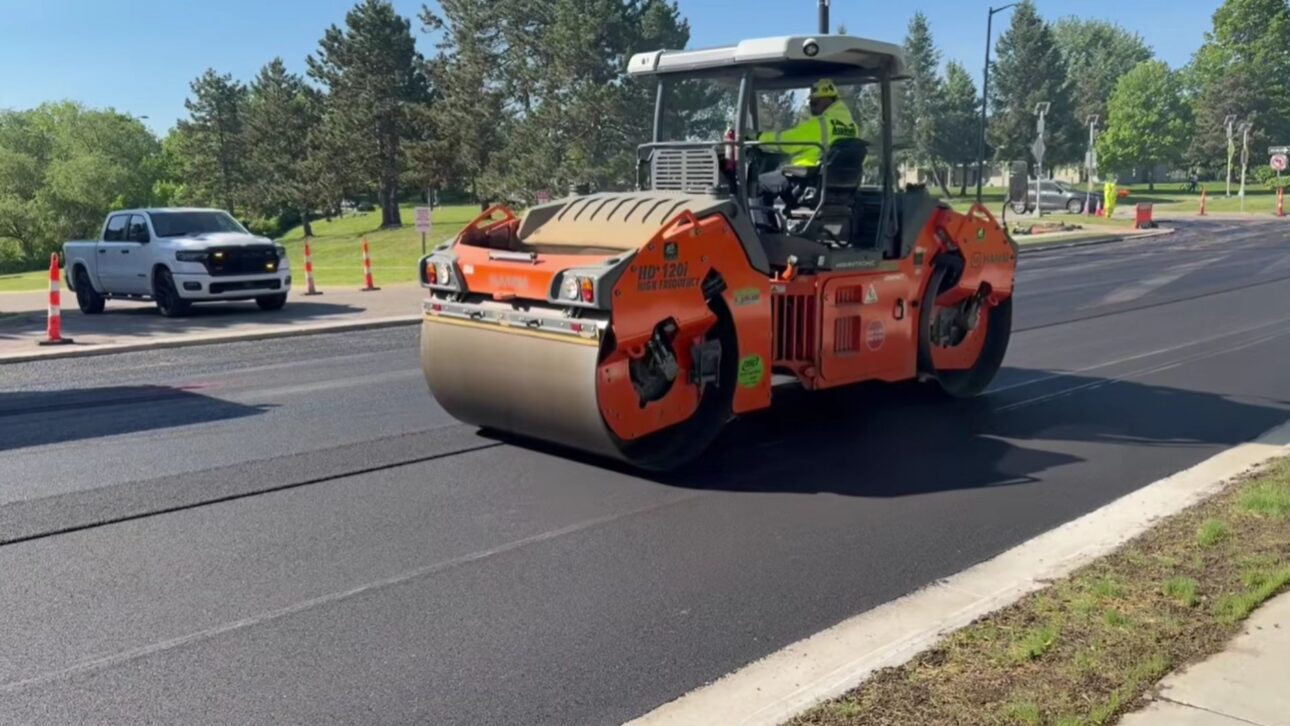
According to the Ann Arbor city hall, residents generate more than 70,000 discarded tires per year, and almost half of them end up burned in cement kilns or deposited in landfills.
Reusing part of this material in paving removes the tires from this disposal cycle and gives them a long-lasting function.
The funding for the test reinforces this environmental character, as it came from a public grant aimed at recycling.
The resources came from the Michigan Department of Environment, Great Lakes, and Energy, known by the acronym EGLE, through a state program for market development for scrap tires.
The project is led by the city of Ann Arbor itself, in technical partnership with Michigan Technological University, which monitors the results.
Promises of better streets
The advantages promoted by those responsible focus on three fronts, namely, durability, comfort, and environment.
According to Professor Zhanping You from Michigan Technological University, the rubber incorporated into the asphalt can extend the pavement’s lifespan by up to 30 percent, which would mean a few more years of road before a new renovation.
In a state marked by frequent potholes and cracks, this projection is one of the main attractions of the material.
Besides lasting longer, rubberized asphalt promises quieter streets with better wet surface grip.
The reduction in traffic noise benefits both drivers and street residents, while the increased grip tends to enhance safety on rainy days.
It is worth noting that these characteristics are pointed out as expected benefits and are precisely part of what the test aims to confirm in practice, based on the actual performance of the streets.
The limits and questions the test should answer


Despite the enthusiasm, it is important to treat the project for what it is, that is, a pilot under evaluation, and not an established solution for the region.
The very choice to compare the rubberized sections with a segment of regular asphalt shows that the results still need to be measured in Michigan’s climate, marked by cycles of moisture and freezing that punish any pavement.
Only monitoring over time will tell if the promised durability is confirmed in these specific conditions.
There are still cost and impact issues that usually accompany this type of technology.
Historically, rubber asphalt faced the barrier of initial cost and the need for specific equipment, although specialists from Michigan Technological University claim that, at current prices, rubber material can be equal to or even cheaper than regular asphalt.
As with any pavement that incorporates rubber, monitoring emissions during application and wear over time is part of what needs to be observed before expanding the technique.
An old technology in a new location
Although it is new to Ann Arbor, rubber asphalt is far from being a novel experience in the United States.
The technique was pioneered by the city of Phoenix, Arizona, back in the 1960s, attracted by the high durability of the material.
Since then, states like Arizona, California, Florida, and Texas have been using rubberized pavement for decades, which helps explain why drivers notice quieter streets in these regions.
For Ann Arbor and the county where it is located, Washtenaw, the project represents a further step in this direction.
The previous year, the county had already conducted a first project of this type in the Ellsworth area, and the current test is the first undertaken by the city.
The expectation of those involved is that, if the benefits are confirmed, new streets in Ann Arbor may receive the same treatment in the coming years.
The Ann Arbor project shows how a problematic waste, the old tire, can gain a second life under the feet of drivers.
The proposal to combine environmental gain, quieter streets, and greater durability is promising, but its real value depends on the data the test will generate in Michigan’s harsh climate.
For now, what we have is a well-founded pilot, which transforms 2,000 tires into pavement and bets on a technology already tested in other states.
And you, would you like to see streets made with recycled tires in your city? Comment if you believe that rubber asphalt could help solve the pothole problem in Brazil, if you’ve heard of this technology, and what you think about turning old tires into pavement. The conversation is open to those interested in innovation, sustainability, and urban infrastructure.


Great development. We should try using other plastic materials like plastic containers eg. water bottles polluting our rivers and seas.
I live in Regina sask canada. We get extreme weather fluctuations on average of plus 35 Celsius to minus 40or more ,depending on the weather patterns. Our streets turn into a gauntlet of pot holes in the spring and are a danger to to drive on in many parts of the city. Hope your tests turn out great especially with the freeze thaw cycles causing cracks and leaves.
This technology is far from new.
Twenty eight years ago, Ontario used a process which included recycled rubber tires on parts of hwy 115. Then the goal was to create better contact with spans which typically had black ice during cold weather. Opposed to warmer ground level stretches.
Everything comes back around every twenty years and people love to call it new and innovative.
The cost of the rubber transformation is the true issue.