






 Portuguese
  Spanish
  4 min of reading
  0 comments


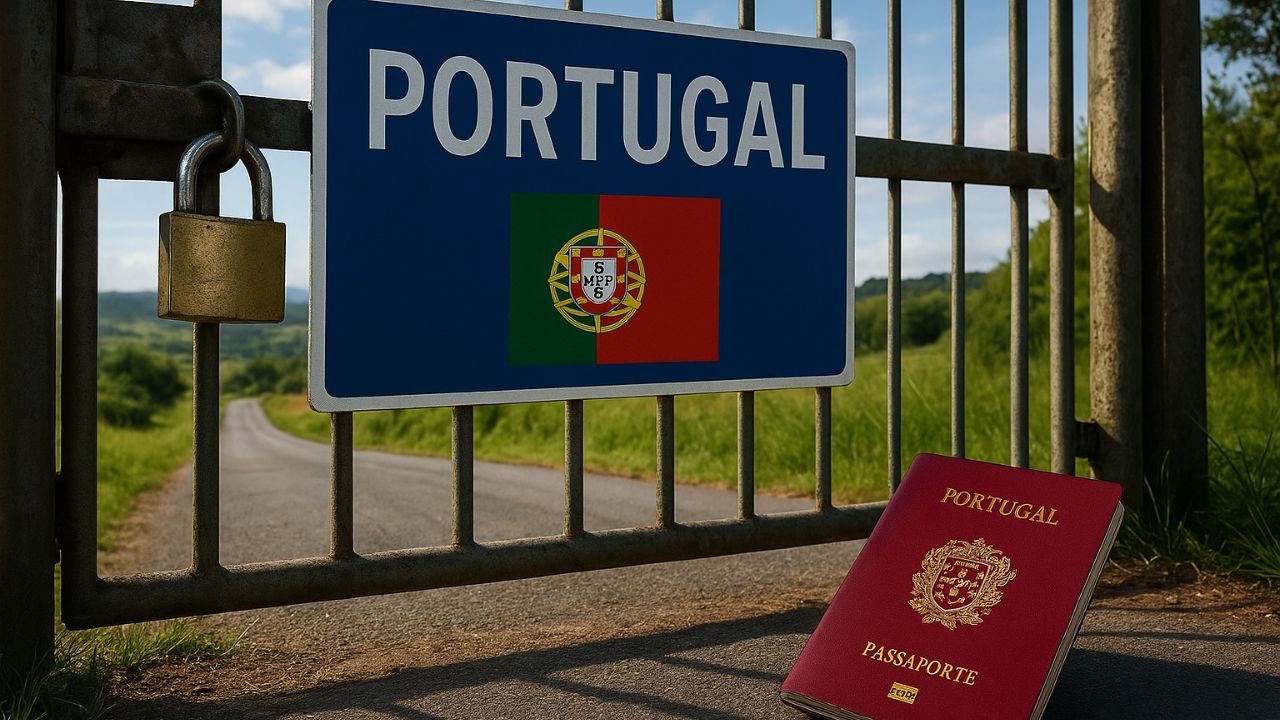
Change Extinguishes the “CPLP Channel,” Mechanism That Facilitated the Regularization of Brazilians, and Imposes New Conditions for Visas and Family Reunification in Portugal.
Approved by Parliament, the new Immigration Law in Portugal represents one of the most significant changes in the country’s immigration policy in recent years, directly impacting thousands of Brazilians. As reported by InfoMoney, the legislation completely prohibits the possibility of applying for a residence permit after entering the country as a tourist, a common practice that allowed many immigrants to regularize their status while already in Portuguese territory. The measure was approved with the support of a center-right coalition and the far right, signaling a clear tightening of the rules for entry and stay.
This legislative change occurs at a time of intense debate about immigration in Europe and in Portugal, where the Brazilian community has already surpassed 600,000 regular residents. The end of the so-called “CPLP Channel,” which simplified this process for citizens of Portuguese-speaking countries, is the most sensitive point of the new law, eliminating an important path for regularization and creating a climate of uncertainty for future immigrants. The law now proceeds to the sanction of President Marcelo Rebelo de Sousa.
The End of the CPLP Channel and Regularization as a Tourist
The main and most impactful change in the new law is the end of the so-called “expression of interest”. This was the legal instrument that allowed a foreigner, even if they entered Portugal with a tourist visa, to apply for a residence permit by proving they had a work contract and contributions to Social Security. In practice, it was the main gateway for the regularization of thousands of Brazilians who arrived in the country looking for opportunities and found a job after arrival.
-
Detran RJ starts requiring a toxicological test for those obtaining their first driver’s license in the car and motorcycle category starting June 29; see who will be affected.

-
Florida takes TikTok to court and accuses the Chinese giant ByteDance of ignoring the law that bars minors under 14, while parents and authorities demand more protection for children on social networks.
-
Chamber approves constitutional amendment reducing the age of criminal responsibility from 18 to 16 years; what now?

-
Justice confirms that old debts in tax executions that have been stalled for more than 15 years can no longer be collected through judicial or administrative means.


With the elimination of this possibility, the path to legal immigration becomes more rigid and bureaucratic. The new rule stipulates that the application for a residence visa must be mandatory at Portuguese consulates in the country of origin before traveling. The “CPLP Channel,” an agreement that offered a simplified procedure for citizens of the Community of Portuguese Language Countries, including Brazil, will be extinguished in this context, closing the loophole that allowed regularization post-entry, according to information from InfoMoney.
Family Reunification: Deadlines and Conditions Changed
Another pillar of immigrant life that underwent changes was family reunification, a process that allows a legal resident to bring their family members to Portugal. The new legislation reduces the required residency time to apply for the benefit, decreasing from two to one year. However, this reduction comes with a new and crucial requirement: proof of a stable union of at least 12 months in the country of origin to regularize a spouse or partner.
This condition, according to an analysis by InfoMoney, aims to prevent fraud and ensure that family ties existed prior to migration. The requirement for prior proof of stable union will not apply, however, to cases involving minor children, protecting the right to family unity. Despite the apparent advantage of reducing the deadline, the new bureaucracy may complicate the process for many couples who did not formalize their union before moving.
Work Visa Becomes More Restrictive and Selective
The job search visa, a tool created to attract workers to Portugal, has also been subject to tightening. The validity of the visa will be six months, but its granting will go through a new filter: it will be restricted to professionals that the Portuguese government considers qualified. Although the exact criteria for this qualification are not yet detailed, the measure indicates a clear shift in focus, prioritizing skilled labor over an open-door policy.
This selectivity may alter the profile of the Brazilian immigrant seeking opportunities in the country. Whereas Portugal was previously seen as a viable destination for workers from various fields, now the tendency is for the market to become more competitive and restricted to specific sectors defined by the government. The change reflects a strategy to align immigration with the economic needs of the country but may exclude many professionals who would have had a chance before.
Political Context: The Weight of the Right and Far Right
The approval of the law did not happen without intense political debate. The legislative package advanced thanks to the votes of the governing coalition AD (center-right) and, crucially, the far-right party Chega, which is openly anti-immigration. The support of Chega, which pressured for even harsher measures, was essential to consolidate the majority needed in Parliament. The opposition, formed by left-wing parties such as PS, Bloco de Esquerda, and PCP, voted against, accusing the government of yielding to an “electoral” and xenophobic agenda.
As reported by InfoMoney, the Minister of the Presidency, António Leitão Amaro, defended the measure as an important step for the country, while government deputies claimed that the change represents a victory “for the Portuguese.” The new law now depends only on the promulgation by President Marcelo Rebelo de Sousa, who has already signaled positively. Once published in the Diário da República, the new rules will come into effect, redefining the future of immigration in Portugal.
Do you agree with this new approach of Portugal to immigration? Do you think that the end of the CPLP Channel and the new restrictions will negatively impact the Brazilian community or bring more organization to the country? Share your opinion in the comments, and we want to hear from those who live this in practice or were planning to move.





-

-

-

-

10 people reacted to this.