Portuguese
  Spanish


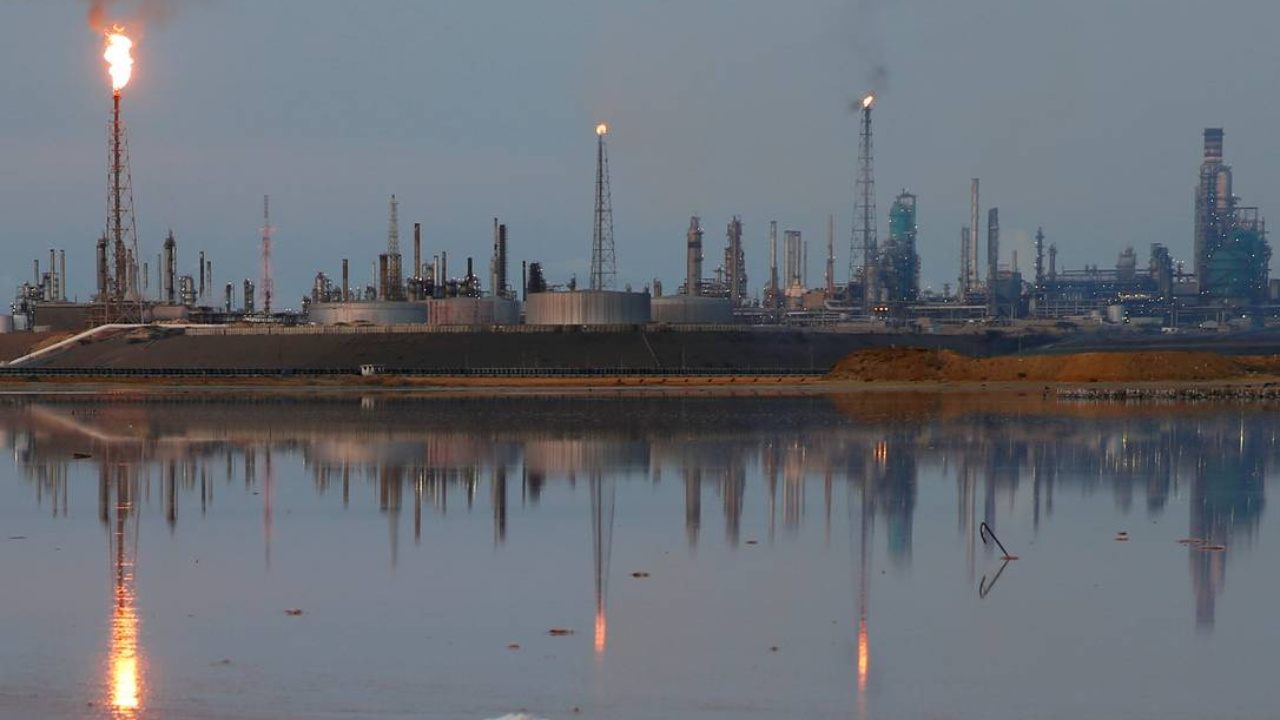


U.S. Actions Against Venezuelan Oil Reduce Remittances to Cuba, Expand Blackouts, and Expose the Island’s Energy Dependence Amid the Crisis.
The intensification of the U.S. offensive against Venezuelan oil has begun to produce effects beyond Caracas’ borders. Cuba, highly dependent on Venezuelan fuel remittances, has begun to feel the direct impact of the blockade promoted by the White House against allies of Nicolás Maduro’s regime.
Although the immediate focus of American operations is on the Venezuelan coast, experts point out that Havana has entered Washington’s radar as part of a broader strategy. Analysts indicate that this development is not coincidental and is part of the political objectives of President Donald Trump’s administration in the Caribbean.
Capture of Tankers Affects Cuban Supply
The U.S. military actions against the so-called “ghost fleet” of Venezuelan tankers have resulted in the seizure of vessels carrying oil destined for Cuba. An emblematic example occurred on December 10, when the ship Skipper was captured while heading to the island.
-
OPEC+ Boosts Oil Supply by 188,000 Barrels per Day in July 2026, Leading to Price Drop from $112 to $89 per Barrel in Under Two Months

-
TotalEnergies Signs 20-Year Deal to Purchase 2 Million Tons of LNG from Alaska, Boosting Project Viability
-
Turkey Deploys Çağrı Bey Drilling Ship to Explore New Oil Frontier Off Somalia’s Coast
-
Golden Pass LNG Ships First Liquefied Gas Cargo from the U.S., Completing $10 Billion QatarEnergy and ExxonMobil Investment

After the incident, the Cuban government itself acknowledged that the measure reinforced the “economic war against Cuba” and would have a “direct impact” on the country’s already fragile energy sector. Since then, concerns about the continuity of fuel deliveries have grown.
Historical Dependence on Venezuelan Oil
The energy relationship between Cuba and Venezuela dates back to the year 2000, with the signing of the Comprehensive Cooperation Agreement between Cuba and Venezuela. At the time, under the leadership of Fidel Castro and Hugo Chávez, an agreement was established in which Caracas would provide large volumes of oil in exchange for Cuban professional services.
These services included, mainly, doctors and teachers, as well as specialists in security and defense. Consequently, Venezuela began to occupy a strategic role for the Cuban economy, similar to what the Soviet Union exercised during the Cold War.
Over the years, however, the volume of oil sent varied significantly. Although official data is not public, experts indicate that in the last decade, remittances have continuously fallen, influenced by the decline in Venezuelan production and the sanctions imposed by the United States.
Internal Crisis Aggravates Impact of Oil Shortage
This new scenario arises at a particularly delicate moment for Cuba. The country is facing its fifth consecutive year of a deep crisis, marked by shortages of basic goods, high inflation, and economic contraction.
Additionally, frequent power cuts, collapse of agricultural and industrial production, deterioration of public services, and mass migration form a picture of persistent instability. In this context, the reduction in oil remittances further aggravates the situation.
It was precisely in this environment that the Trump administration decided to intensify pressure on Venezuela, reinforcing sanctions and actions in the Caribbean.
Experts See Calculated Effects on Havana
According to Cuban economist and political scientist Arturo López-Levy, the decrease in oil deliveries from Venezuela to Cuba is an expected result of the recent American measures. “The most probable outcome is that, with the recent measures in the Caribbean, these deliveries (of Venezuelan oil to Cuba) will decrease,” he states.
Meanwhile, Cuban economist Ricardo Torres warns of the direct impact of this reduction. “The consequences for Cuba would be disastrous,” he highlighted.
According to López-Levy, the naval blockade of Venezuelan tankers represents a new tightening on Havana. In his assessment, the offensive against Caracas also aims to weaken the Cuban government. “The Trump administration’s offensive against Venezuela quietly seeks to overthrow the Cuban government, with the same priority or more than targeting Nicolás Maduro,” he evaluates.
Daily Oil Need and Supply Bottlenecks
Independent estimates indicate that Cuba needs between 110,000 and 120,000 barrels of oil per day to maintain its basic activities. Of this total, about 40,000 barrels are produced domestically.
The remainder must be imported. Venezuela, which in the past provided up to 100,000 barrels daily, sent about 27,000 barrels per day in 2025, according to data from Reuters.
This gap, which can reach 50,000 barrels daily, translates into blackouts of up to 20 hours per day, halting industries, and long lines at gas stations. Although other suppliers have emerged, they have not been able to meet the demand.
Furthermore, Havana faces financial difficulties in purchasing oil on the international market due to a shortage of foreign currency.
Russia and Mexico Offer Limited Support
Among the alternative partners, Russia appears as one of the few countries capable of supplying oil to Cuba. In 2025, Moscow sent about 6,000 barrels daily, according to Jorge Piñón, a specialist from the University of Texas.
Piñón also anticipated the arrival of a new Russian tanker to the island, transporting about 330,000 barrels. Still, Ricardo Torres assesses that Russia, involved in the Ukraine war and facing sanctions and pursuit of its own fleet, is not in a position to consistently replace Venezuela.
Mexico also figures into this scenario. Last year, the country sent approximately 23,000 barrels daily to Cuba. In 2025, this volume fell to less than 3,000 barrels, according to data from state company Pemex. Torres points out that the Mexican government needs to “take care of the relationship” with the United States, the destination of 85% of its exports.
China Emerges as Strategic Unknown
In light of this picture, the possibility of China’s involvement is being discussed. According to López-Levy, the main question is identifying who could finance oil purchases in other markets and who would be willing to sell and transport fuel under the current level of American pressure.
According to him, Beijing could play a relevant role by offering credits to Cuba or potential suppliers. “It’s a geopolitical decision, not ideological,” pointed out the political scientist.
Despite recognizing a “vendetta logic” on the part of figures like Secretary of State Marco Rubio, López-Levy warns not to underestimate the Cuban system’s capacity for resistance. Still, he differentiates short-term survival from the country’s structural crisis, which, in his view, continues without a clear perspective for a solution.