






 Portuguese
  Spanish


With Almost 60 Cm Of Skull And Ambush Habits, New Fossil Found In Namibia Surprises Scientists And Challenges Theories About Pre-Dinosaur Climate
In 2025, researchers announced the discovery of a new prehistoric predator, the Gaiasia jennyae. The fossil was found in Namibia, in a region that was part of the ancient supercontinent Gondwana. The animal lived about 280 million years ago, long before the emergence of dinosaurs.
The discovery attracted attention for several reasons. One of them is the environment where the fossil was found: a swampy area with icy regions.
This type of location was not considered common for large predators of the time, leading scientists to rethink some ideas about the climate and fauna of the Permian period.
-
China Develops Custom 140-Ton Electric Mining Truck with 770 kWh Swappable Battery, Deploys 290 Units in Xinjiang’s Largest Zinc Mine

-
Meta to Launch Arena, a New Prediction App Targeting 3.56 Billion Users, Competing with Polymarket and Kalshi

-
Scientist Challenges Famous Human Evolution Theory, Argues Homo Sapiens Evolved Gradually Over Thousands of Years
-
15-Year-Old American Builds Ocean Generator with PVC Pipe and 3D-Printed Propeller for $12, Wins National Prize, Presents at White House, and Makes Forbes 30 Under 30 List




Giant Skull And Sharp Teeth
The Gaiasia jennyae stands out for its imposing skull. Measuring almost 60 centimeters in length, the animal’s head was equipped with long, sharp teeth. Its jaw was also powerful, adapted to hold and cut medium-sized prey.
According to paleontologists, the shape of the skull is uncommon among known fossils from the period. This difference suggests that the animal may belong to its own evolutionary lineage.
Furthermore, the body of the Gaiasia jennyae seems to have been ideal for hiding in aquatic vegetation and ambushing prey.
A Hunter of The Cold
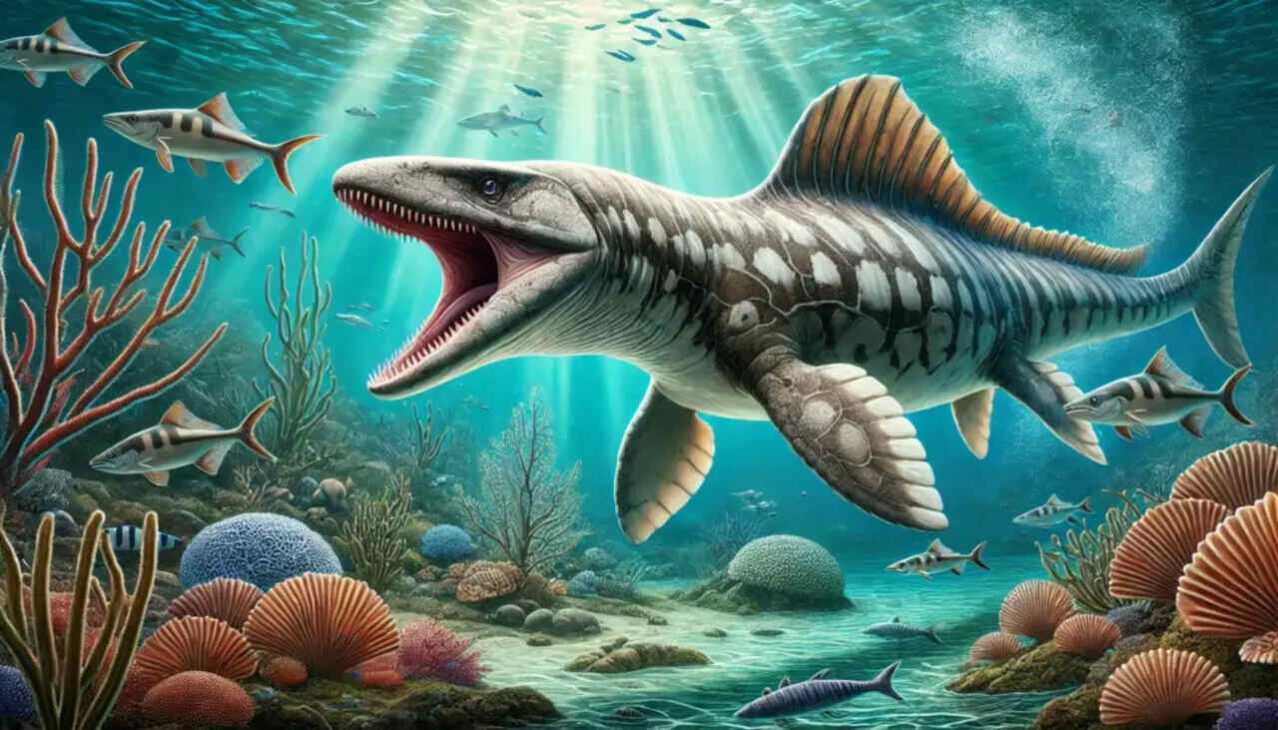
Another important detail is that this predator lived in an environment that alternated between wet and icy areas. This shows that large carnivorous animals could survive in extreme climates.
The presence of this fossil reinforces the idea that Permian fauna was more adaptable and diverse than previously thought.
Until then, most land vertebrate fossils from the Permian had been found in warmer regions, such as North America and Europe.
The find in Namibia expands this map and shows that these animals also existed in colder parts of the planet.
Impact On Evolutionary Studies
The Gaiasia jennyae is classified as a tetrapod, a group that includes all land vertebrates. The discovery expands the knowledge of these animals’ presence in Gondwana and indicates that they could adapt to various types of environments.
This may lead scientists to revise old hypotheses about how tetrapods spread across the planet and how they evolved in different ecosystems. The fossil found is considered a key piece for better understanding this process.
Tribute To Jenny Clack
The name Gaiasia jennyae was chosen in homage to paleontologist Jenny Clack. She is recognized for her studies on the transition of vertebrates from water to land. The choice of name highlights the importance of the fossil for understanding this evolutionary phase.
With unique and well-preserved features, the new predator helps reveal a piece of Earth’s life history that was still hidden. The discovery reinforces the importance of exploring new regions in search of unprecedented fossils.
With information from O Antagonista.






Uau, que matéria mal feita, com ilustrações piores ainda, que NADA tem a ver com o **** encontrado. Tentem verificar o artigo original ou, se não conseguirem entender, convidem um especialista para revisar seus textos da próxima vez.