Portuguese
  Spanish


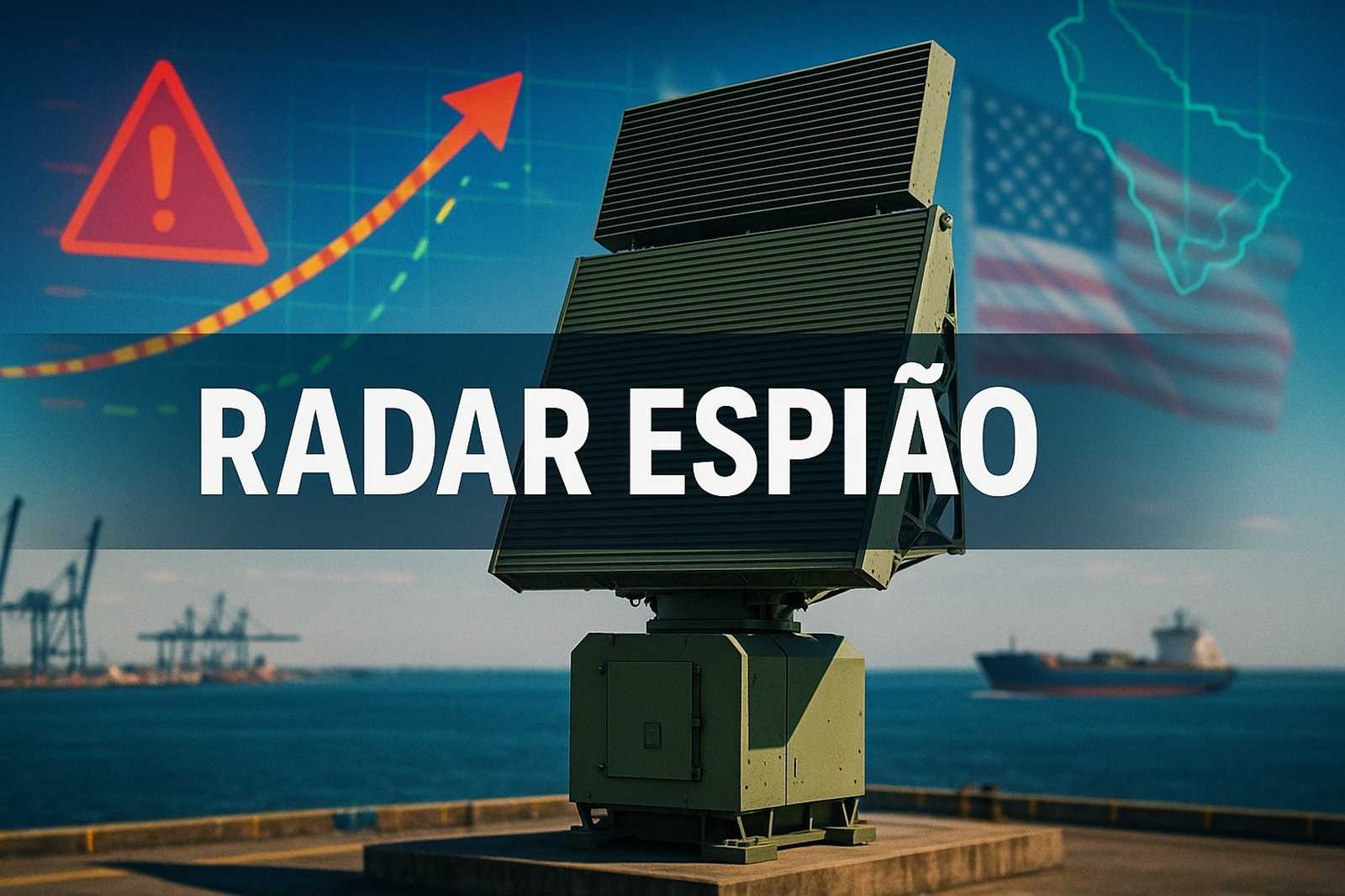

The United States Navy Took Another Step Forward in Advancing Its Naval Defense. In Partnership with Raytheon, a New State-of-the-Art Radar Was Tested in a Maritime Environment. The Technology Promises to Enhance the Capability for Detection and Tracking of Threats, Ensuring Greater Safety for the Fleet Ships.
A defense company based in Virginia has successfully completed tests of its AN/SPY-6(V)4 radar in a maritime environment. The evaluation, conducted in partnership with the United States Navy, showed that the system tracks aerial and surface targets under various conditions.
The tests took place in open waters and confirmed that the radar can significantly enhance the defense of naval vessels.
Barbara Borgonovi, President of Naval Power at Raytheon, emphasized the importance of the live demonstration. According to her, the SPY-6(V)4 represents a major advancement for the current fleet and strengthens joint operations with allies around the world.
-
Spain Launches World’s Largest Floating Dry Dock: 56-Meter Giant Produces Massive Concrete Structures in A Coruña Using Technology Proven in Brazil

-
AI-powered toys that talk, recognize faces, and collect data face scrutiny from Brazilian government over children’s privacy concerns

-
4,000-Year-Old Child’s Skull Unveils Ancient Burial in 7,500-Year-Old Norwegian Rock Shelter, Impressing Archaeologists

-
Norway Defeats Brazil in World Cup but Invests Billions to Preserve the Amazon, Strengthens Amazon Fund, and Joins Brazil in Leading Global Effort Against Tropical Deforestation




Strengthening the Flight IIA Destroyers
The radar will enable the Flight IIA destroyers to enhance their detection and tracking capabilities. This means that sailors will be able to monitor threats in real-time and respond more effectively.
During the tests, the company collected the first set of live data from this configuration. This material will be used to refine the system, support new tests, and prepare for onboard deployment.
Expansion Expected for Over 60 Ships
In the next decade, the expectation is that the SPY-6 will be present on over 60 vessels of the U.S. Navy. The system will be able to act against ballistic, cruise, and hypersonic missiles, as well as hostile aircraft and surface ships.
Integration is one of the technology’s strengths, as it allows for simultaneous defense against different threats.
The radar also offers greater range, enhanced sensitivity, and more precise discrimination compared to traditional systems.
Compatibility with the Most Advanced Weapons
Raytheon claims that the SPY-6 can optimize the effectiveness of the U.S. Navy’s most modern weapons, including all variants of standard missiles. Accurate target information ensures that combat systems maximize performance.
Each version of the SPY-6 family uses the same hardware and software, which simplifies maintenance and reduces costs. This standardization ensures scalability and reliability across different platforms.
Modular Structure Eases Adaptation
The radar is built from modular radar sets, called RMAs. Each unit measures 60 centimeters in all dimensions and functions as an independent antenna.
These modules can be stacked according to the needs of each ship. This feature makes the SPY-6 the first truly scalable radar family of the Navy, according to the company.
Application on New and Old Ships
The SPY-6 sets are already being delivered and integrated into different classes of vessels. They equip DDG 51 Flight III destroyers, frigates, aircraft carriers, and amphibious warfare ships. Additionally, they are being adapted to the DDG 51 Flight IIA destroyers and aircraft carriers of previous generations.
With this flexibility, the radar is expected to become the centerpiece of American naval defense. Therefore, the success of the recent tests reinforces the plans for large-scale deployment, ensuring that the fleet operates with greater protection and efficiency.