Portuguese
  Spanish


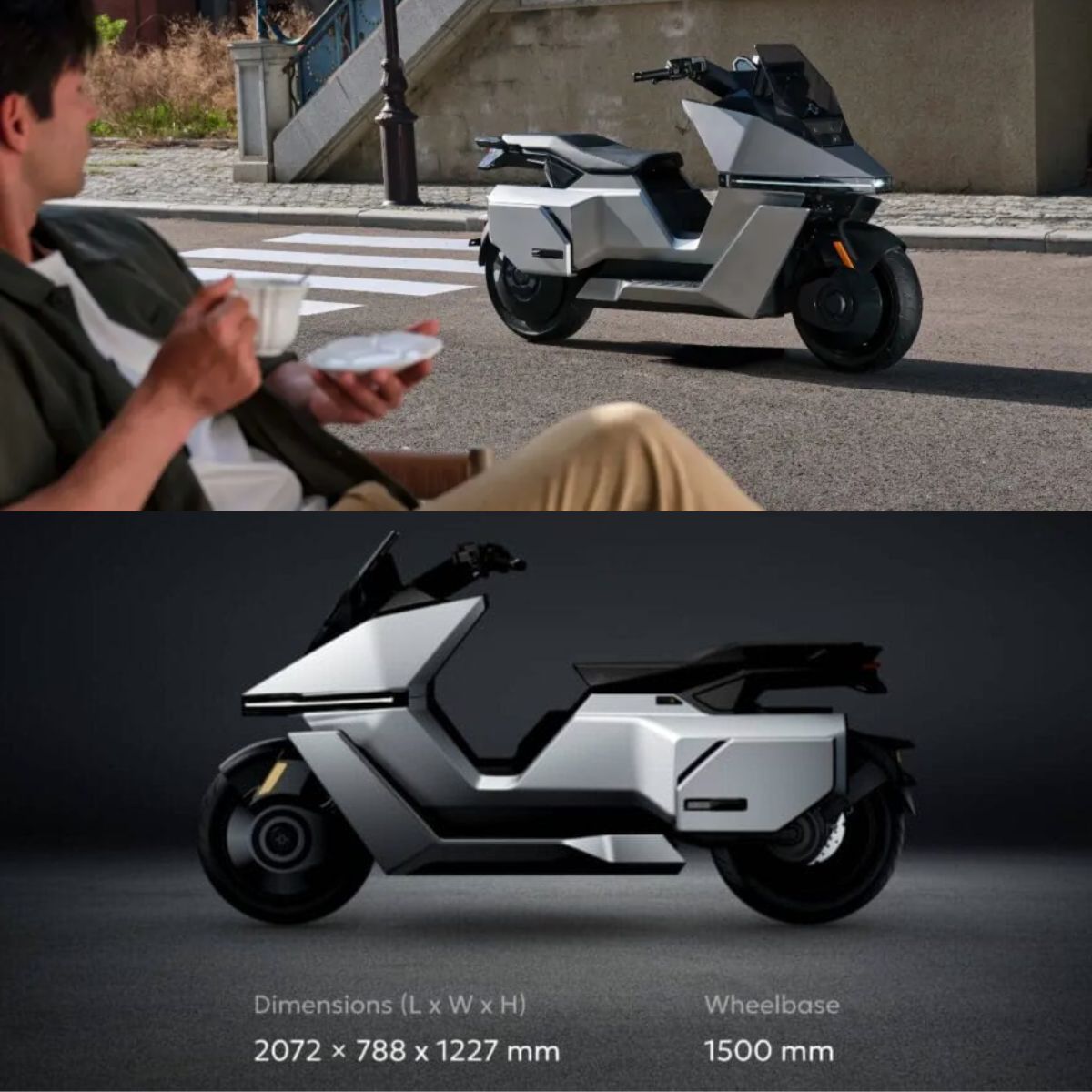

OMOWAY introduced the OMO X, described as the first mass-produced self-balancing electric motorcycle. The model uses artificial intelligence, sensors, and aerospace-level gyroscopic stabilization to keep the motorcycle upright on its own, even when stationary. Pre-sales began at the end of April 2026, and the commercial launch is scheduled for the end of May, initially in Indonesia. The system interprets sensor data, calculates risks in milliseconds, and activates the engine, steering, and brakes to correct the vehicle’s posture before the rider notices the problem.
The scene seems like science fiction, but it already has a market arrival date: an electric motorcycle capable of standing upright on its own without relying on the rider’s constant balance. The OMO X, developed by OMOWAY, bets on artificial intelligence, sensors, and gyroscopic stabilization to eliminate one of the biggest fears of those who ride or think about riding a motorcycle: falling at low speed, at traffic lights, in tight curves, and on wet surfaces. With pre-sales starting at the end of April and a commercial launch scheduled for May 2026, the innovation turns the motorcycle into a kind of urban robot on two wheels.
The system that keeps the OMO X upright is the same principle used in satellites and space stations. The aerospace-level gyroscopic stabilization technology uses angular momentum to resist tilting and keep the vehicle balanced even when completely stationary. Additionally, the OMO-Robot architecture functions as a command center that interprets sensor data, calculates risks in milliseconds, and activates the engine, steering, and brakes to correct the motorcycle’s posture before the rider notices the problem.
How the electric motorcycle can stand upright on its own
According to information released by the NSC portal, the secret of the OMO X lies in the aerospace gyroscope, a device that spins at high rotation within the motorcycle’s structure and creates resistance to any tipping movement. In practice, when the motorcycle starts to lean to one side, the gyroscope generates an opposing force that keeps it vertical, a physical principle that works regardless of whether the vehicle is in motion or stationary. It’s the same technology that stabilizes satellites in orbit and navigation sensors in military aircraft.
-
Hilux’s little sister: Toyota relaunches the Land Cruiser 70 in the 2027 lineup with over 40 years of production, a 2.8 turbo diesel engine with 201 hp and 51 kgfm, a six-speed automatic transmission, and a renewed retro look.

-
Automatic, economical, and known for reliability: with a 1.5 engine of up to 110 hp, CVT transmission, seven airbags, and fuel consumption of up to 15.9 km/l, this used hatchback appears as a rational alternative to Polo, HB20, and Onix; meet the Toyota Yaris XLS 2020.
-
He surpassed the Tera, Creta, and Tracker: With a TSI engine of up to 150 hp, 6-speed automatic transmission, and a 373-liter trunk, the Volkswagen T-Cross was the best-selling SUV in June, with 11,753 registrations.

-
It looks factory-made, but it came out of a workshop: a mechanic from Pernambuco builds a handcrafted “mini Toyota,” drives it through the streets, and the video goes viral on social media, leaving residents astonished.



Artificial intelligence complements the gyroscope by anticipating risk situations. The system reads data from multiple sensors that monitor tilt, speed, acceleration, and floor conditions, and processes this information in milliseconds to decide if it needs to trigger corrections in the engine, steering, or brakes. The combination of mechanical hardware (the gyroscope) with intelligent software (the AI) creates a vehicle that reacts to fall threats faster than human reflexes can.
Why low-speed falls are the biggest danger for motorcyclists
Most motorcycle falls don’t happen at high speed on highways: they occur in seemingly simple everyday moments. Starts at traffic lights, sudden stops, tight curves, and slippery surfaces are responsible for thousands of accidents ranging from scraped knees to severe fractures and fatalities. The rider who needs to balance a motorcycle weighing 150 to 200 kilos at a wet intersection with tight traffic faces a challenge that experience reduces but never eliminates.
For beginners, the fear of falling is the main barrier preventing the adoption of the motorcycle as a means of transportation. An electric motorcycle that balances itself could attract an audience that currently avoids two wheels due to insecurity, expanding the motorcycle market to people who never considered riding. In urban traffic jams, where the rider deals with short advances, frequent stops, and little room to maneuver, automatic stability becomes a practical differentiator that can save lives.
The artificial intelligence that leaves the screen and enters the street
The OMO X inaugurates a phase where artificial intelligence no longer acts only in digital devices and begins to directly interfere with the movement of vehicles in the real world. OMOWAY itself calls this concept “Embedded AI,” where software and hardware work together to solve physical problems that algorithms alone cannot solve. The gyroscope provides the mechanical stabilization force, but it’s the AI that decides when, how, and with what intensity to activate it.
This model of AI applied to the vehicle’s body can expand beyond motorcycles. If the technology proves to work on a commercial scale, the same principle can be adapted for electric bicycles, scooters, and even motorized wheelchairs, enhancing the safety of any two-wheeled vehicle that suffers from the balance problem at low speed. The OMO X is the first market test of an idea that could transform urban mobility.
The launch in Indonesia and when the motorcycle might reach other countries
The first commercial stage of the OMO X begins in Indonesia, a market chosen by OMOWAY for being one of the largest consumers of motorcycles in the world. The distributor network covers regions such as Jakarta, Bandung, Surabaya, and Bali, and the strategy indicates a gradual launch that allows for adjustments in production, logistics, and technical support before a possible expansion to other markets.
The mass arrival of this type of electric motorcycle in countries like Brazil will depend on important factors. Price, availability of maintenance for the gyroscopic system, acceptance by motorcyclists, and adaptation to each country’s traffic rules are barriers that need to be overcome before the OMO X crosses continents. For the Brazilian rider, who faces chaotic traffic and uneven surfaces daily, a motorcycle that balances itself would solve real problems, but the cost of the technology and the technical assistance infrastructure will be determining factors.
What is needed for the self-balancing motorcycle to convince the market
The promise is revolutionary, but skepticism is understandable. Experienced motorcyclists may question whether an electronic system can replace decades of skill developed in traffic, and the reliance on components like the aerospace gyroscope raises concerns about maintenance costs and long-term durability. If the gyroscope fails in a risk situation, the rider needs to be prepared to take control.
The OMO X is the kind of innovation that will only be validated by real use on a large scale. If thousands of motorcyclists in Indonesia confirm that the motorcycle really prevents falls in everyday life, global demand may explode and force other manufacturers to adopt similar technology. If it fails, the self-balancing electric motorcycle will remain a technological curiosity. The verdict begins in May 2026.
Would you ride a motorcycle that stands upright on its own, or do you prefer to rely on your own balance and experience? Tell us in the comments if you think this technology makes sense for Brazilian traffic and if you would buy an OMO X when it arrives in the country.