Portuguese
  Spanish



Raízen Announced the Sale of the Passa Tempo and Rio Brilhante Plants for R$ 1.325 Billion, in a Transaction That Includes Capacity of 6.2 Million Tons and Transfer of Sugarcane Fields, Marking the Largest Disinvestment in the Company’s History.
The Raízen announced the sale of the Passa Tempo and Rio Brilhante plants, in Mato Grosso do Sul, to Cocal, for R$ 1.325 billion, in a transaction paid in full at closing.
The package includes 6.2 million tons of milling capacity, in addition to the transfer of owned sugarcane and contracts with suppliers linked to the units.
According to the company, this is the largest disinvestment since the beginning of the portfolio optimization strategy to reduce debt, which is currently close to R$ 40 billion.
-
Brazilian Startup Turns Coffee Grounds into Plant-Based Leather, Cutting Water Use by Over 50 Times for High-Impact Sustainable Fashion

-
Eco Invest Auction Aims to Unlock $10 Billion in Investments, Focusing on Green Fertilizers, Critical Minerals, Batteries, and AI for Clean Industry in Brazil

-
Half of Brazilians Prefer Lower Taxes with Private Health and Education, While 44% Opt for Higher Taxes for State-Provided Services, Datafolha Survey Reveals

-
Brazil’s Most Expensive Toll Rises to R$ 40.60 on Route from São Paulo to the Coast, Nearly Matching Bus Fare to Santos




Disinvestment Strategy and Focus on Efficiency
Since adopting the plan of “portfolio asset optimization, simplification of operations, and capturing efficiencies,” Raízen has been executing targeted asset exits.
In May, the company sold the Leme plant for R$ 425 million. Subsequently, in July, it decommissioned the traditional Santa Elisa plant and sold its assets.
In line with the same directive of capital recycling, it also ceased operations at the MB plant, in Morro Agudo, and scheduled the sale of sugarcane fields by the end of 2024.
The two decommissioned units operated in areas with high competition for sugarcane, which pressured costs and margins.
Although the company maintains a significant presence in the Central-South region, the current move reinforces priority in capital allocation in assets with higher returns and operational synergies.
At the same time, it simplifies the industrial network and reduces the need for investment in maintenance of less strategic sites.
What Is Included in the Transaction with Cocal
Besides the two industrial plants, the contract provides for the transfer of owned sugarcane and the transfer of supplier agreements related to the negotiated plants.
In practice, Cocal assumes the agricultural base capable of sustaining the reported milling, preserving supply of raw materials and operational continuity.
The purchase price is equivalent to US$ 44 per ton of milling capacity, a level cited as aligned with other recent operations in the sector.
The dollar reference helps compare assets in different regions and cycles, but payment will be made in reais, in cash at closing.
Possible Price Adjustment with the Off-Season
The total value may reach R$ 1.543 billion if the off-season, estimated at R$ 218 million, remains the seller’s responsibility.
In this scenario, Raízen would perform the maintenance and receive the amount as capex reimbursement, a common practice in the sector.
At the end of each harvest, in November, the plants undergo dismantling and maintenance to prepare for the next cycle.
These services ensure reliability and performance of equipment at the beginning of the next milling.
While the final settlement depends on the determination of who will bear the off-season costs, the structure preserves predictability for both buyer and seller.
If Raízen performs the service, the effective transaction price increases. On the other hand, if Cocal assumes it, the total disbursement remains at the base level.
Who Is the Buyer and How Will Its Scale Change
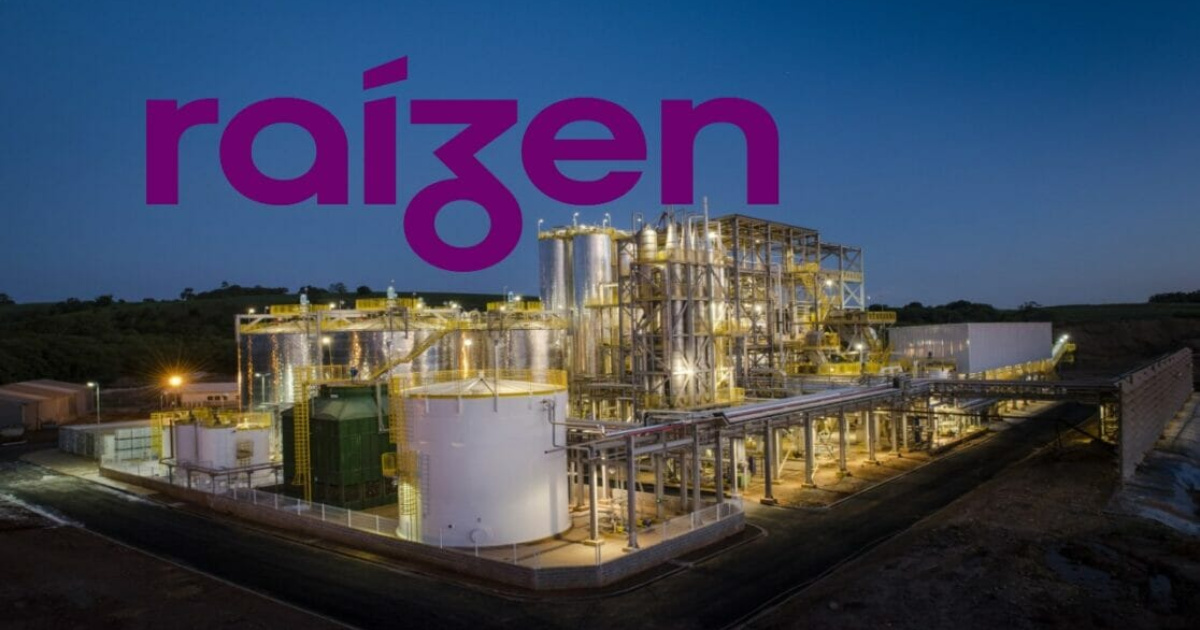
Belonging to the Garms family, Cocal is a sugar-energy group with two plants in the state of São Paulo, in Paraguaçu Paulista and Narandiba, whose combined capacity reaches 10 million tons.
In the last harvest, the company processed 8.7 million tons, resulting in 720 thousand tons of sugar and 400 million liters of ethanol.
With the acquisition in Mato Grosso do Sul, the company is expected to gain industrial scale and geographic diversification, diluting fixed costs and increasing flexibility between sugar, ethanol, and energy.
The incorporation of sugarcane fields and associated contracts also reduces risks of biomass supply, a critical factor in maintaining asset utilization rates.
Impacts for Raízen and Financial Rationale
For Raízen, the sale reinforces capital discipline and contributes to deleveraging.
By divesting from plants considered less priority in the network, the company redirects resources toward projects with superior returns, while also simplifying industrial management.
The divestment of units in regions with acute competition for sugarcane also tends to mitigate cost pressures, favoring operational margins in remaining areas.
In the short term, the cash inflow of R$ 1.325 billion improves liquidity and helps cover future investment needs in strategic areas.
If the execution of the off-season by Raízen is confirmed, the reimbursement of R$ 218 million will increase the total transaction value, but without altering the logic of deleveraging, as it constitutes maintenance capex.
Next Steps and Closing Timeline
Payment will be in cash at closing, as defined between the parties.
The transaction includes the transfer of agricultural contracts and sugarcane bases, which requires usual cession procedures and possible approvals for this type of transaction.
Meanwhile, the management of maintenance and the determination of who will bear the off-season costs will be decisive for the final price.
The sector’s expectation is that the transition preserves operational continuity and that the next harvest begins with the maintenance schedule completed.
Sector Overview and Valuation Reference
The multiple of US$ 44 per ton of capacity aligns with recent transactions in sugar and ethanol in the Central-South region, according to market parameters cited by Raízen.
This reference, although it depends on the condition of the assets, product mix, and agricultural profile, serves as a benchmark for investors when comparing plants with similar efficiency levels.
Furthermore, the presence of owned sugarcane fields and a supplier portfolio linked to the asset typically reduces risks and consequently sustains higher prices in negotiations.
Fourth Move of the Current Wave of Sales
With Passa Tempo and Rio Brilhante, Raízen adds the fourth round of divestments in this phase.
First, it sold the Leme plant. Then, it ceased operations at Santa Elisa and sold its assets. Finally, it shut down the MB plant in Morro Agudo and planned the sale of sugarcane fields until the end of 2024.
This sequence indicates an industrial reorganization to concentrate efforts on assets with higher return and less competition for raw materials.