






 Portuguese
  Spanish
  3 min of reading
  0 comments


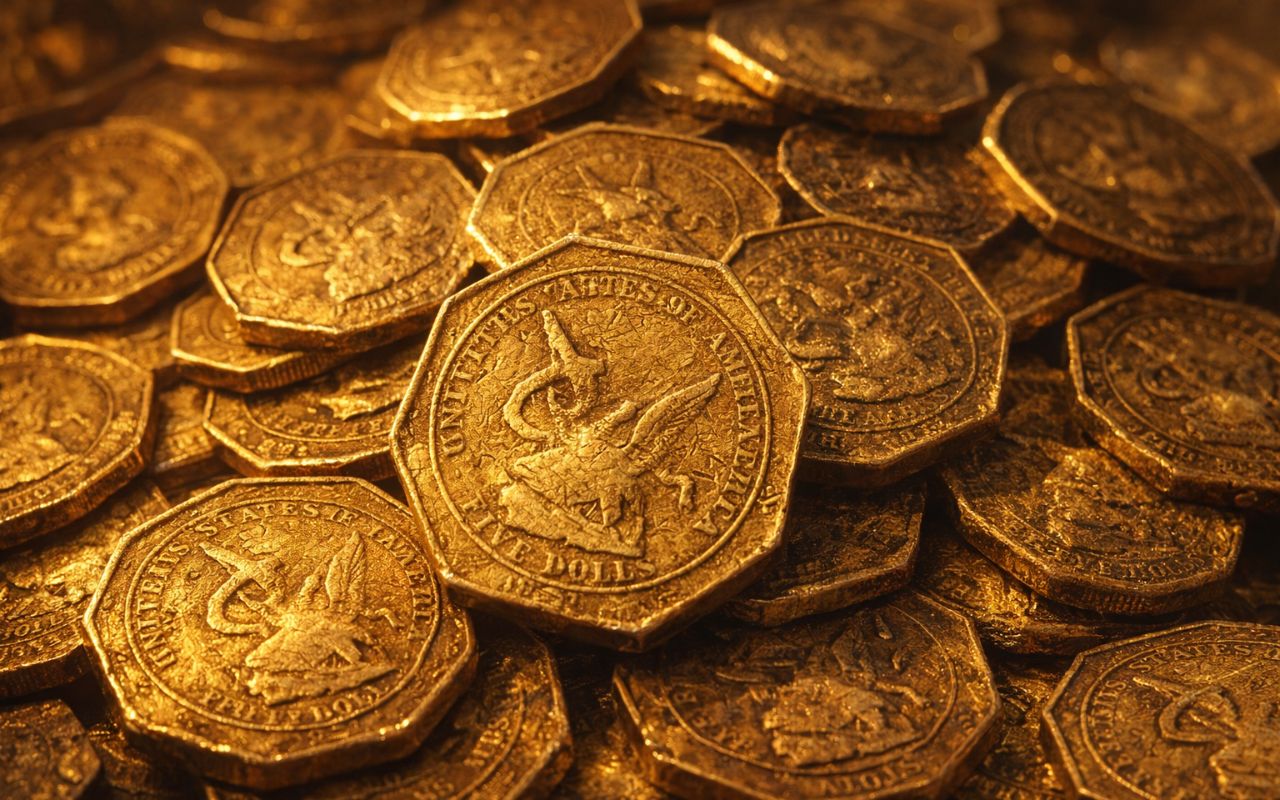
Treasure hunt in the USA will hide rare coins in San Francisco, with prizes that can reach R$ 250 thousand. Understand the event.
More than $50,000 in rare coins will be hidden in a treasure hunt taking place on April 25, in San Francisco, United States. The initiative is promoted by Witter Coin, which is hosting the event for the third consecutive year.
The proposal is simple: participants must follow clues released throughout the day to find historical pieces scattered around the city, in an experience that combines competition, tourism, and history.
How does the treasure hunt in the USA with rare coins work?
The dynamics of the treasure hunt in the USA will be based on riddles released in real-time. The clues will be published on the organizer’s social media, always at intervals throughout the day.
-
Survivor of 1966 SS Daniel J. Morrell Shipwreck in Lake Huron Recounts 38-Hour Ordeal in Extreme Cold

-
The Greatest Hoax in World Cup History? The Film That Denied Brazil’s 1958 Victory and Exposed How Fake Evidence Can Seem Convincing on TV
-
Fake South Korean Online Stores Offer Shopping Thrill Without Spending Money or Receiving Products
-
The War of Jenkins’ Ear: How a Severed Ear Sparked One of the 18th Century’s Most Unusual Conflicts


In this way, participants need to interpret the information quickly and move to the indicated locations. Additionally, all items will be hidden in public areas, with no need for digging or access to private properties.
The main attraction of the treasure hunt is the rare coins that will be distributed. In total, ten historical pieces will be hidden, including one highly valuable grand prize.
This format increases the chances of winning and makes the event more democratic. At the same time, it sparks interest from both curious individuals and experienced collectors.
Grand prize stands out among rare coins
Among all the items, the most valuable is the so-called “Humbert Slug,” a gold piece minted in 1851. Valued at around $25,000, it is considered one of the most emblematic objects of numismatics related to the gold rush.
The piece has an octagonal shape and weighs approximately 2.5 ounces, equivalent to about 71 grams. Additionally, it features the image of a bald eagle, a traditional symbol of the United States.

According to Popular Science, it is one of the most representative artifacts from that historical period.
Historical context strengthens the treasure hunt in the USA
The choice of San Francisco is directly linked to the city’s history. During the 19th century, the region was one of the main centers of the gold rush, attracting thousands of people in search of fortune.
Before this period, in 1847, the local population was less than 500 inhabitants. However, in just two years, this number exceeded 25,000, driven by mass migration.
According to Seth Chandler, CEO of the organizing company, the purpose of the event is precisely to revive this historical moment: “This city was built around the search for gold,” he stated to KTVU.
“We wanted to create something that brought that spirit back. Something real, tangible, and rooted in the history of San Francisco.”
Treasure hunt in the USA combines tourism and cultural experience
In addition to its financial value, the treasure hunt in the USA also focuses on the cultural experience. Participants traverse iconic neighborhoods of the city, rediscovering historical sites while following the clues.
Meanwhile, the event helps strengthen local tourism and promote interest in rare coins. Therefore, the initiative goes beyond competition and transforms into a journey that connects the past and present.
Another differentiator is the number of rewards. In addition to the main prize, nine other historical coins will also be hidden, increasing the chances of success.
Thus, even those who do not find the most valuable item can still be rewarded. This makes the experience more inclusive and attractive for different profiles of participants.
With information from Aventuras na História





-

1 person reacted to this.