Portuguese
  Spanish


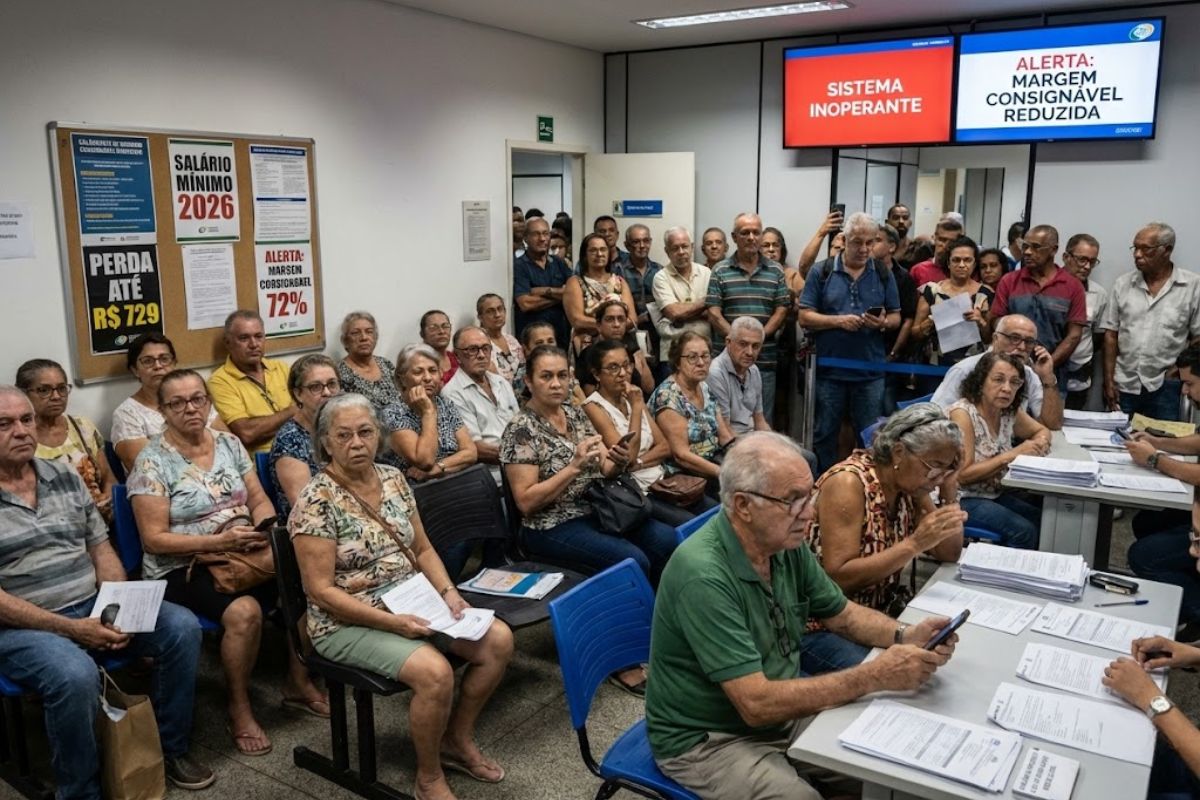


With the National Minimum Wage at R$ 1,621 and an Increase of 6.79% for Those Earning a Minimum Wage, the INSS Saw the Consignation Margin Increase and the Search Double: From 4.4 Million to More Than 8 Million Inquiries in One Day, Causing Instability in My INSS at the Beginning of January
The minimum wage adjustment in 2026 changed the game for INSS loans for those receiving a minimum: with the new value of R$ 1,621, the consignation margin automatically increases and can lead to deductions of up to R$ 729.45 per month when the total limit is used.
The surge in interest turned into operational overload. Dataprev recorded a spike in inquiries about the consignation margin, with the daily average of accesses rising from about 4.4 million to more than 8 million in a single day, a scenario that coincided with reports of slowness, failures, and pages being down on My INSS.
What the Minimum Wage Adjustment Changed in INSS in 2026
The starting point is the new national minimum wage set at R$ 1,621. From there, the movement spreads out in two interconnected fronts:
-
As Brazil Expands Social Welfare, Survey Reveals 40% Blame Poverty on Laziness, While 58% Cite Lack of Opportunities

-
China Tightens Control on Antimony, Driving Prices from $22,000 to Nearly $40,000 per Ton as U.S. Rushes to Bolster Strategic Reserves

-
BlackRock Freezes $1 Billion in Brazilian Renewable Energy, Impacting 1.5 GW of Planned Projects and Highlighting Investor Concerns Over Infrastructure Bottlenecks Cutting Up to 25% of Solar and Wind Generation
-
Labor Shortage: Despite Record Average Salary, 90% of Brazilian Bar and Restaurant Owners Struggle to Hire Key Roles Like Sushi Chefs and Head Cooks


First, the adjustment of benefits. According to the agency itself, those receiving a minimum wage received an increase of 6.79%, while benefits above the minimum were adjusted by 3.90%, according to the INPC accumulated in 2025. In practice, the adjustment takes effect in January and reorganizes the reference value for millions of people.
Second, the consignation margin. By increasing the benefit amount, it also raises the maximum limit that can be committed to monthly deductions. This mechanism has reignited the search on My INSS and amplified anxiety about the real impact of consignation on paychecks.
How the Deduction of Up to R$ 729.45 May Appear in the INSS Benefit
Under the described rules, retirees can commit up to 45% of the benefit amount to monthly deductions, distributed as follows:
35% for payroll loans
5% for payroll credit cards
5% for benefit payroll cards
In the case of someone receiving R$ 1,621, the practical breakdown presented is straightforward:
Up to R$ 567.35 in loan installments
About R$ 81.05 for each type of payroll card
Adding the three parts together, the ceiling reaches R$ 729.45 per month. The detail that changes the perception of risk is operational: this amount only appears if the entire limit is utilized, meaning it is not an automatic deduction for everyone, but the maximum possible within the margin setup.
Still, the scale of the number is alarming because it is a very specific cut: those earning a national minimum wage have a tighter benefit to accommodate deductions without pressing essential expenses, and the increase of the ceiling, by itself, can stimulate simulations, inquiries, and requests.
Explosion of Inquiries and What The Dataprev Data Indicate
The peak of search was focused on the inquiry of the consignation margin, according to Dataprev. The change in level was described as follows:
Previous daily average: about 4.4 million accesses
After the adjustment: more than 8 million inquiries in one day
Growth: over 80%
In another cited measurement, the atypical volume reaches 8.5 million inquiries in a single day, which is significant for two reasons.
The first is technical: such a large jump in a short window tends to press infrastructure, authentication, request queues, and services that depend on integration with statements and margin parameters.
The second is behavioral: the explosion suggests not just curiosity. It suggests perceived risk, an attempt to understand the new limit and, among part of the public, seeks for credit in a month that begins with adjustments, payment schedules, and questions about deductions.
Instability in My INSS and the Symptoms Reported by Users
With the sudden increase in demand, My INSS faced instability. The reported accounts describe a typical pattern of overload:
difficulties in logging in
slowness
pages being down
failures when checking statements
failures when requesting services
In the presented cut, Dataprev directly associated the instability with the atypical volume of accesses. The dynamic is simple: when most people try to inquire at the same time, the bottleneck spreads from authentication to the statement and margin screens.
What Else Entered the Sights, Beyond the INSS Consignation Margin
The movement was not limited to the margin. The search expanded to topics that commonly go together when there is an adjustment and a new paycheck:
information about adjustments
income tax
unlocking of loans
In this last item, the specific data is what stands out the most: there were more than 400,000 releases in one day related to unlocking, indicating a rush for enabling operations, regularizing access to credit, and, possibly, an immediate reaction to the new minimum and the new ceiling of commitments.
When Do Deposits with the New Values Start to Be Made
The mentioned calendar sets a concrete milestone: deposits with the new amounts begin to be made from January 26, within the staggered calendar of the INSS.
This helps explain the concentration of traffic: as the payment with the corrected amount approaches, interest in statements, margins, deductions, and confirmation of amounts grows, especially among those who fear seeing the benefit compressed by installments or payroll cards.
What to Observe in the Paycheck to Avoid Being Caught by Surprise
With the data presented, the critical point for those receiving a minimum wage is to separate three things that may appear in the same period:
the new benefit value after the adjustment
the recalculated consignation margin
already contracted deductions, which start to be viewed with more attention when the minimum changes
The most sensitive part is understanding that the ceiling of R$ 729.45 is a possible maximum, but it functions as a warning signal because it alters the perception of risk. The problem is not just the adjustment, but the size of the deduction that can fit within the rule, especially for those who already have active installments and still accumulate payroll cards.
The minimum wage adjustment in 2026 placed INSS consignation at the center of practical news concerning finances: minimum at R$ 1,621, discount ceiling reaching R$ 729.45, margin inquiries jumping from 4.4 million to more than 8 million in one day, instability in My INSS, and more than 400,000 releases for unlocking in a single day. The result was a frenzied January in search of confirmation of amounts, statements, and limits, in a system that felt the pressure.
If you could choose an immediate measure to reduce this financial shock in January, would it be to limit the INSS consignation margin or to reinforce locks and alerts in My INSS before any contracting?