





 Portuguese
  English
  Spanish
  1 min of reading


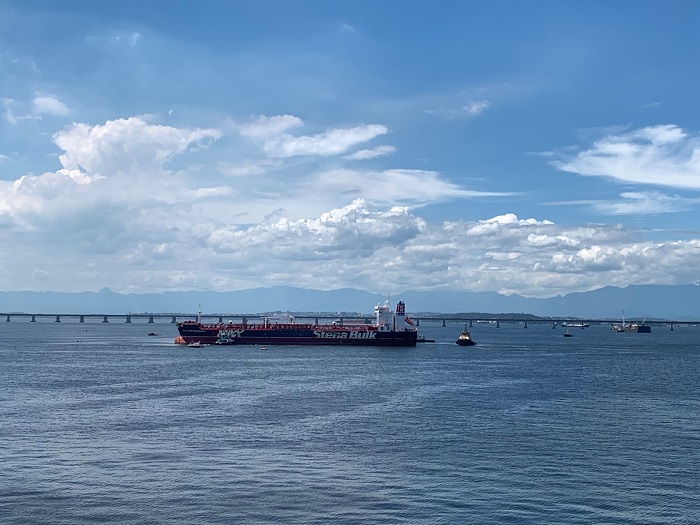
The Expectation Is That the Port of Rio de Janeiro Will Handle About 800 Thousand Tons of Liquid Bulk Per Year
After the testing phase was completed, the Manguinhos Refinery (currently REFIT) resumed operations at the Port of Rio de Janeiro on Friday afternoon (22), with the vessel Stena Performance, which unloaded 40,000m³ of condensed liquid bulk through the underwater pipelines, corresponding to approximately 26,000 tons.
After months of planning and much work from the operational team of the Port Authority of Rio de Janeiro (CDRJ) and REFIT, this first operation was a total success, thus fulfilling the final requirement set by the Brazilian Navy.
From now on, vessels of the same class will arrive every 30 days in an initial phase, with plans to double this scale after the first six months of operation.
-
Water hyacinth that blocks boats, oxygen, and channels gains a new function as a lightweight construction panel, creating a sustainable alternative, reducing waste, and offering efficient thermal insulation.

-
More than 230 Brazilian companies move production to Paraguay, pay a tax rate close to 12%, compared to about 80% in Brazil, and use Mercosur to sell back to the domestic market without import tax.
-
Starlink, by Elon Musk, wants to transform its satellites into a cellular operator capable of covering any point on the planet, but the three American giants in the sector, AT&T, T-Mobile, and Verizon, rejected the partnership and joined forces for the first time to try to contain the company’s advance.
-
Dredged material from navigation channels restores life to Poplar Island, reconstructs 1,715 acres of land, expands open water zones, and creates a refuge for hundreds of migratory and local bird species.


As a result, the expectation is that the Port of Rio de Janeiro will handle about 800 thousand tons of liquid bulk per year for REFIT, which will correspond to an increase of 214% in the handling of this type of cargo at the port, compared to the volume recorded in 2018.




Be the first to react!