






 Portuguese
  Spanish


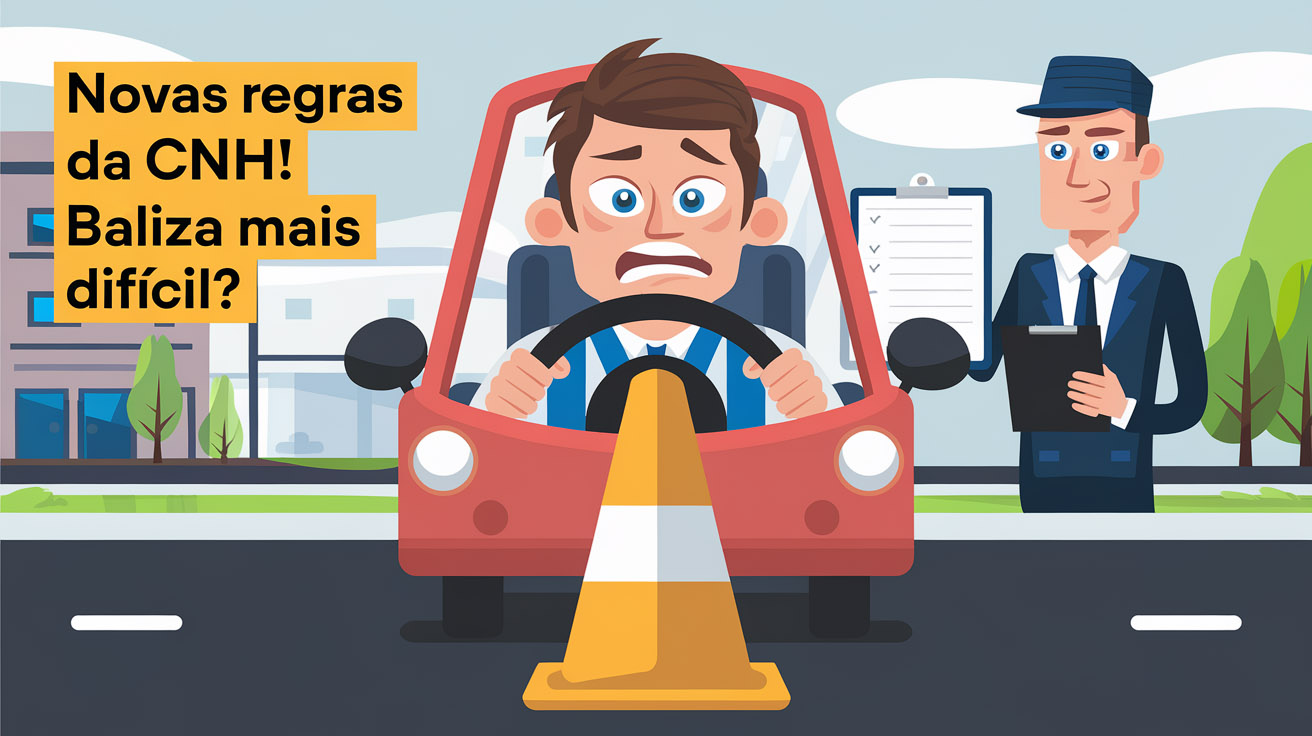


Detran Announces Changes to the Practical Driving Test for the CNH, Especially for Parallel Parking! Now, candidates will have to meet new criteria for parking correctly, at risk of disqualification.
Obtaining the National Driver’s License (CNH) is one of the most anticipated milestones for those wishing to drive, but the process may soon become even more challenging.
The São Paulo State Department of Transit (Detran SP) announced important changes to the practical driving test, and candidates will need to demonstrate greater precision when performing parallel parking.
With the new regulation, the exam will become more rigorous and standardized.
-
How to Prevent Brown Recluse Spider Bites: Common Hiding Spots and Free Tips to Reduce Risks

-
Natto: The Unusual Japanese Superfood Gaining Popularity on Social Media and Driving Record Exports
-
Brazilian Mayor Goes Undercover as Homeless for 24 Hours to Assess Public Services

-
15-Year-Old Entrepreneur Malu Lira Publishes 20 Children’s Books on Financial Education, Earns $500,000, and Expands Her Project to the Amazon Rainforest




Starting March 6, future drivers in the state of São Paulo will face a revamped assessment, with more objective and clear criteria.
According to Detran SP, the change aims to make the exam fairer, eliminating ambiguities and ensuring that all candidates are evaluated under the same conditions.
What Changes in the Practical Test?
The most significant change is in the assessment of parallel parking, one of the most dreaded moments by candidates.
Now, candidates must park the vehicle within the designated space, with the wheels parallel to the curb and completing the maneuver in up to three attempts.
Another important point is that after executing the parallel parking, it is mandatory to engage the parking brake and disengage the car, signaling to the examiner the end of the procedure.
If the candidate fails to follow these guidelines, they may lose points or even be disqualified.
In addition, the maneuvers must be carried out without exceeding the limits of the markings. If the vehicle touches the lateral or rear markings, the candidate will be penalized.
Reversing excessively or losing control of the vehicle can also result in serious failures, leading to disqualification.
Evaluation Criteria
To clarify how the new assessment will work, Detran SP has released the following criteria:
- Vehicle Correctly Positioned: exam proceeds normally
- Vehicle within 50 cm of the curb: minor fault, but the test continues
- Vehicle Outside the Marked Area: immediate disqualification
- Touching the Markings: light penalty, depending on severity
- Excessive Maneuvers: may result in point deductions
Driving Schools Need to Adapt
With the new guidelines, Driving Schools (CFCs) are already adjusting their training to prepare students.
Sindautoescola.SP recommends that instructors reinforce parallel parking training with future drivers, ensuring they adapt to the new evaluation model.
Candidates are also encouraged to practice more and clarify doubts with their instructors, avoiding surprises on exam day.
The more familiar the student becomes with the rules, the greater their chances of approval.
Traffic experts emphasize that, despite the change, the essence of the test remains the same.
Well-prepared candidates should not encounter difficulties adapting to the new format.
Expected Impact of the Change
Changes in assessment processes always generate uncertainties, but Detran SP assures that the new methodology will bring more transparency and standardization to the test.
The intention behind the changes is to enhance driver training, ensuring that all have a minimum level of safety and skill while driving.
While some may feel insecure with the new rules, the trend is for adaptation to happen quickly.
With teaching more aligned to the requirements, future drivers are likely to emerge better prepared for traffic.
Furthermore, the standardization of the evaluation aims to reduce subjectivity in administering the test.
The idea is for all evaluators to use the same parameters, avoiding discrepancies between different testing locations.
What to Do to Avoid Failing?
To ensure approval in the new practical test, experts recommend:
- Practice parallel parking frequently, respecting the new standards.
- Conduct simulations with instructors at driving schools.
- Pay attention to details, such as vehicle position and use of the parking brake.
- Avoid common mistakes, such as touching the curb or exceeding the limits of the space.
- Stay calm during the exam, focusing on the correct execution of the maneuver.
With preparation and attention, it is possible to face the new rules confidently and obtain the CNH without major difficulties!







Isso é pra tirar mas dinheiro do aluno
Na realidade é so mais uma forma de arrecadação a qual não ajuda em nada.
Eu sou um instrutor de autoescola. Essas novas regras são boas na minha opinião.mas é preciso mais no preparo do candidato o instrutor tem que ensinar o aluno a desenvolver mais velocidade e usar terceira marcha e também reduzir pra segunda marcha sem dar tranco na embreagem e também fazer conversões a esquerda em via de duplo sentido e que isso também fizesse parte da prova prática do Detran.